AI pricing, limits and comparisons
What each AI plan costs, where the limits are, and which model is best at what.
Comparing models? Every head-to-head on one page →
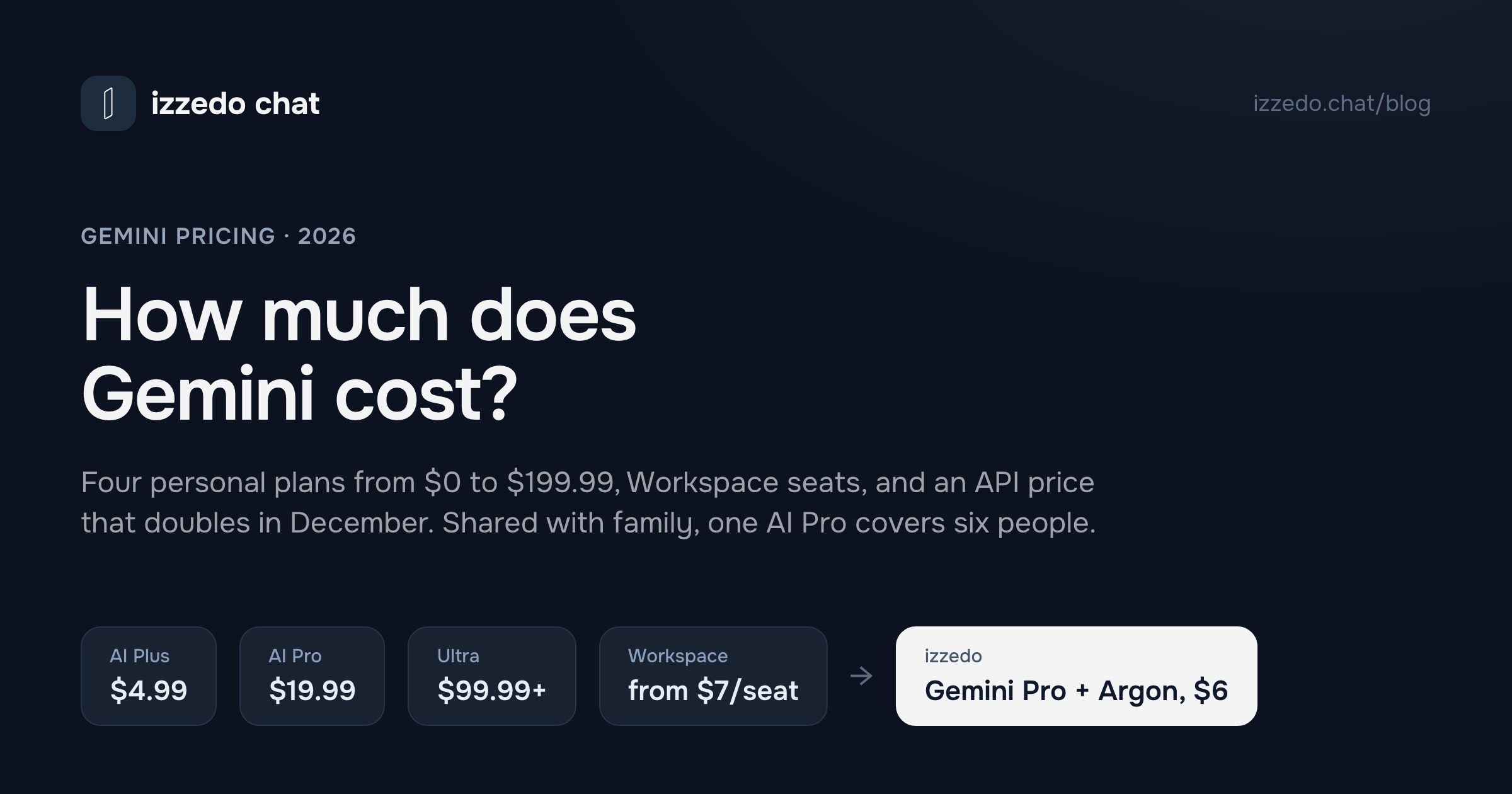
How Much Does Gemini Cost? Every Google AI Plan, Priced (2026)
Google sells Gemini four ways: a free app, Google AI plans from $4.99 to $199.99, Workspace seats for businesses, and an API billed per token. Here's every price, what each one buys, and the family rule that changes the maths.
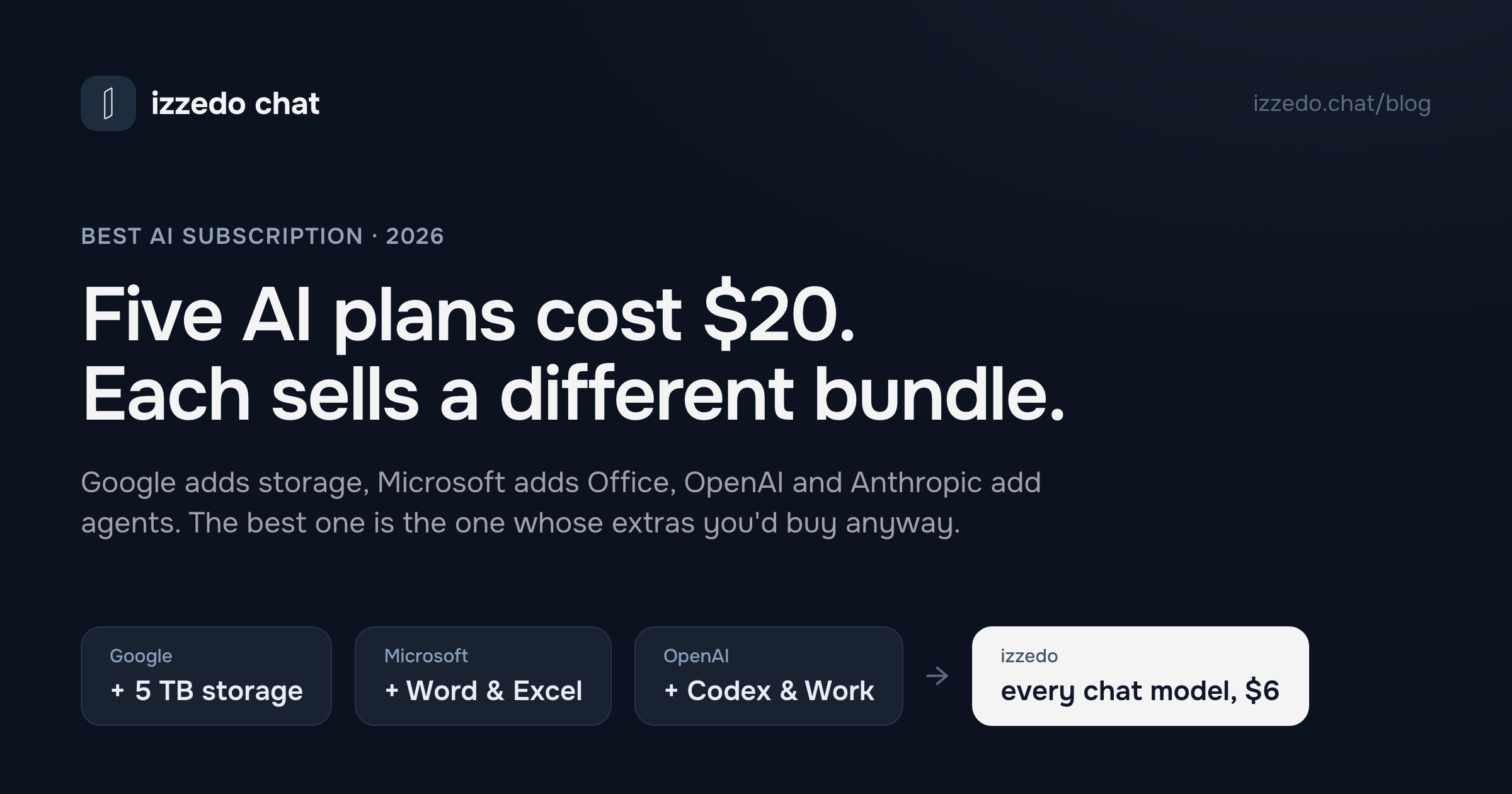
The Best AI Subscription in 2026: Five Plans Cost $20, and Each Sells Something Different
Five of the six big AI companies charge about $20 a month for their main plan, and what sets them apart is what comes with the chatbot: storage, Office apps, agents, a search engine. Here's each plan read from the vendors' own pages, the cheapest ones from $4.99, what happens when you run out, and how to pick.
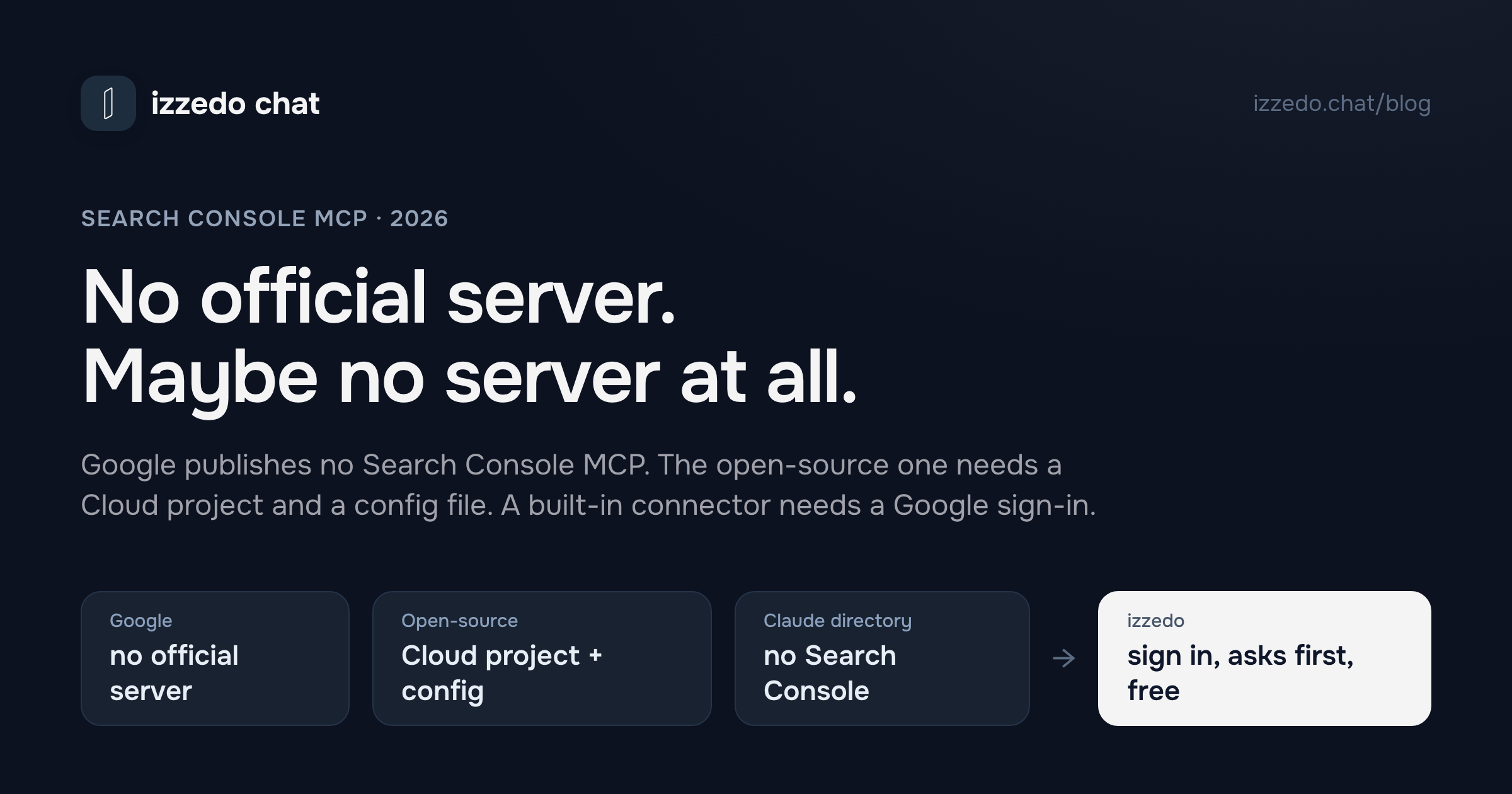
Google Search Console MCP: There's No Official Server, and You May Not Need One
Google publishes MCP servers for Drive, Gmail and Maps, but not for Search Console, and neither Claude nor ChatGPT has a built-in Search Console connector. Here are the three ways to get your clicks and queries into an AI chat, what each one can change in your account, and the questions worth asking once the data is in.
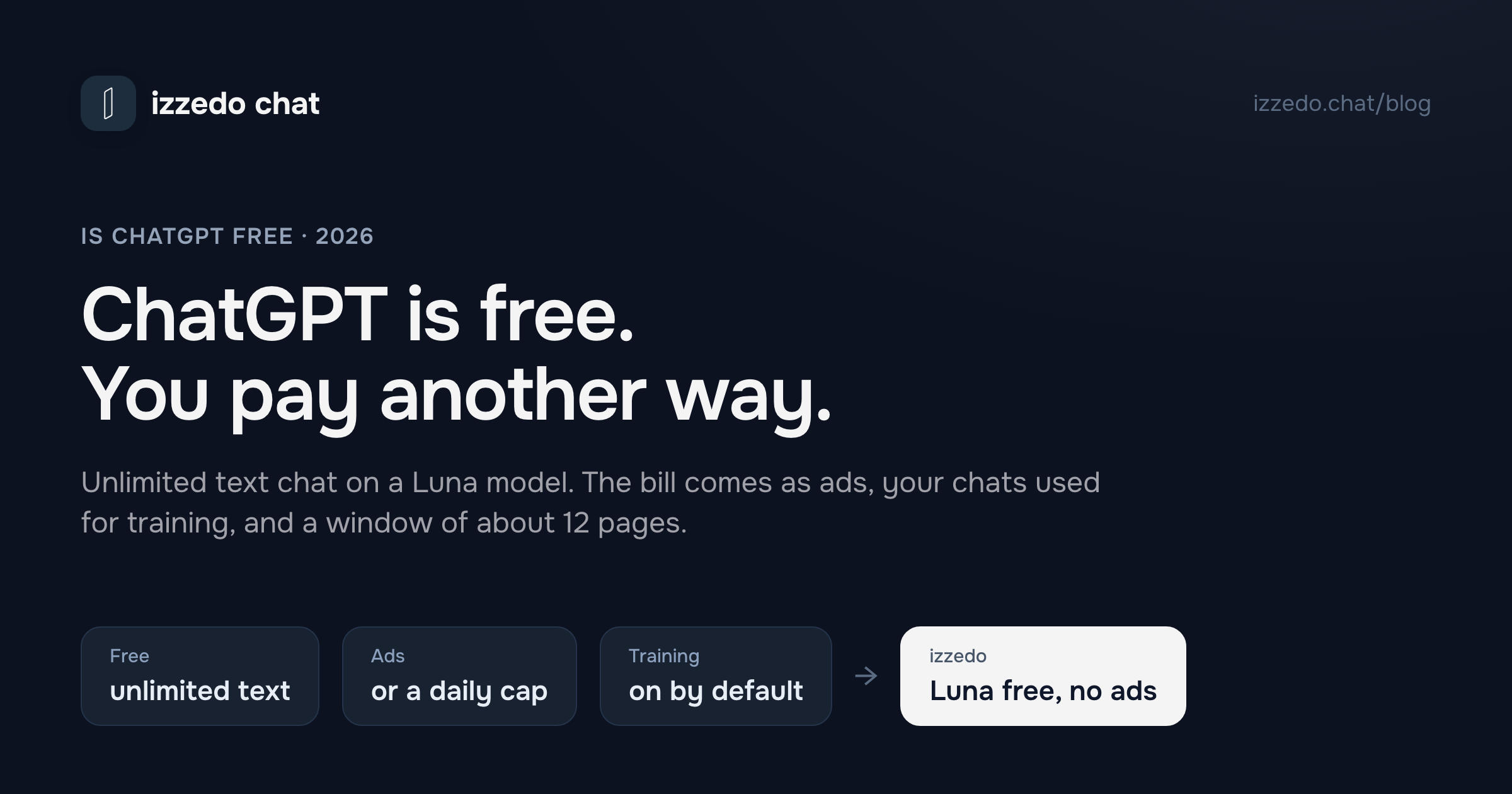
Is ChatGPT Free? Yes. Here's What You Pay Instead of Money
ChatGPT's free plan puts no cap on everyday text chat, which is more than Claude's free plan promises. The bill arrives in other forms: ads in a growing list of countries, your chats used for training unless you switch it off, and OpenAI's lowest-cost model reading about 12 pages at a time.
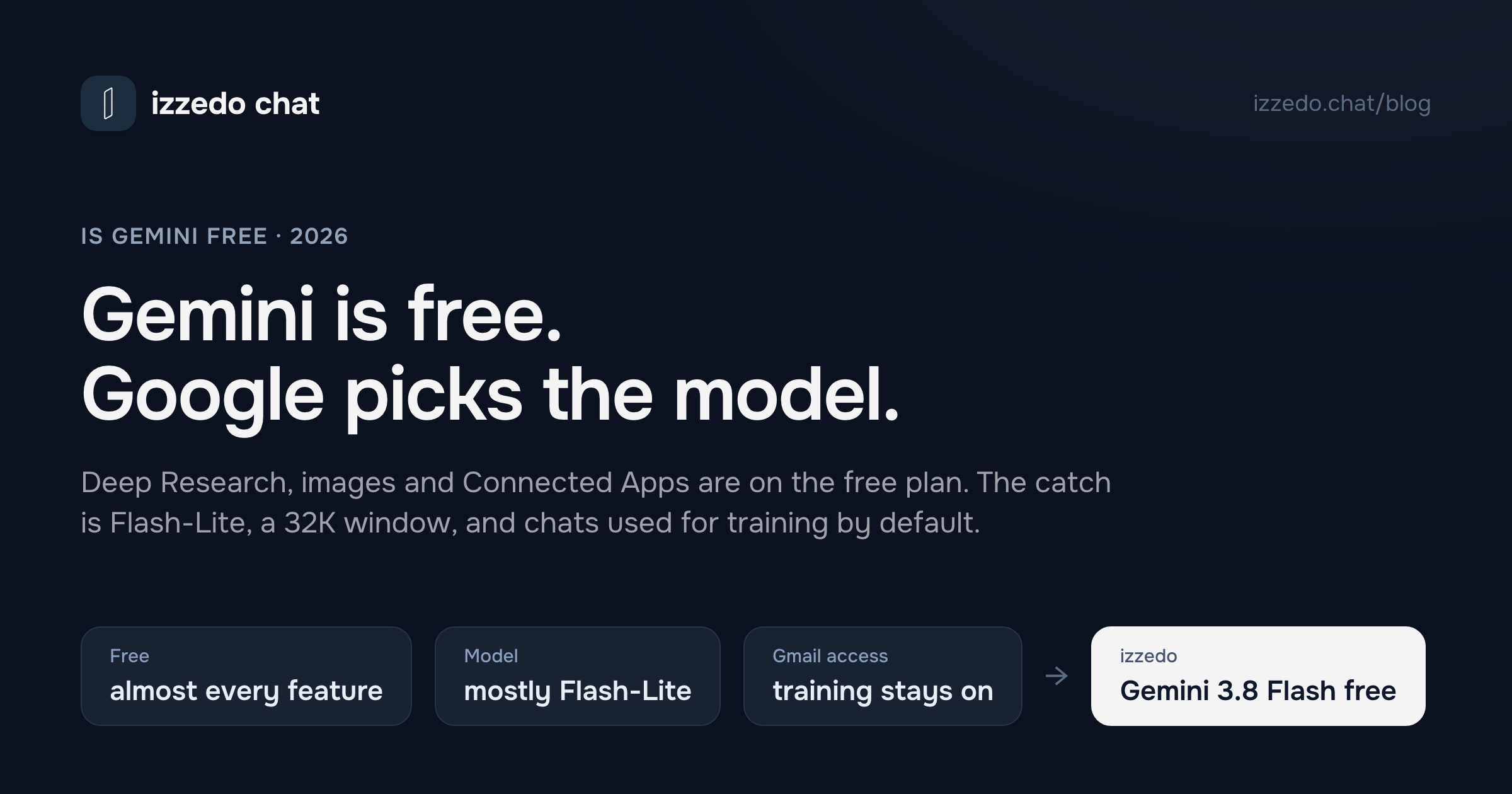
Is Gemini Free? Yes. Google Rations the Model, Not the Features
Google's free plan includes almost every Gemini feature, Deep Research, image generation and Connected Apps among them. What it holds back is the model. Since 9 October most free answers come from Flash-Lite, Google's smallest, and the features that read your Gmail only work while your chats can be used for training.
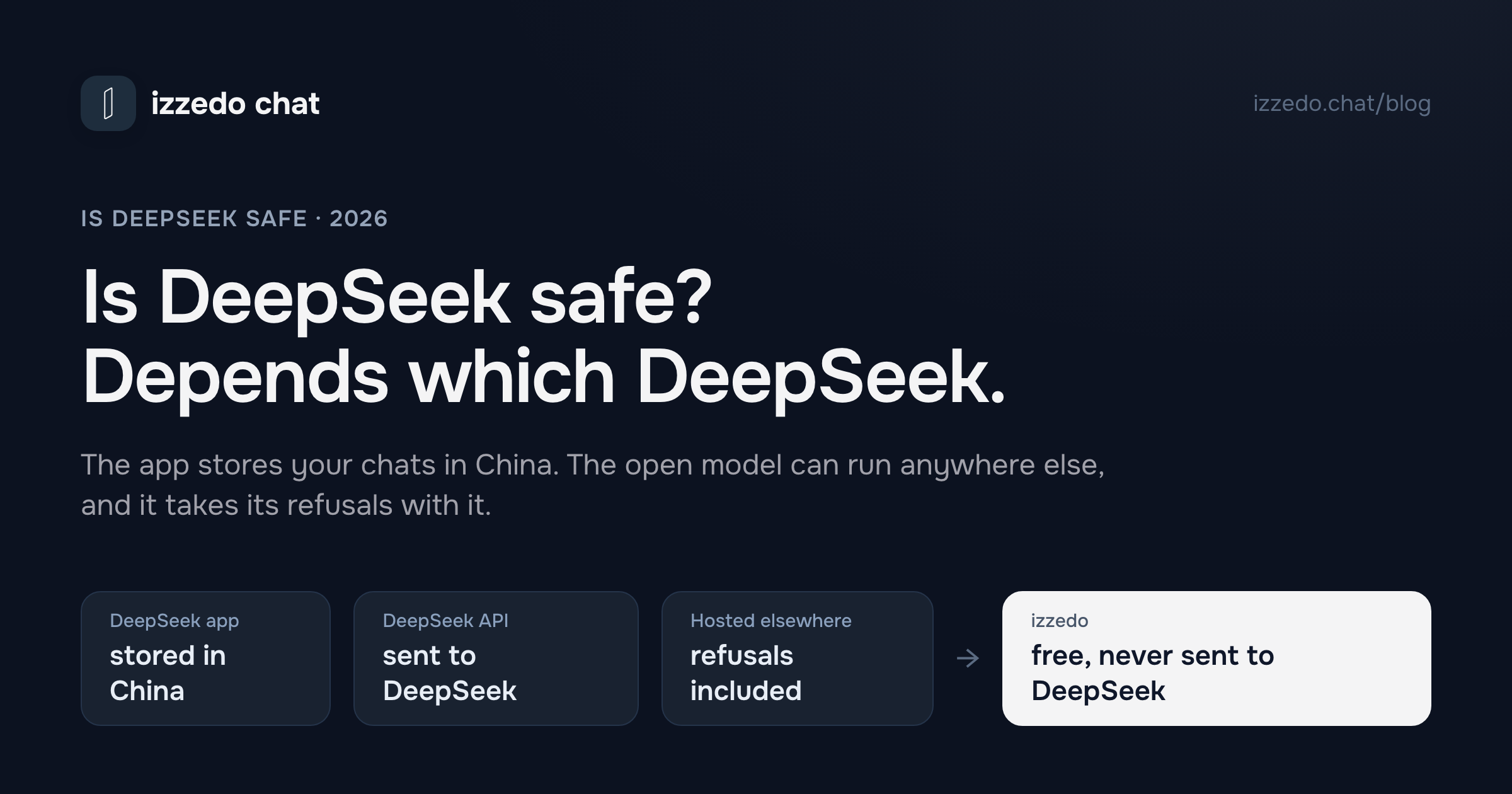
Is DeepSeek Safe? It Depends Which DeepSeek You Use
DeepSeek is three products with three different data deals. The app keeps your chats in China under Chinese law. The open model can run on someone else's servers and never touch DeepSeek. I tested it there, and it still refused to say what happened in Tiananmen Square.
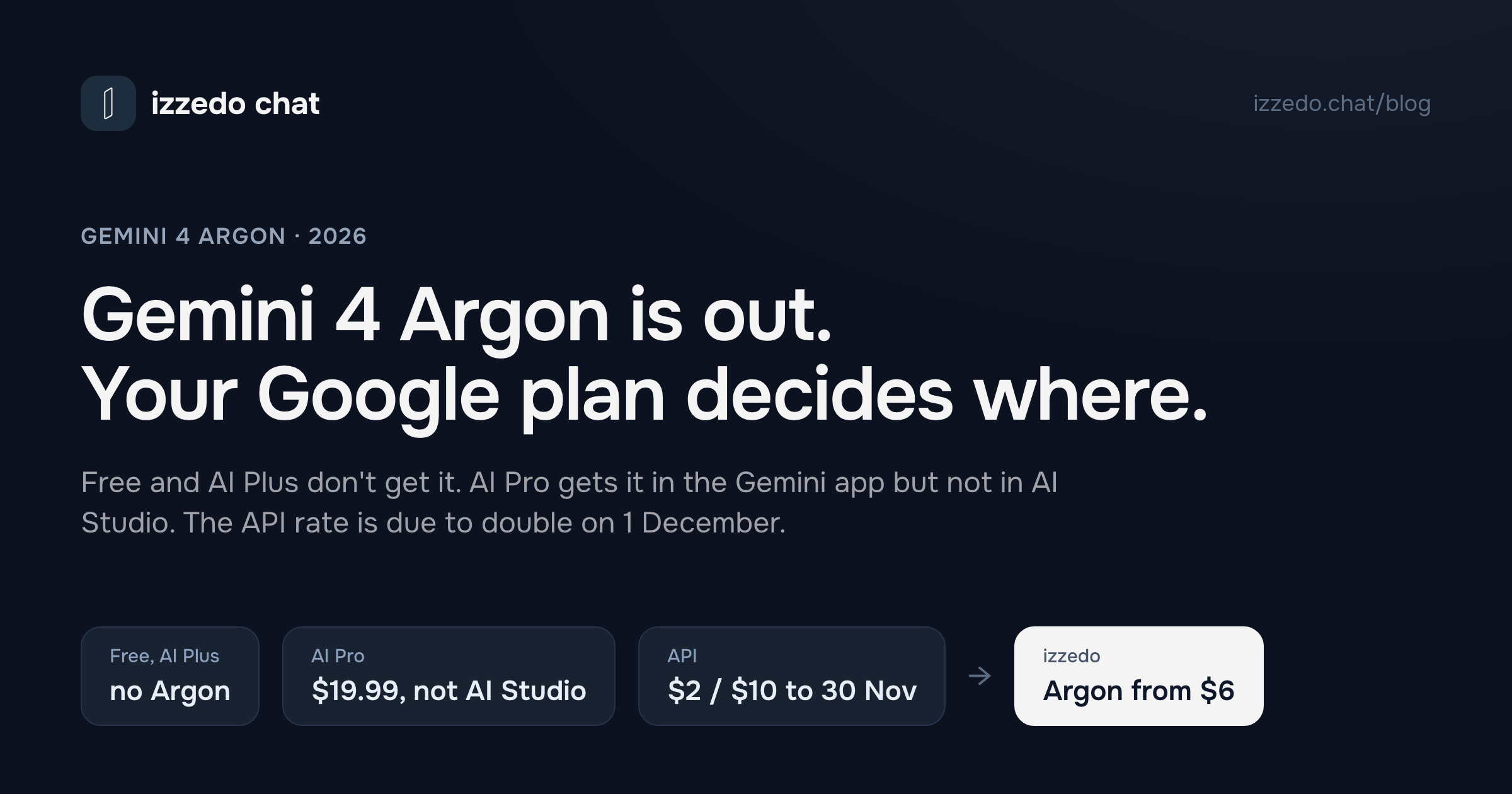
Gemini 4 Argon Is Out: Which Google Plans Get It and What It Costs
Google opened Gemini 4 Argon to paying users on 13 October. In the Gemini app it takes Google AI Pro at $19.99 or Ultra, the free plan and AI Plus don't get it, and AI Pro doesn't unlock it in AI Studio. On the API it costs $2 and $10 per million tokens until 30 November, and Google's pricing page doubles both on 1 December.
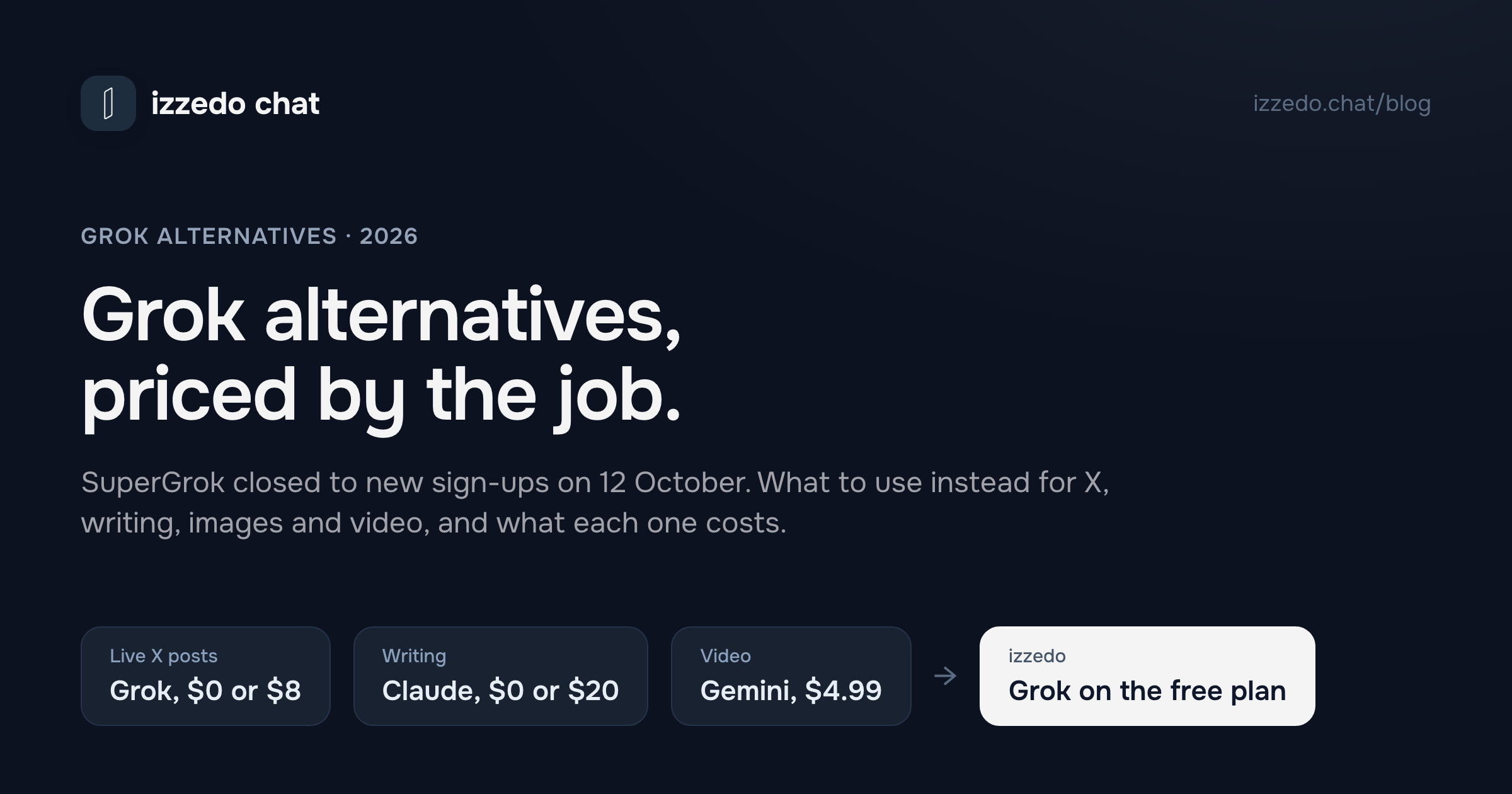
Grok Alternatives in 2026: What to Use Instead, Priced by the Job
On 12 October xAI replaced SuperGrok with The X Subscription, and its $30 tier now bundles a coding agent and X Premium+. If you only used Grok for one job, here is what to use instead for live news, writing, images and video, with a price for each.
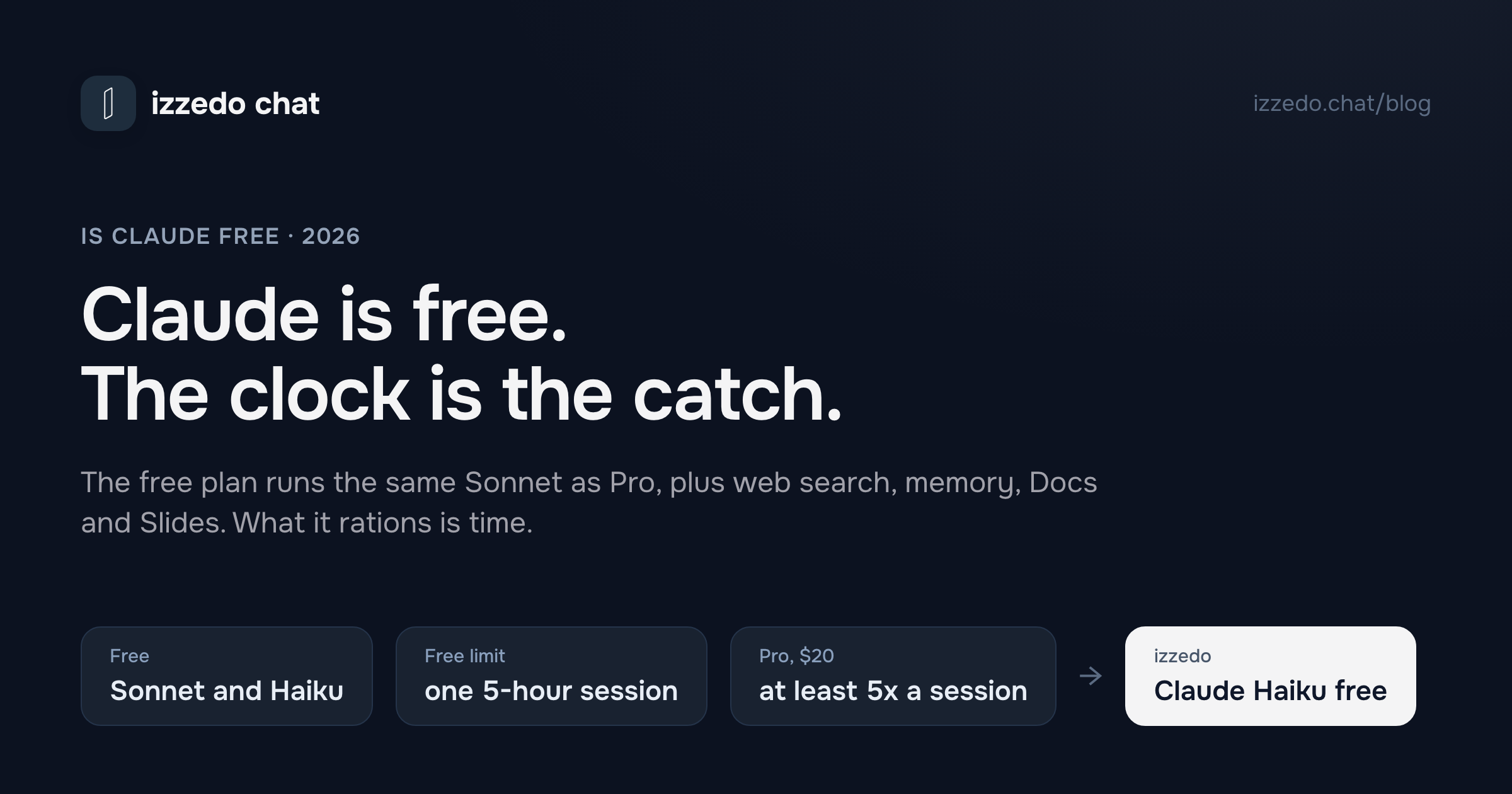
Is Claude Free? Yes, and the Free Plan Runs the Same Sonnet as Pro
Claude's free plan is bigger than its reputation. It runs the same Sonnet model a $20 Pro account gets, and since September it makes documents, slide decks and designs. What it rations is time: one five-hour session clock that Anthropic sizes for everyday questions, and no way to buy more without upgrading.
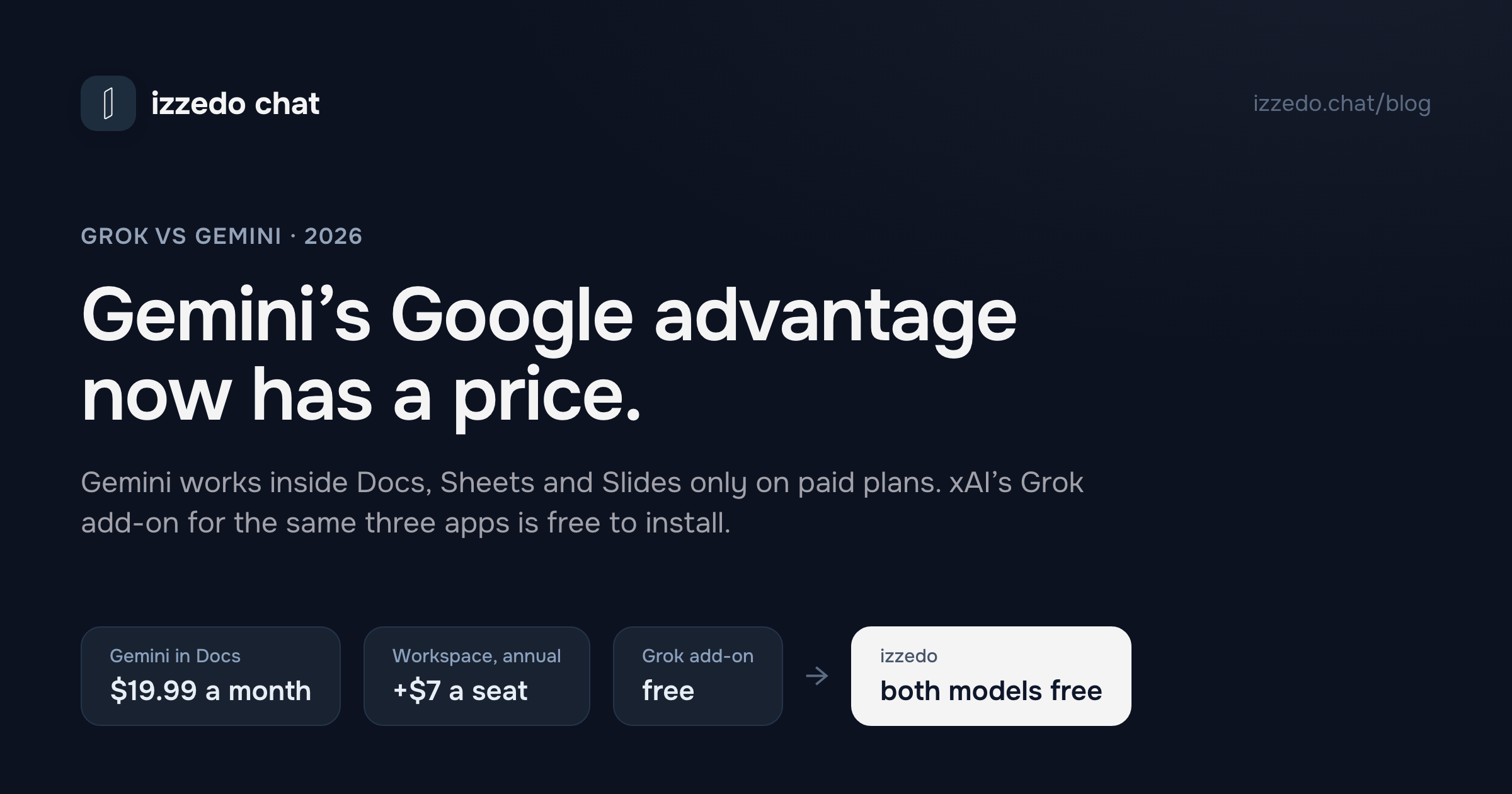
Grok vs Gemini: Gemini's Google Advantage Now Has a Price
The usual verdict is to pick Gemini if you live in Google. That verdict now has a price. Gemini works inside Docs, Sheets and Slides only from Google AI Pro at $19.99 or a Workspace Business Standard seat upward, while xAI's Grok add-on for the same three apps is free to install. And since 9 October, free Gemini sends most prompts to its smallest model.
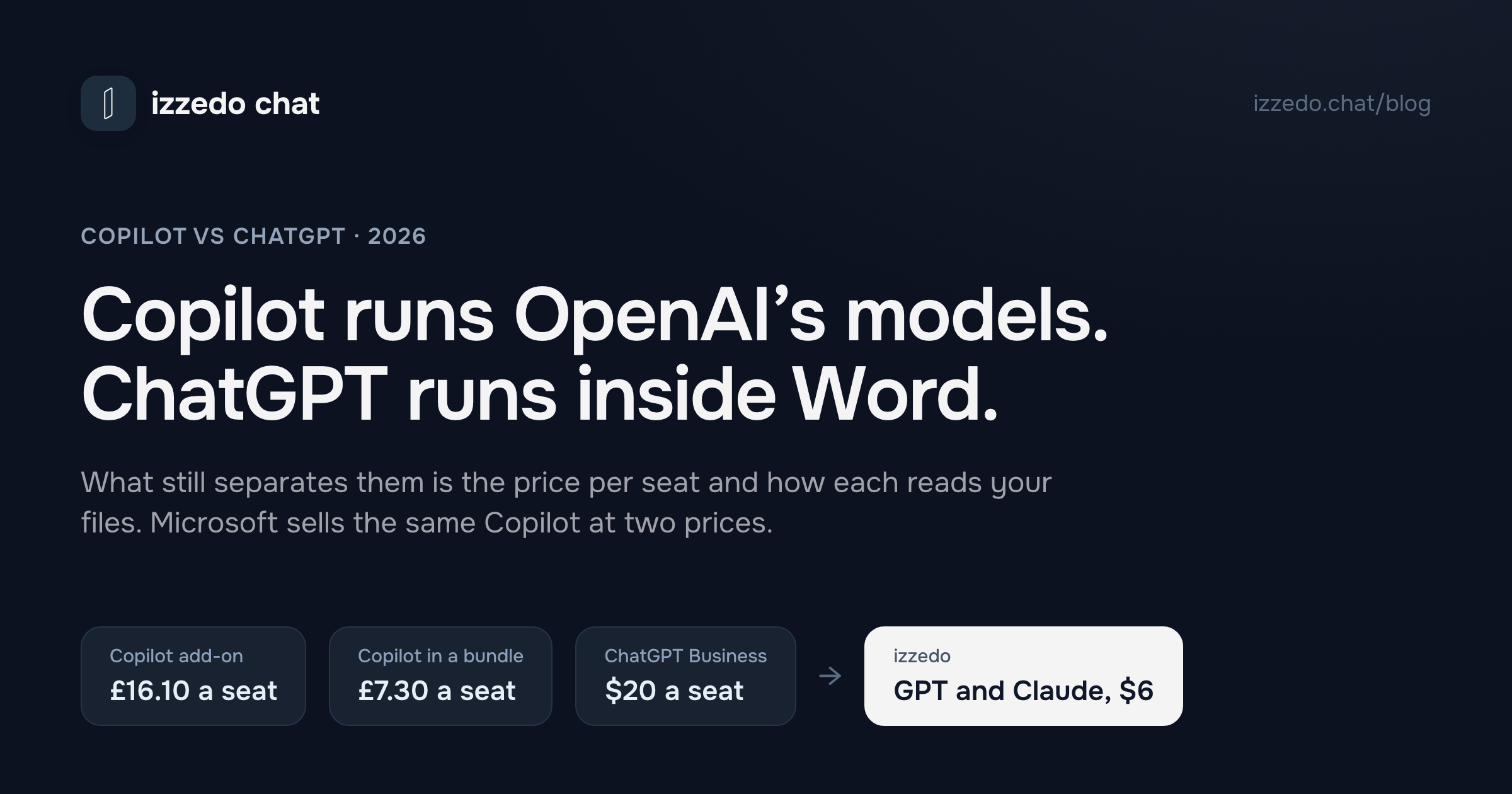
Copilot vs ChatGPT: Copilot Runs OpenAI's Models Now, and ChatGPT Runs Inside Word
Since July, OpenAI itself runs GPT models inside Microsoft's Copilot, and ChatGPT now works inside Word, Excel and PowerPoint and connects to Outlook and SharePoint. What still separates them is what you already pay Microsoft and how each one finds your files. In the UK, Microsoft's bundle adds Copilot to Business Standard for £7.30 a seat, against £16.10 for the add-on.
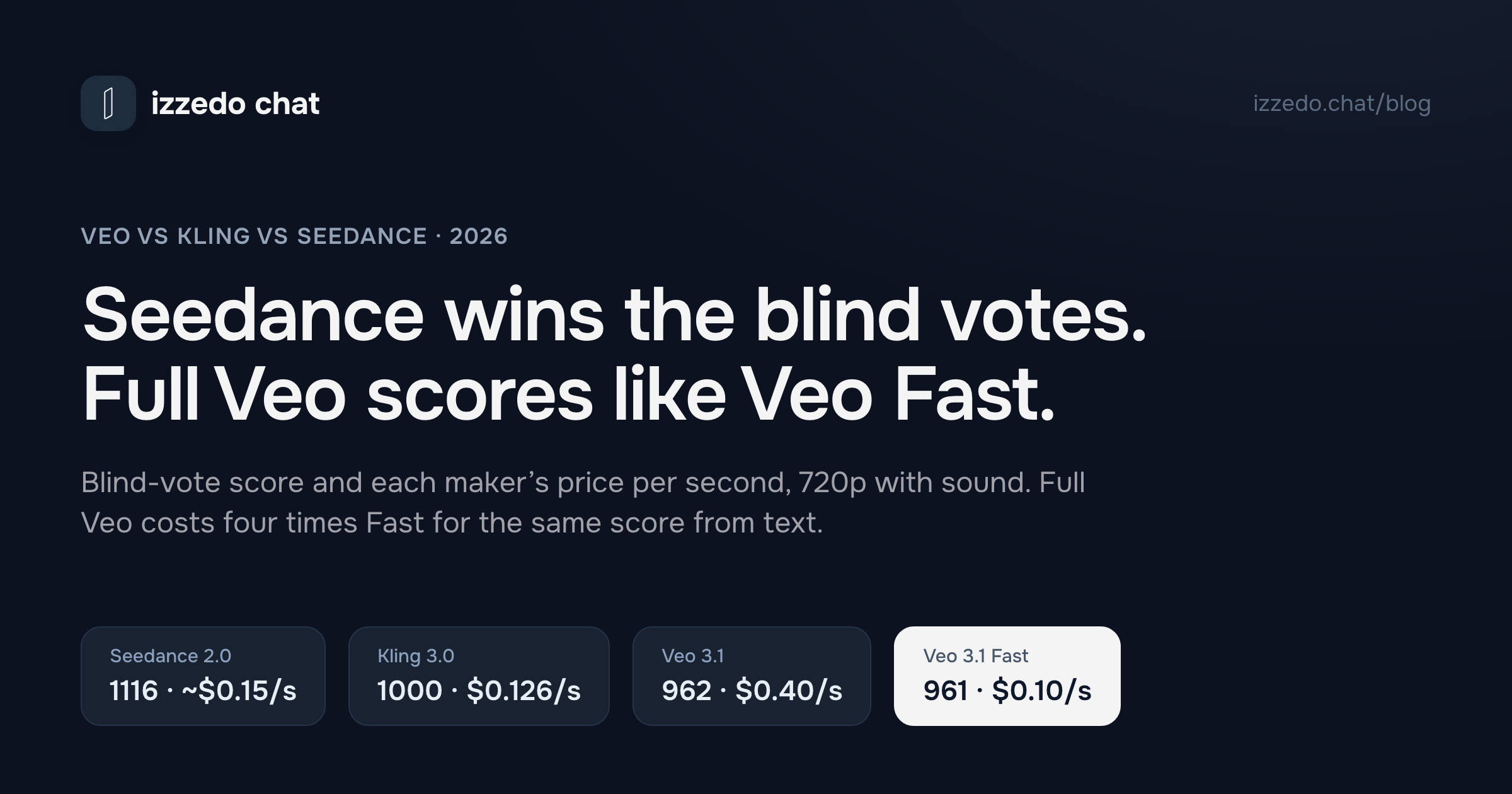
Veo vs Kling vs Seedance: Seedance Wins the Blind Votes, and Veo's $0.40 Tier Scores Like Its $0.10 One
In blind votes Seedance beats Kling and Veo whether you start from text or a photo. Full-price Veo 3.1 costs four times its Fast tier for the same score from text, and Seedance costs twice as much through the API hosts most apps use as it does from ByteDance.
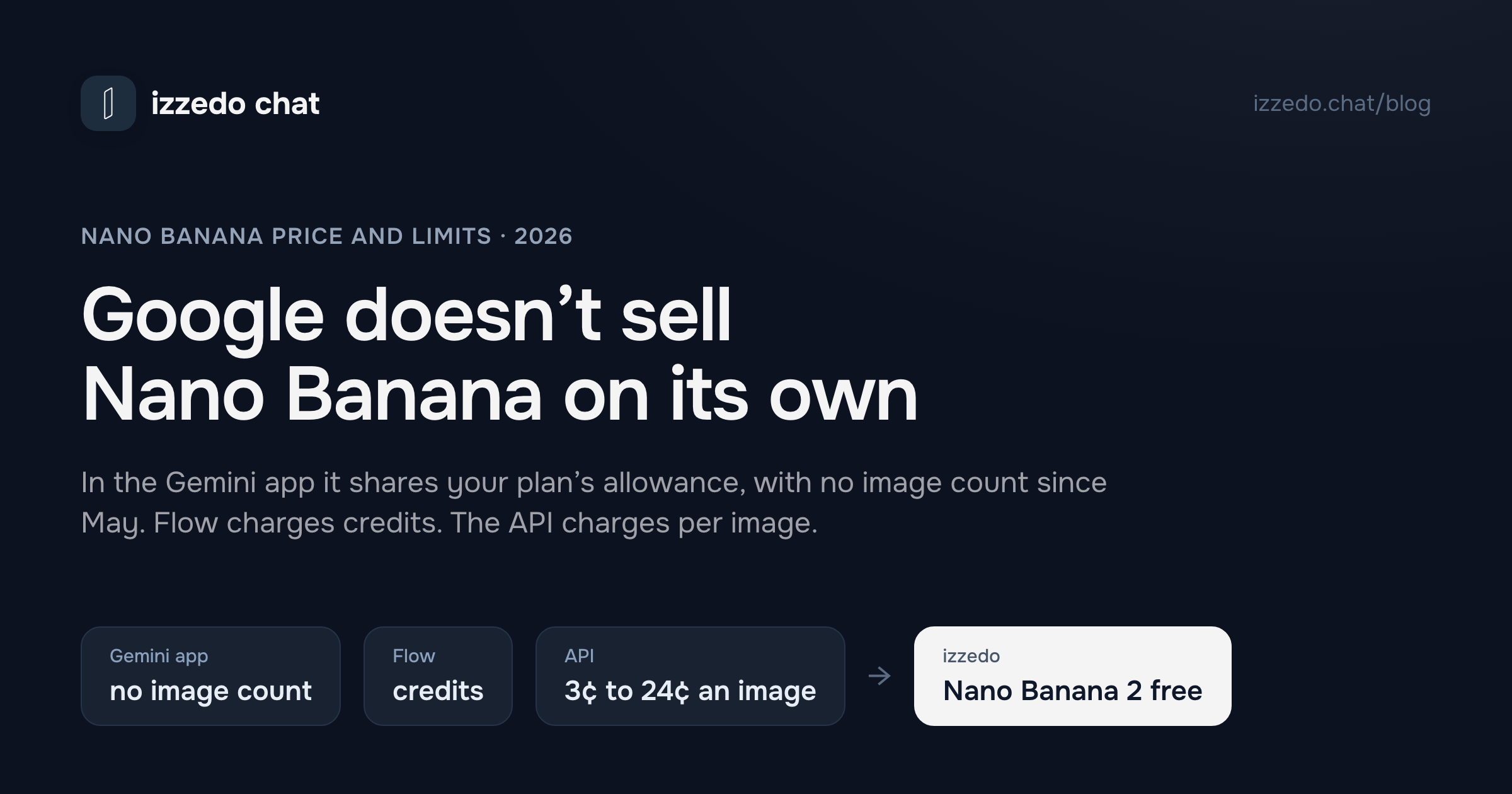
Nano Banana Price and Limits: Google Doesn't Sell It on Its Own
Google doesn't sell Nano Banana on its own. It comes with a Gemini plan, with Flow credits or with API tokens, and since 17 May the Gemini app publishes no image count at all. Here's what each route costs, what the old daily limits were, and how the price compares with Midjourney.
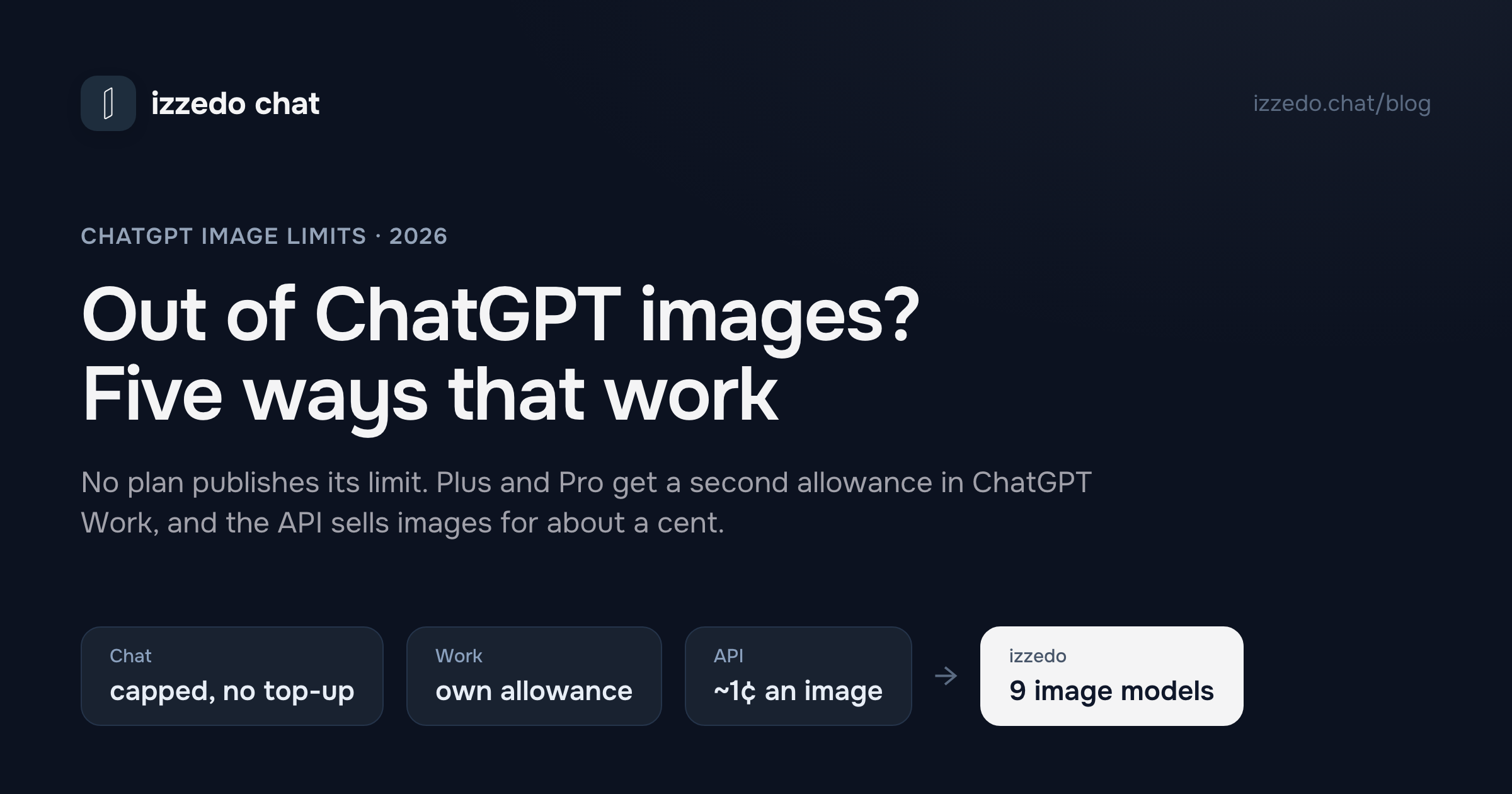
How to Get Past the ChatGPT Image Limit, and What Won't Work
OpenAI doesn't publish an image limit for any ChatGPT plan. Here's what each plan gets, the separate image allowance Plus and Pro have in ChatGPT Work, what an image costs through the API, and which workarounds break OpenAI's terms.
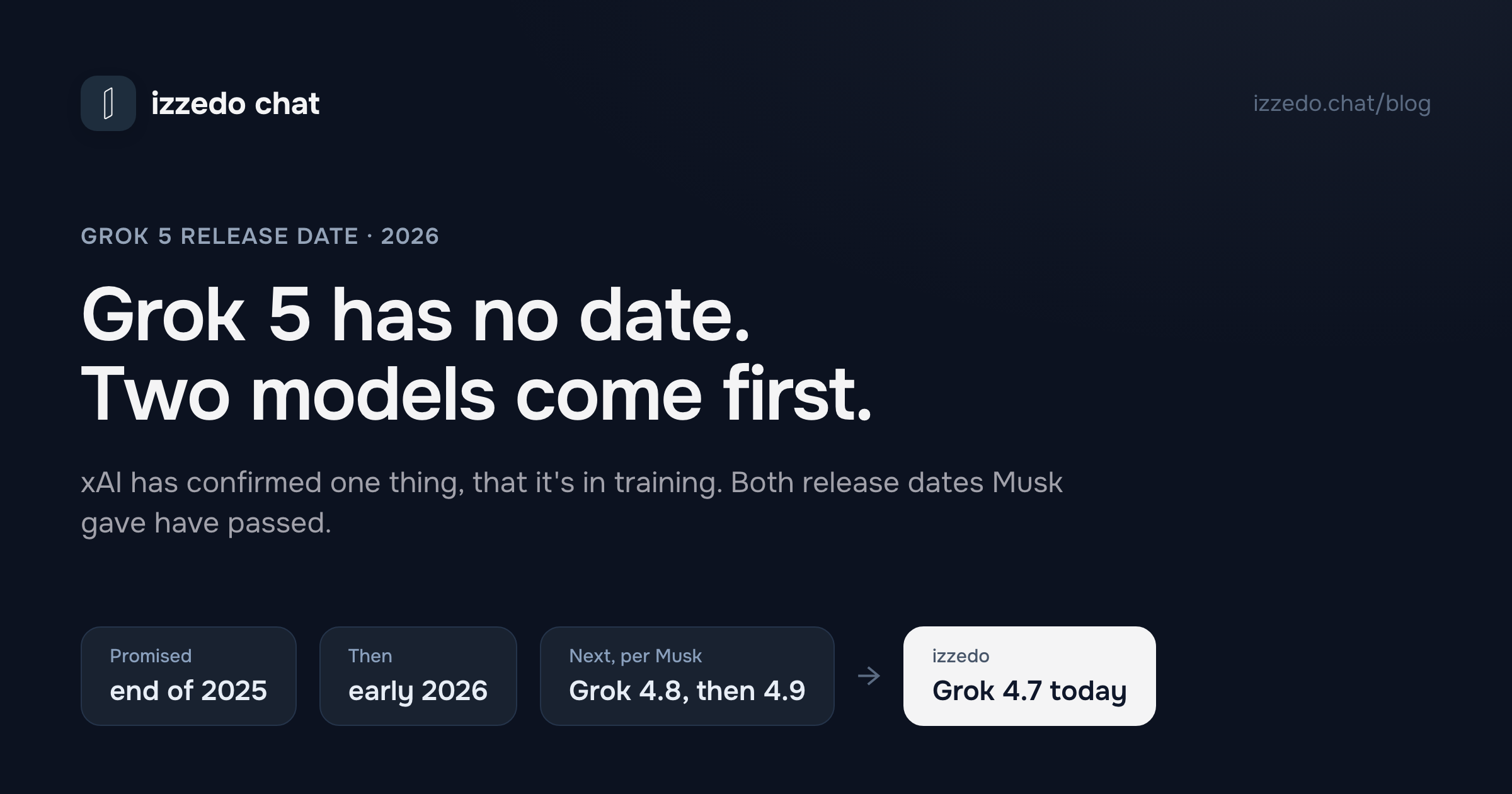
Grok 5 Release Date: What xAI Has Confirmed, and What Comes First
Grok 5 isn't out and has no release date. xAI's own site says one thing about it, that it's in training. Both of Musk's dates have passed, and his latest roadmap puts Grok 4.8 and 4.9 in front of it.
AI Comparisons (2026): Every Head-to-Head on One Page, With the Verdict and the Price Question
Twenty-five AI matchups on one page, from Claude vs ChatGPT to Claude Pro vs Max. Each row has the one-line verdict from the full post and the price question that actually separates the two, which is rarely the sticker price.
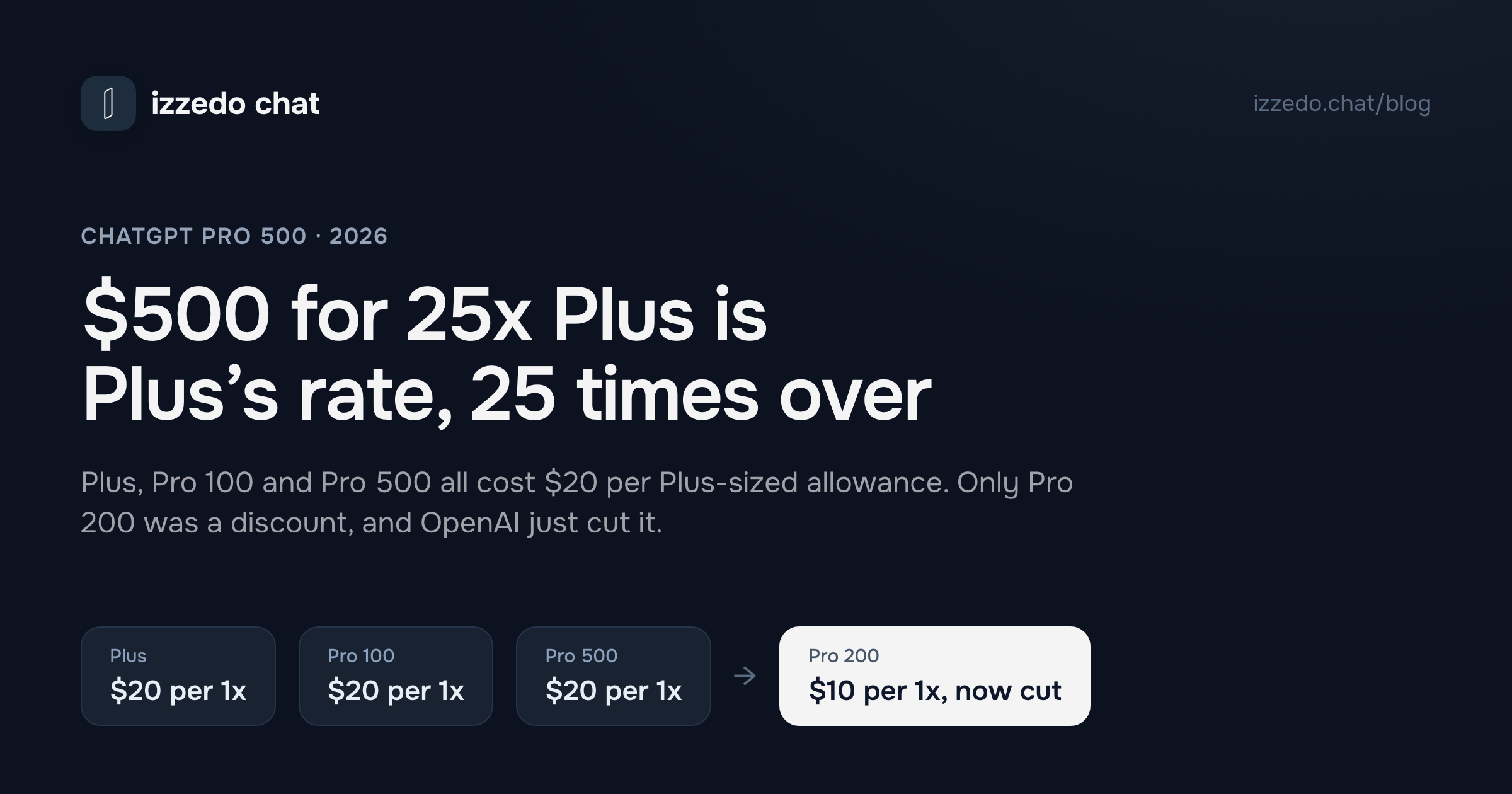
ChatGPT Pro 500: What $500 a Month Buys, and Why It Costs the Same per Unit as Plus
OpenAI's new Pro 500 plan costs $500 a month for 25 times Plus's usage and a faster version of its newest model. Divide it out and it charges exactly what Plus does per unit. The only discount on the ladder was Pro 200, and OpenAI cut that one for new subscribers on the same day.
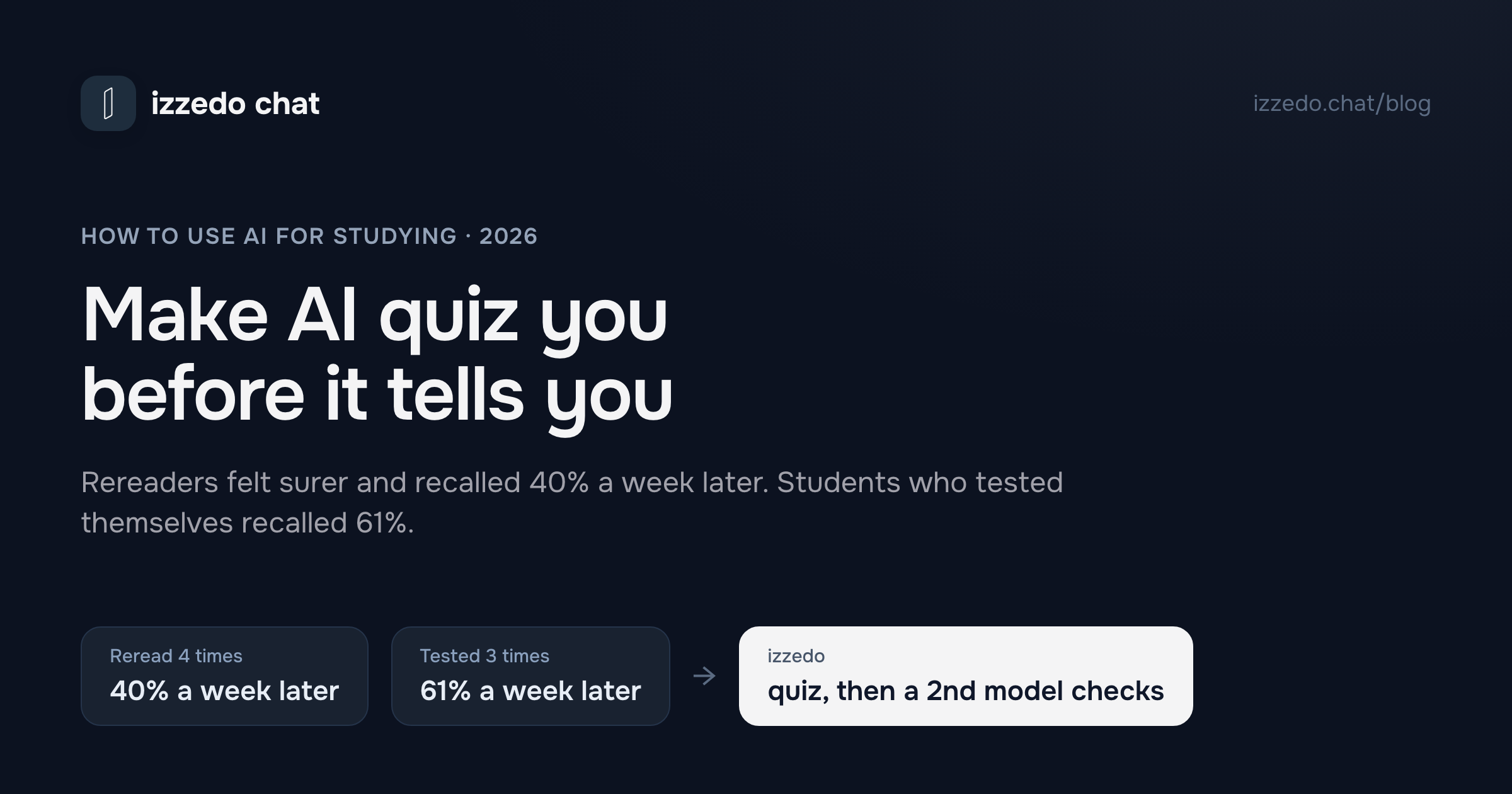
How to Use AI for Studying: Make It Quiz You Before It Tells You
AI makes the study habits that feel productive effortless, and those are the ones the research rates lowest. Here's a six-step method built on the studies, what every vendor's study mode actually does, and the one thing none of them schedules for you.
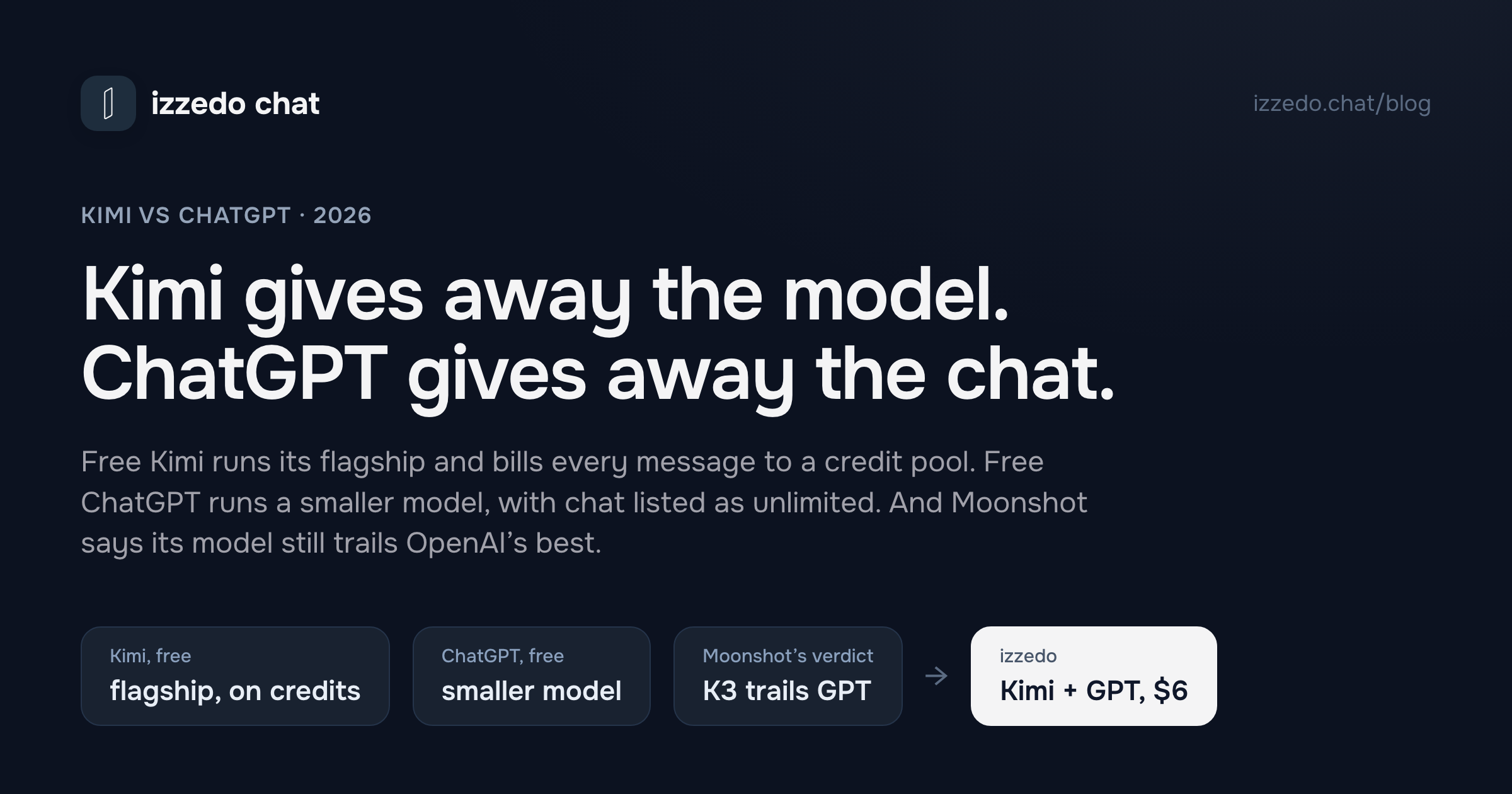
Kimi vs ChatGPT: Kimi Gives Away the Model, ChatGPT Gives Away the Chat
Kimi puts its strongest model on the free plan and bills every message, chat included, against one pool of credits. ChatGPT lists everyday chat as unlimited and charges for its better models. Kimi's new K3.1 Pro, released on 23 October, now scores within three points of the top closed model on Artificial Analysis's index. Here is what each one sells, what it costs, and which to use for what.
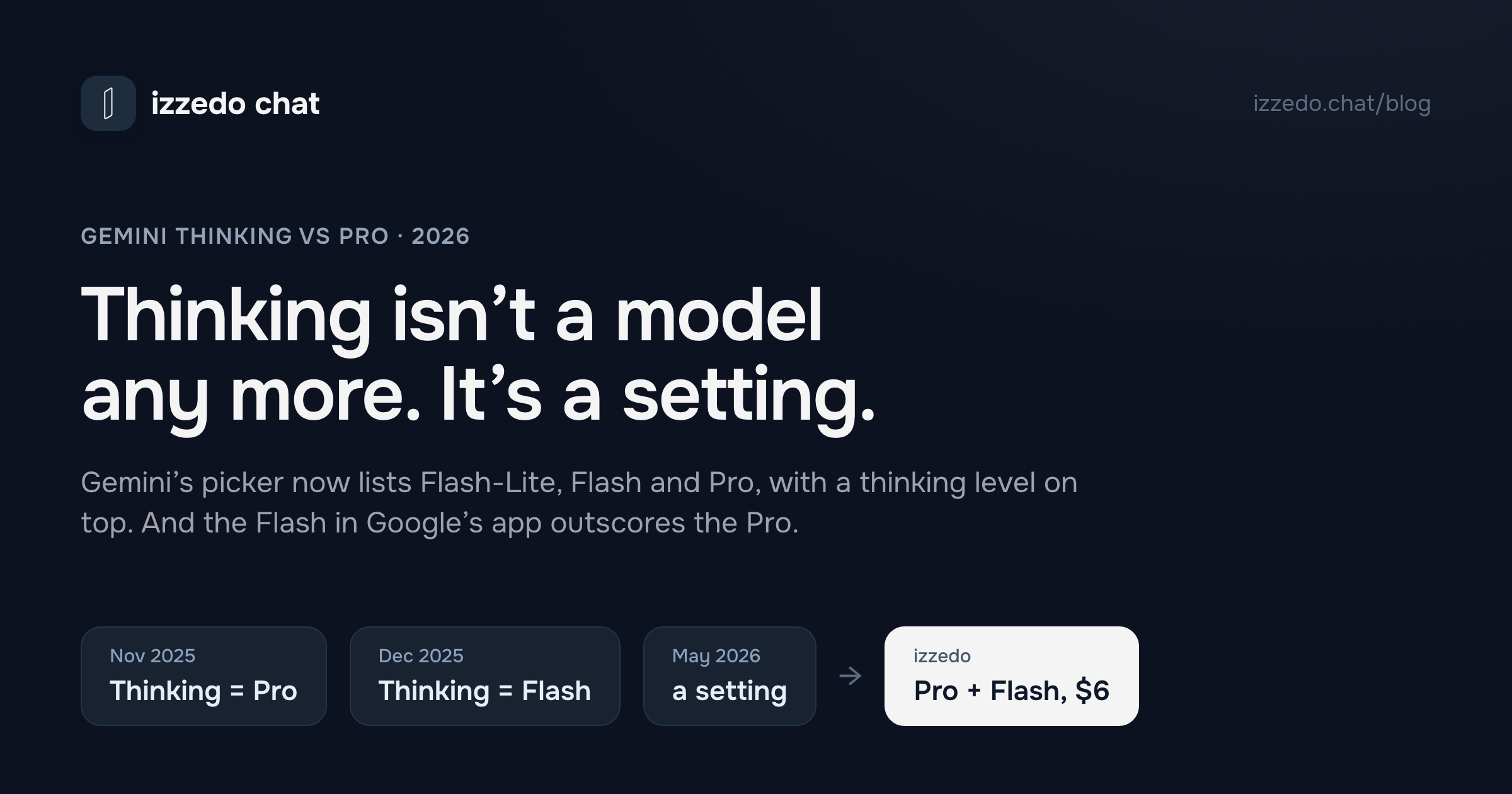
Gemini Thinking vs Pro: Thinking Is a Setting Now, Not a Model
Thinking and Pro used to sit side by side in Gemini's model picker, and Thinking got three times Pro's daily prompts. Since 17 May 2026 the picker lists Flash-Lite, Flash and Pro, and thinking is a level you set on top of any of them. Here is what each option meant, what replaced it, and why the Flash now outscores the Pro.
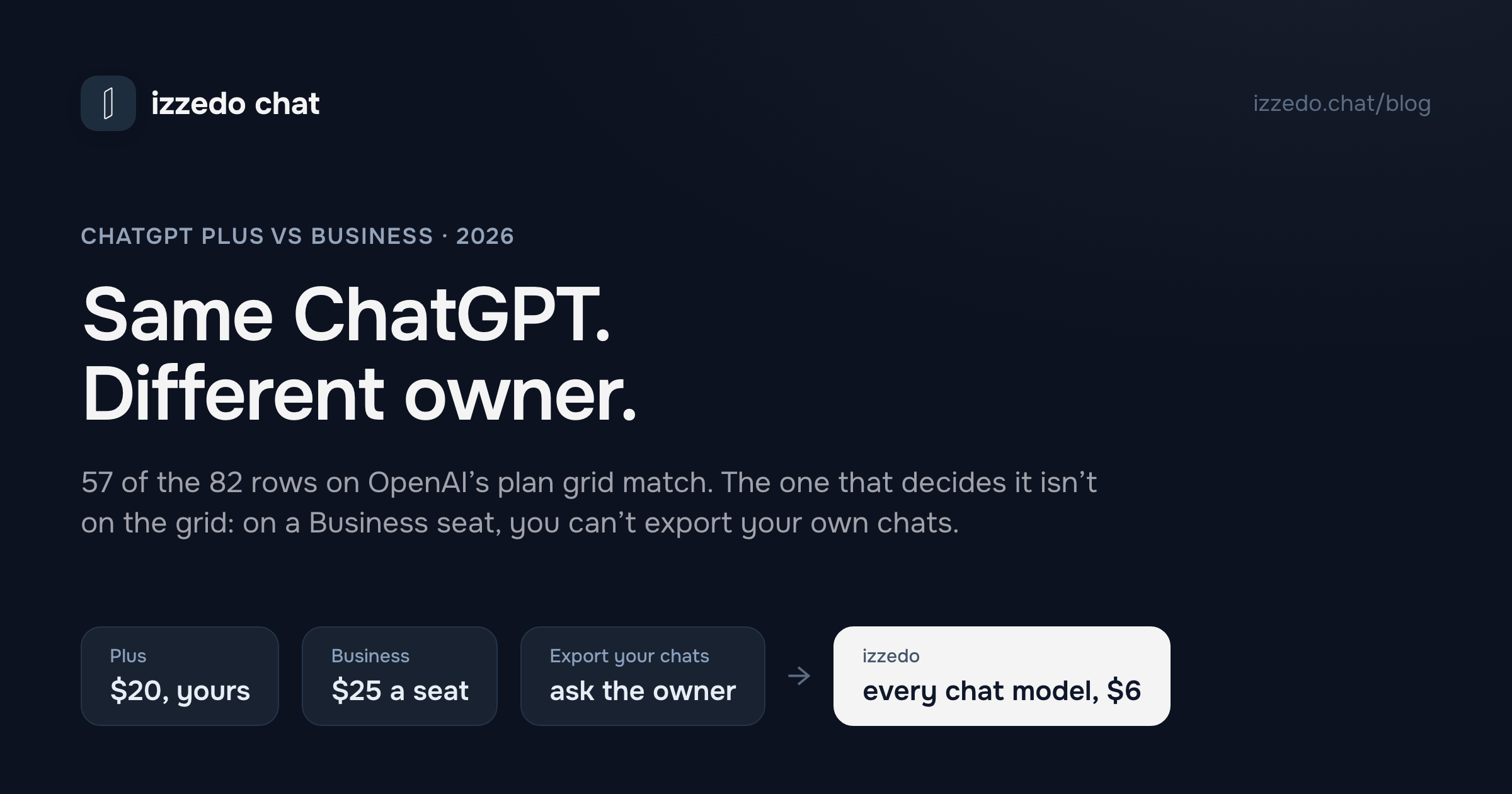
ChatGPT Plus vs Business: Same ChatGPT, Different Owner
A ChatGPT Business seat is $25 a month to Plus's $20, and on OpenAI's own feature grid the two plans match on 57 of 82 rows. Eleven of the rows that differ are admin tools, two are memory features Business doesn't have yet, and the difference that matters most isn't on the grid at all. On Business, you can't export your own chats.
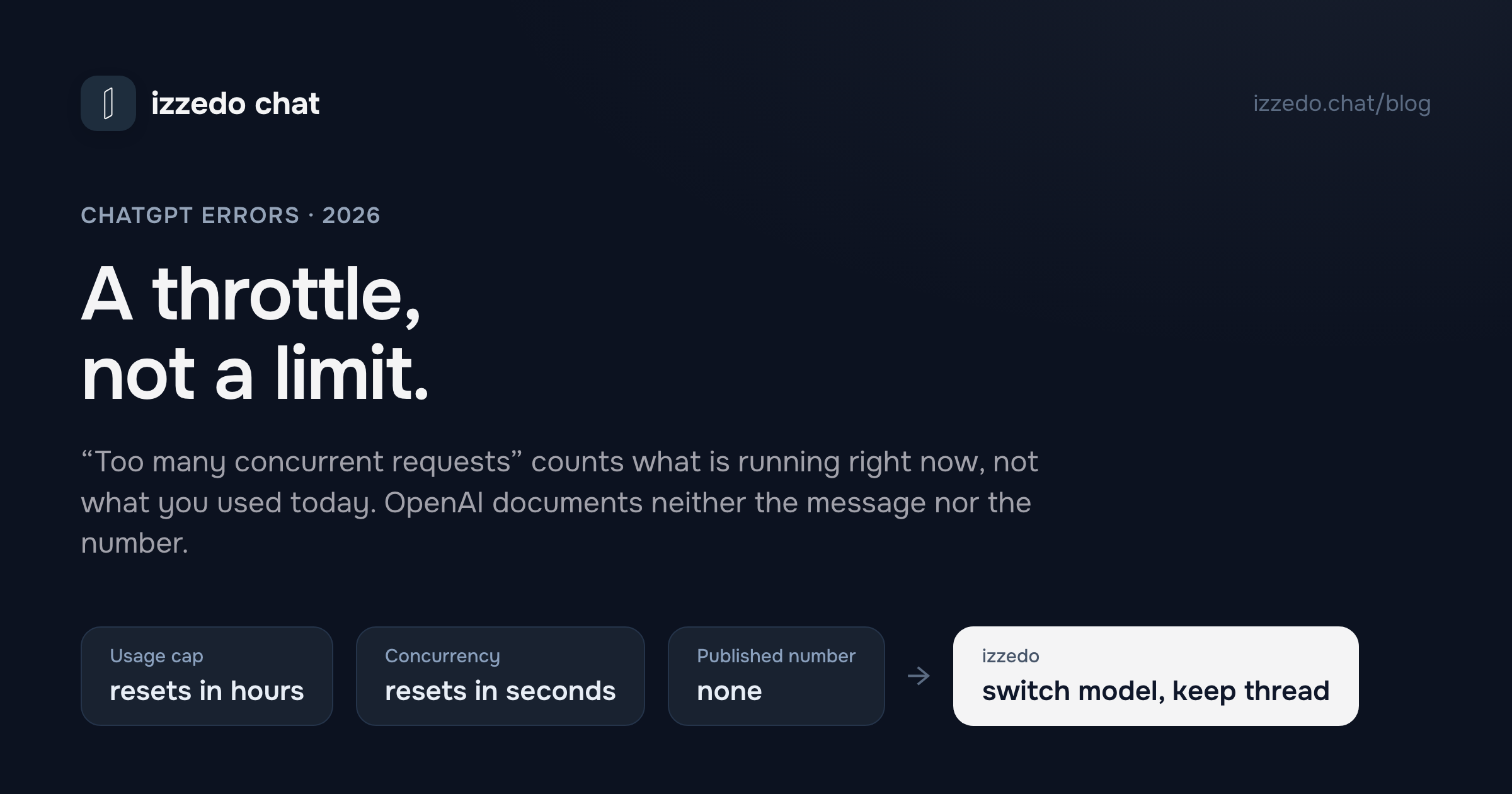
ChatGPT "Too Many Concurrent Requests": What the Concurrency Limit Is and How to Clear It
The concurrency error is the one ChatGPT message that has nothing to do with how much you have used. It counts how many things are running at once, it resets in seconds, and OpenAI does not document it anywhere. Here is what trips it, what clears it, and the one case where nothing on your side will help.
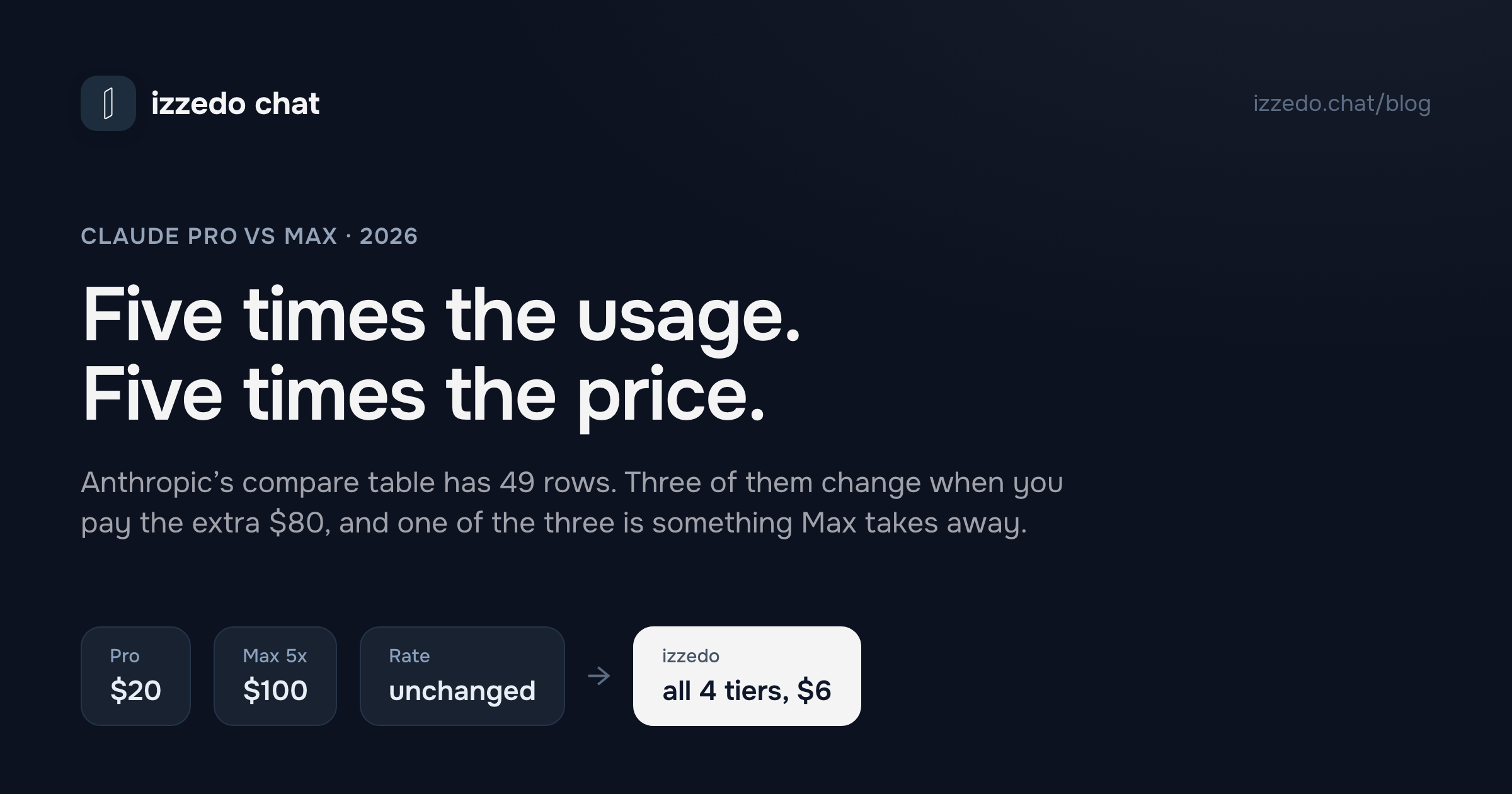
Claude Pro vs Max: Is 5x the Usage Worth 5x the Price?
Max 5x costs five times what Pro costs and gives you five times the usage, which means the $100 plan charges the exact same rate as the $20 one. Here is what the extra $80 actually changes, why the multiplier only applies to one of Claude's two clocks, the one row on the pricing table worth real money to people who chat, and the new one that only pays off if you build on Anthropic's API.
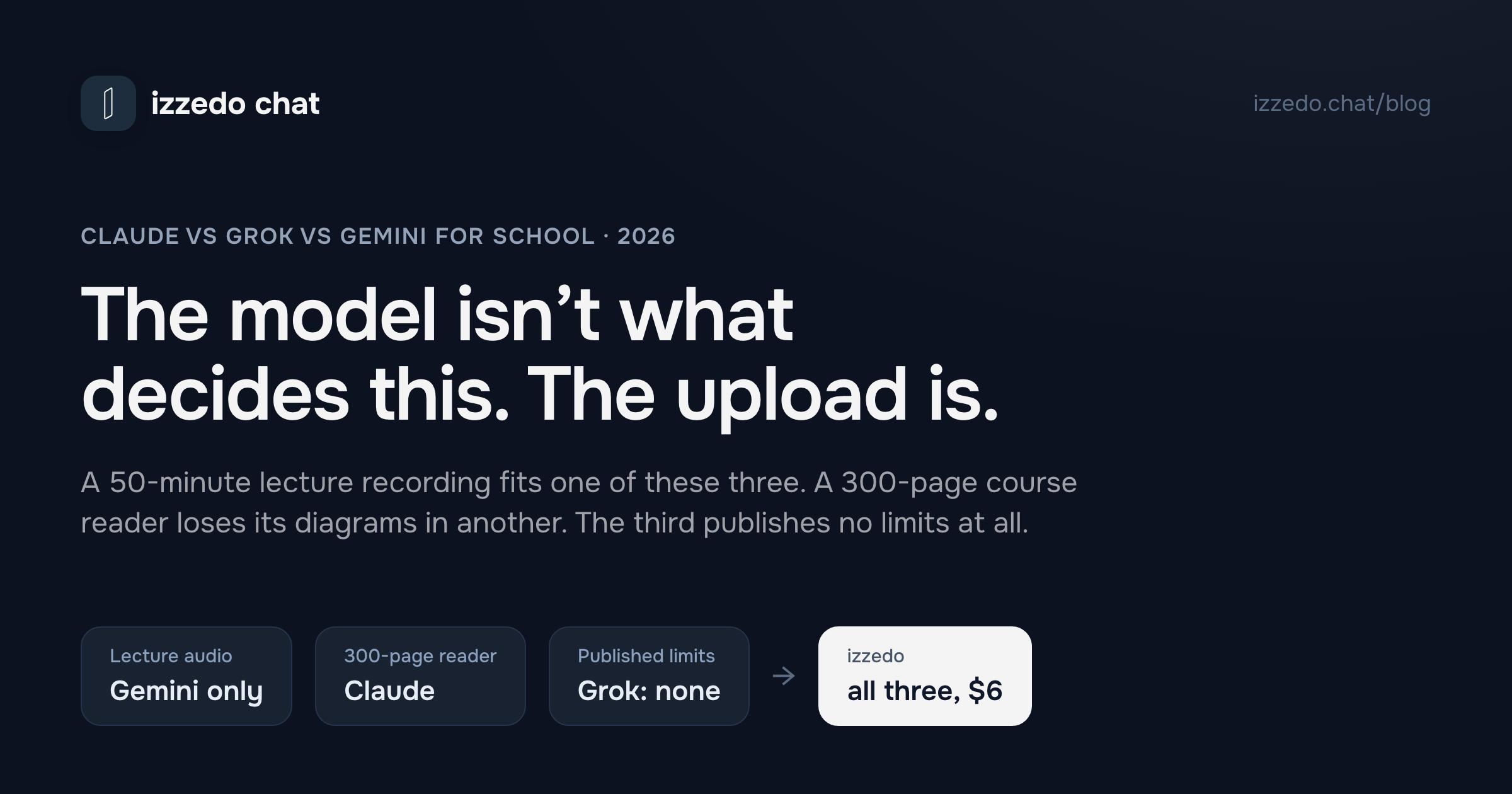
Claude vs Grok vs Gemini for School: The Upload Decides It
Every three-way comparison of these models answers a benchmark question. School asks a different one. Your coursework arrives as a 50-minute recording, a 300-page reader and a slide deck, and only one of these three will take the recording at all. Here is what each one accepts, who built a study product, and whose rules mention your homework.
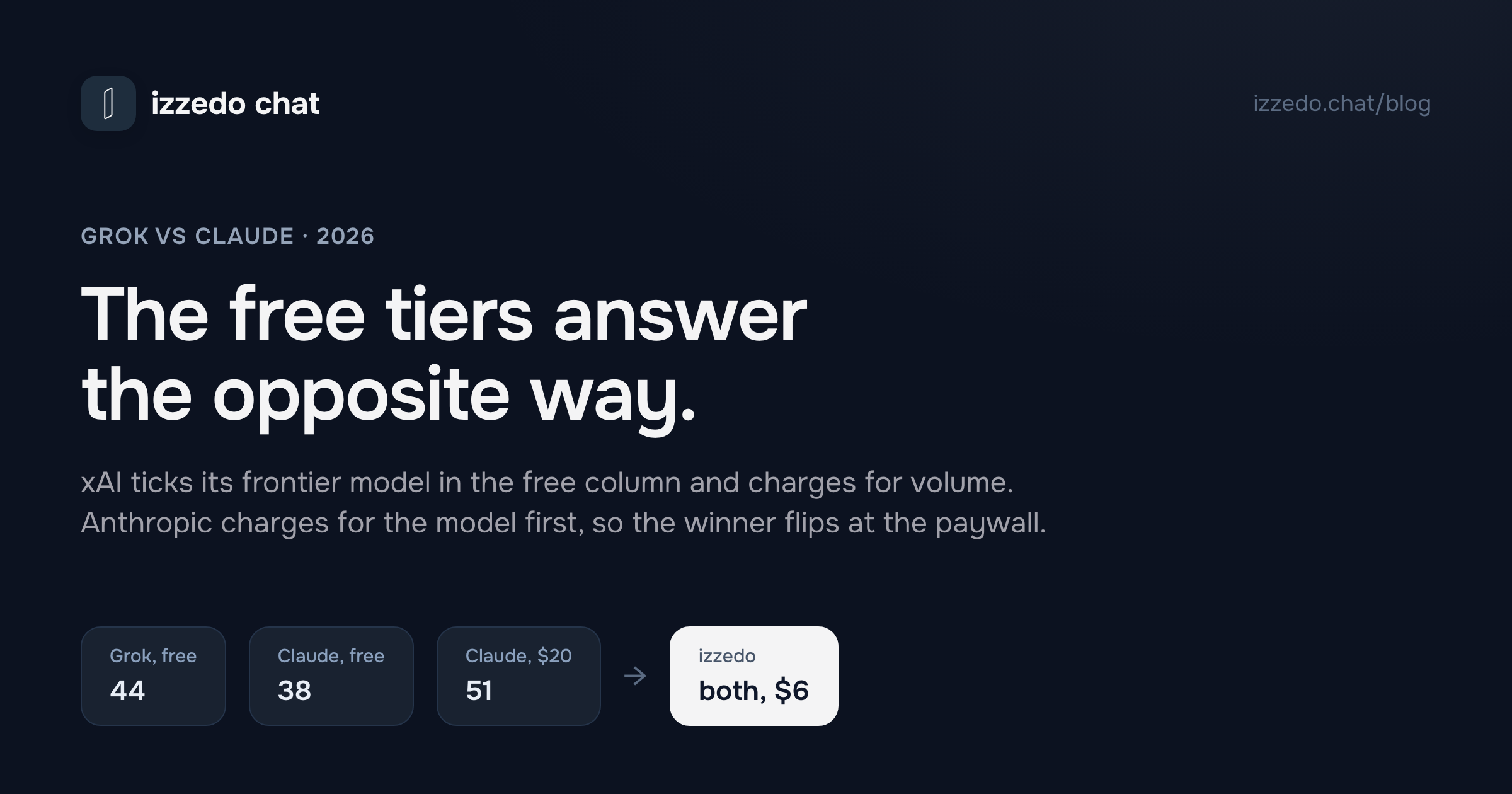
Grok vs Claude: The Answer Flips When You Pay
Every Grok vs Claude comparison benchmarks the flagship models. Almost nobody is using those. Read each company's own plan table instead and the answer changes twice: xAI's table put its best model in the free column and charged for volume, Anthropic charges for the model first. So free Grok beat free Claude, and paid Claude beats paid Grok. Updated for xAI's new plans, which start at $8.
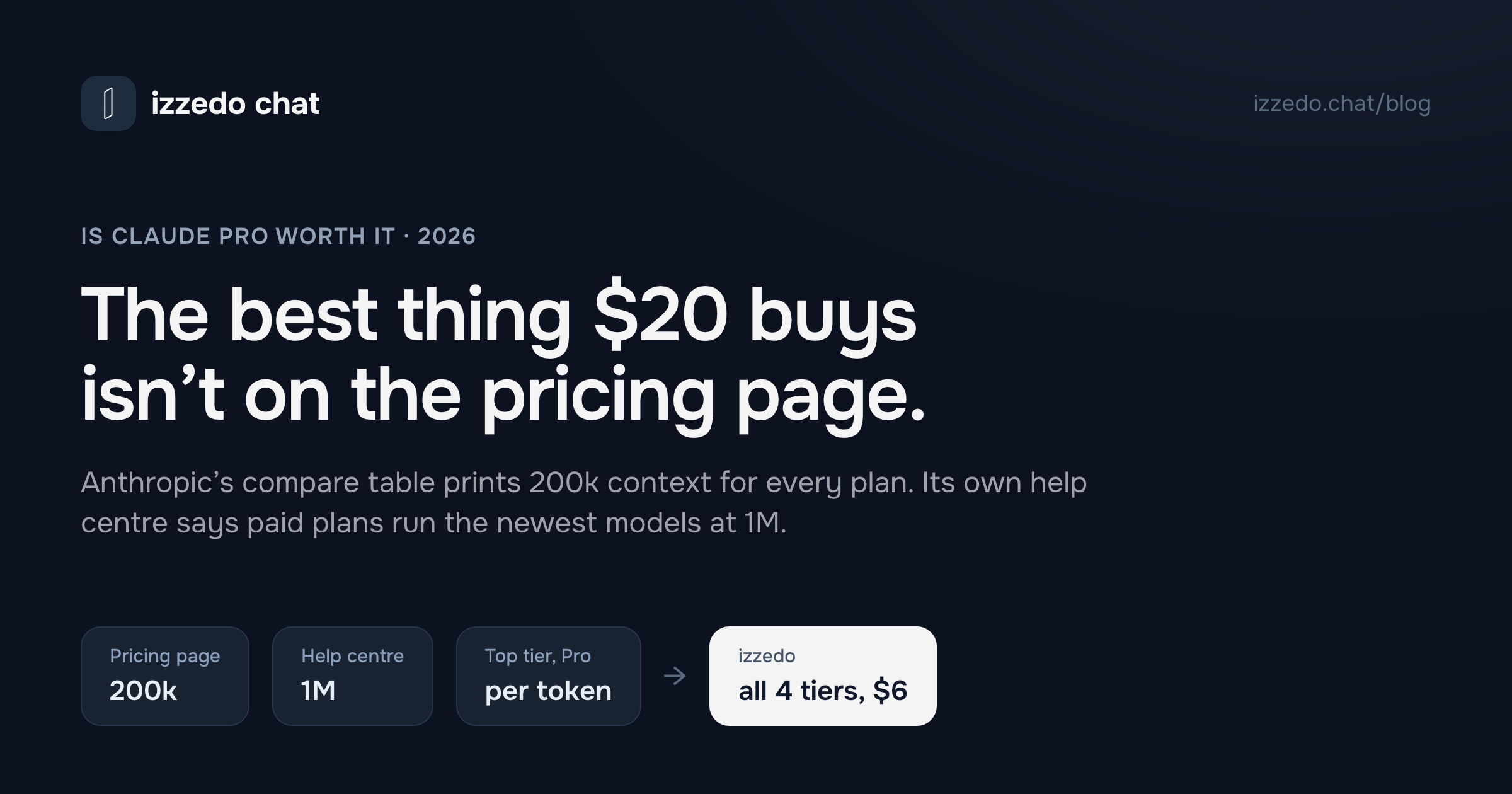
Is Claude Pro Worth It? What $20 Actually Buys
Anthropic's comparison table has 24 feature rows. Twelve are already yes on the free plan, three are no on every consumer plan including $200 Max, and nine flip when you pay. Here is what those nine are worth, what the pricing page gets wrong about context, and why the annual plan is a bet you cannot unwind outside Europe.
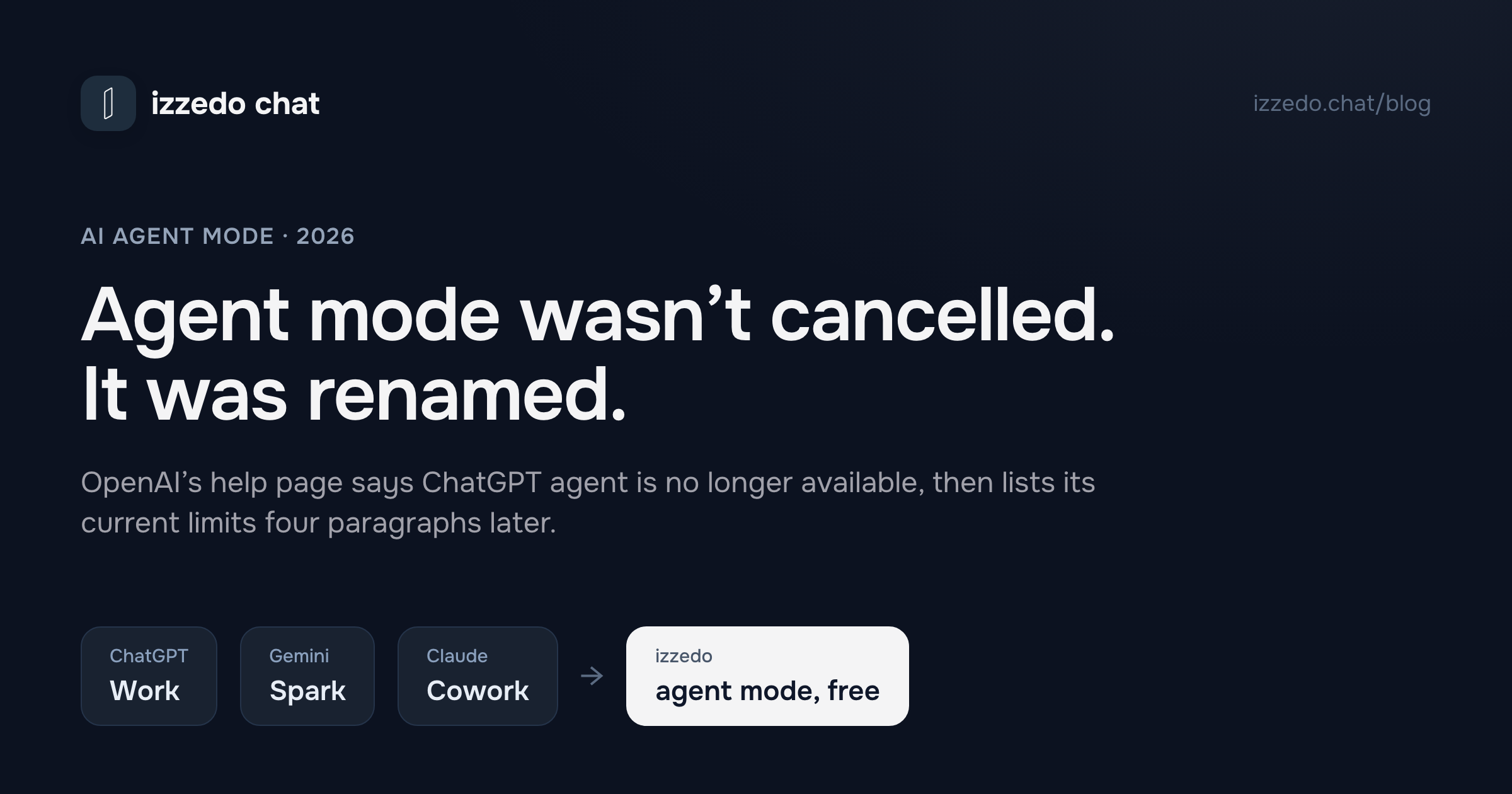
AI Agent Mode: What It Does, and Where ChatGPT's Went
OpenAI's own help page says ChatGPT agent is no longer available, then lists its current per-plan limits four paragraphs later. Google renamed its agent to Spark, Anthropic's is Cowork. Here is what survived the renaming, and which plan you need.
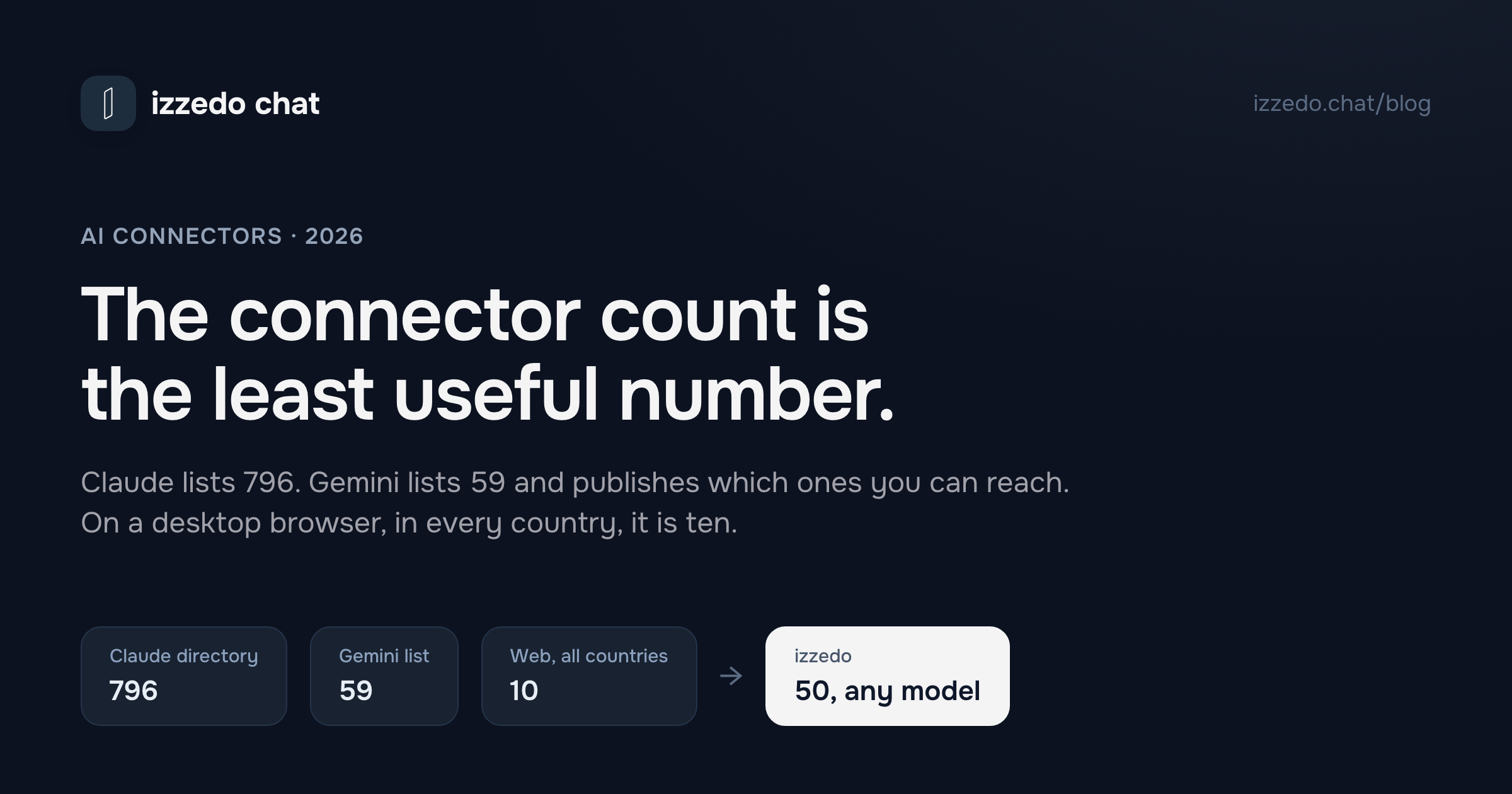
AI Connectors: Which Assistants Reach Your Tools, and What You Actually Get
Claude's directory lists 796 connectors. Gemini publishes 59 and is the only vendor that tells you which ones you can use, and the answer on a desktop browser outside the US is ten. Here is the whole picture, plan by plan.
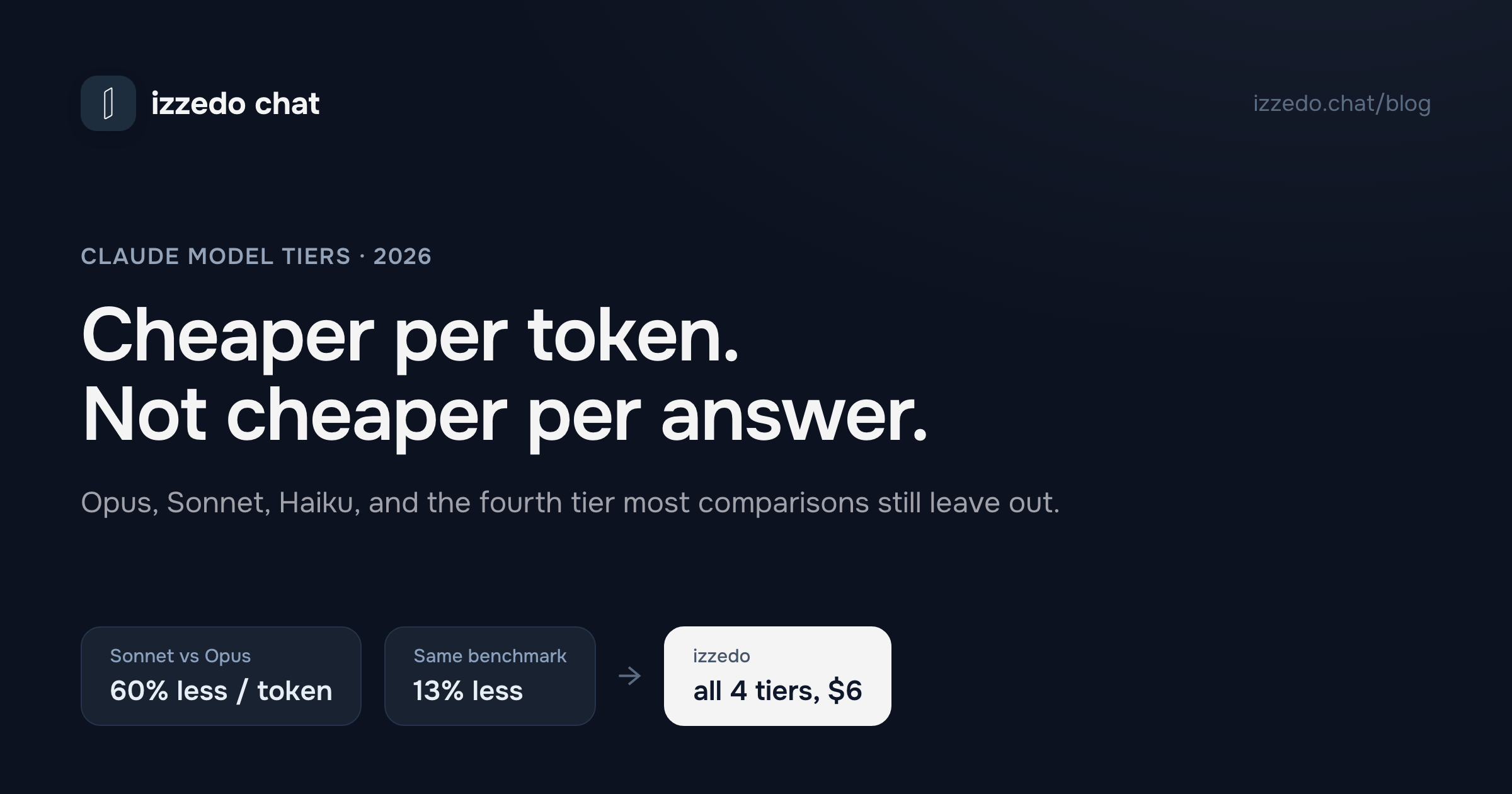
Claude Opus vs Sonnet vs Haiku: Which Tier to Use, and the Fourth One Nobody Compares
Anthropic answers the pick-a-model question three different ways on three of its own pages. Here is what the prices, the benchmarks and the plan gates actually say, including why the cheaper tier finished a whole benchmark for only 13% less.
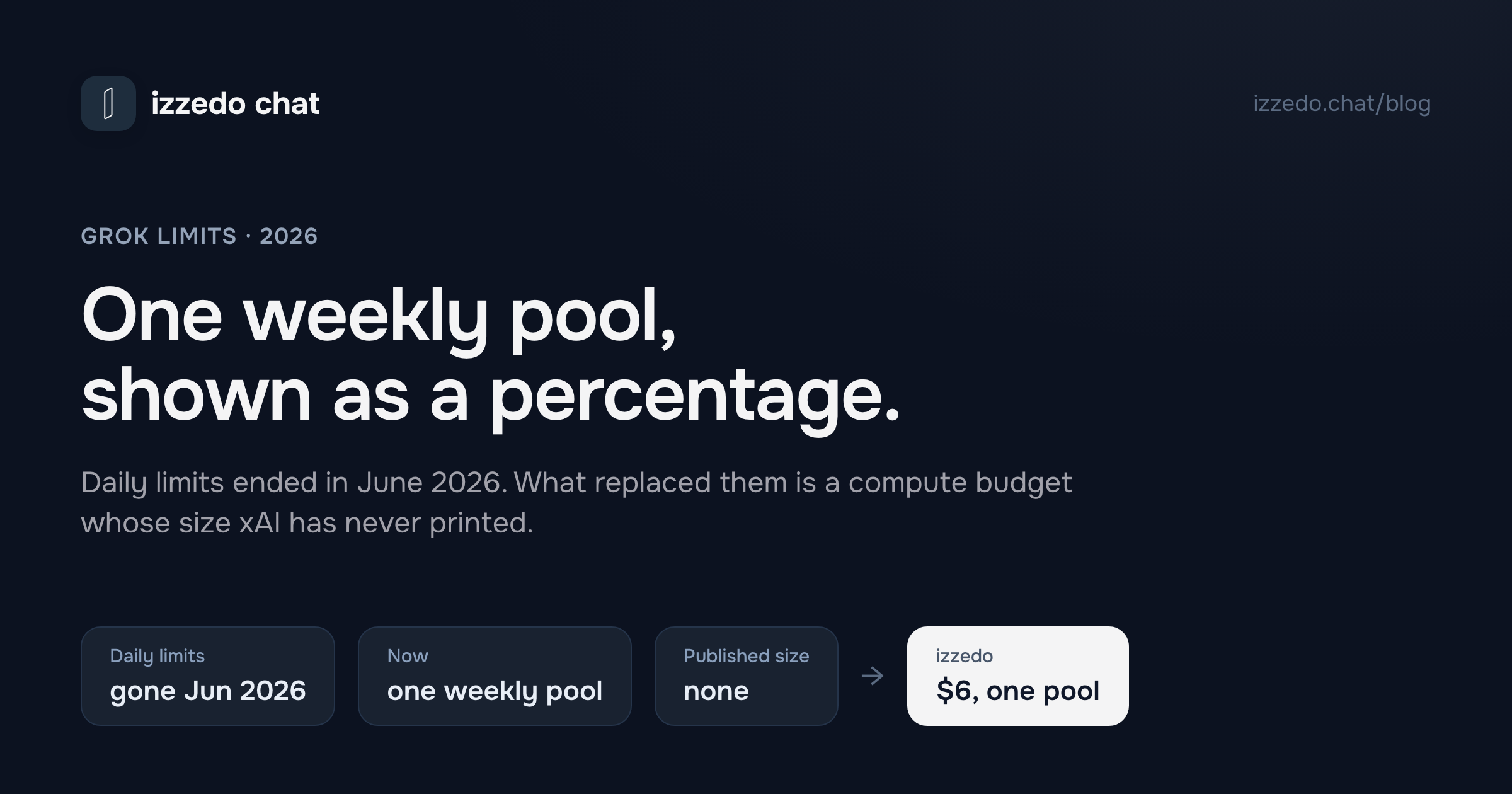
Grok Limits in 2026: One Weekly Pool, a Percentage Bar, and No Published Numbers
Since 12 October Grok sells usage as multiples of a Plus allowance that xAI never sizes. Here is every limit xAI and X actually publish, what SuperGrok subscribers keep, and what to do when the weekly pool runs out.
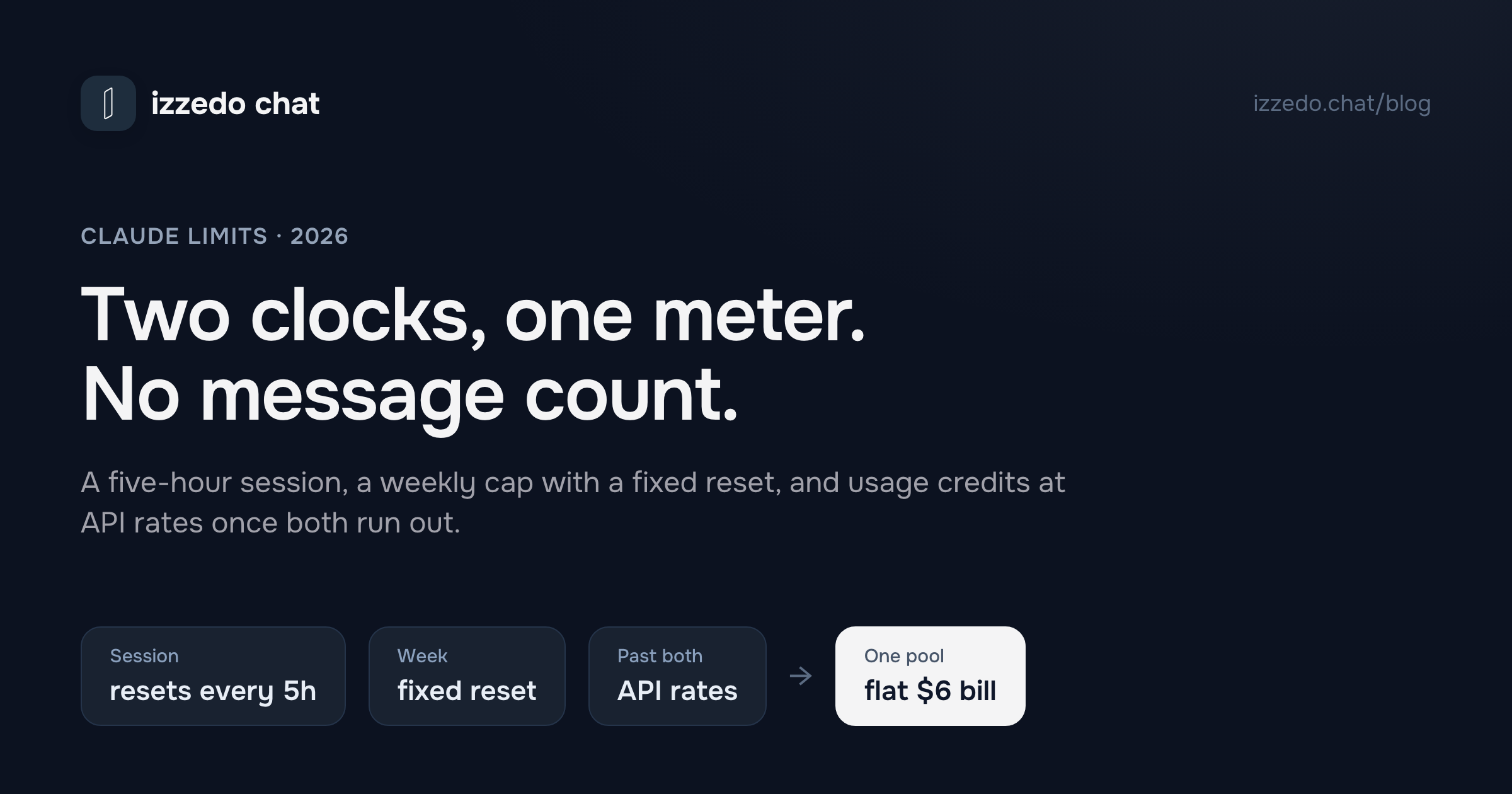
Claude Limits in 2026: The Five-Hour Session, the Weekly Cap, and the Meter Behind Them
Claude never tells you how many messages you get, because there is no such number. What it has instead is two clocks, a five-hour session and a weekly cap, and behind them a pay-as-you-go meter that most Pro subscribers have not noticed they are already standing on.
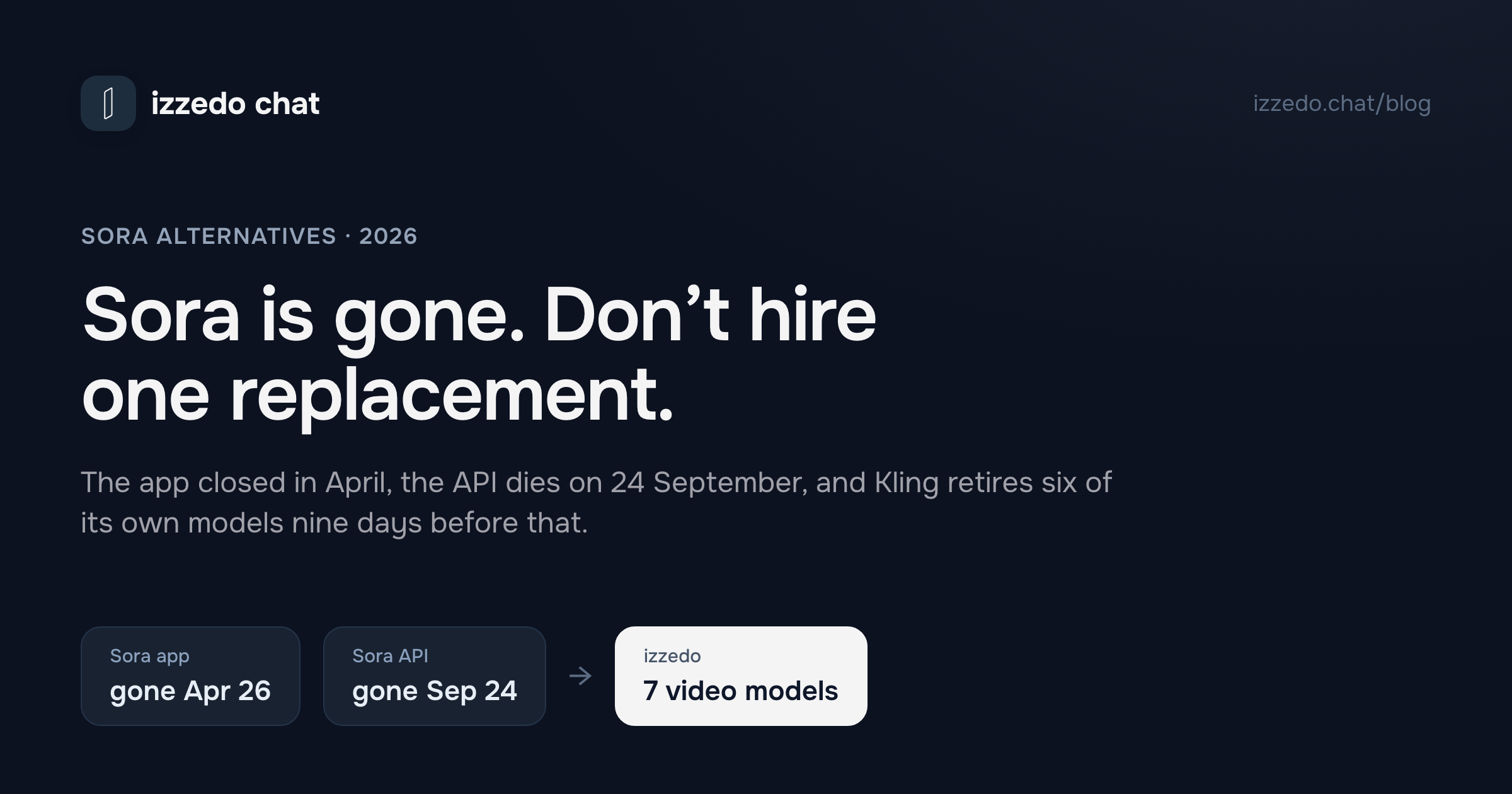
Sora Alternatives in 2026: What a Clip Actually Costs After the Shutdown
OpenAI shut the Sora app in April and the API on 24 September. I priced every replacement by the second, using each vendor's own published rates, because the plan pages sell credits and credits are designed to stop you doing this arithmetic.
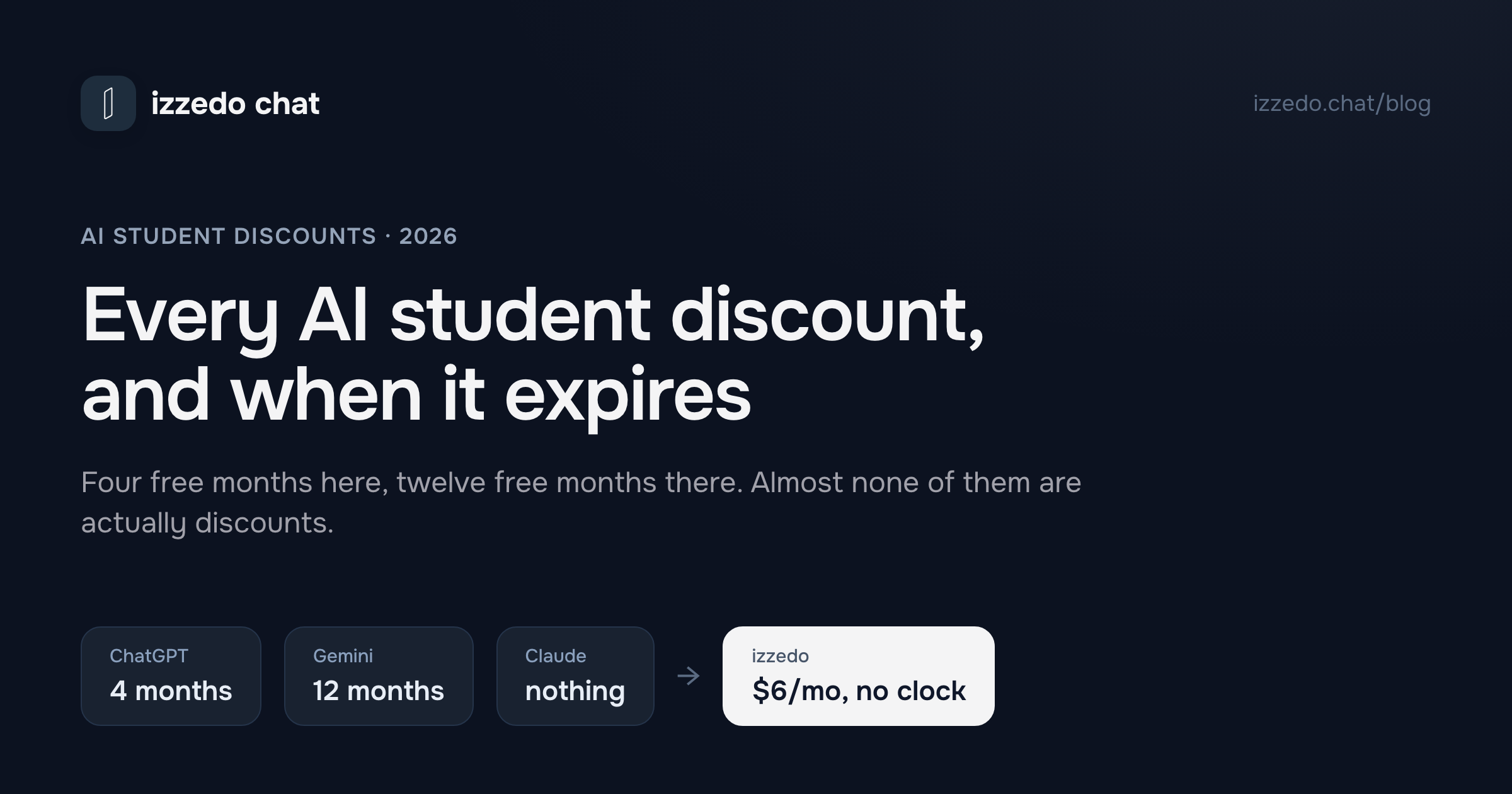
Every AI Student Discount in 2026, and What Happens When It Ends
Four free months from OpenAI, a free year from Google, nothing at all from Anthropic. I read every vendor's own offer page and terms so you can see which of these are actual discounts and which are countdowns with a card on file.
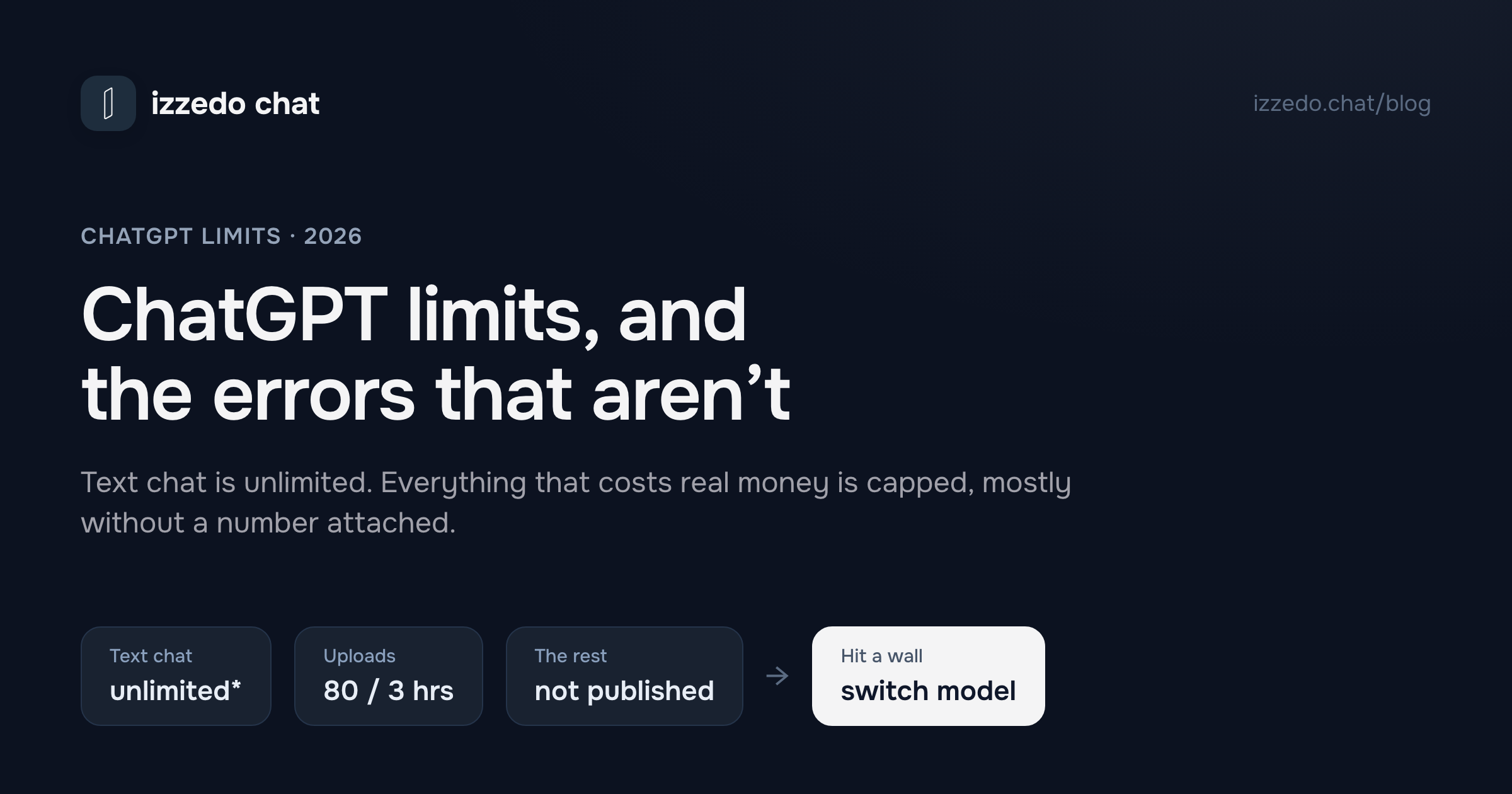
ChatGPT Limits in 2026: Every Cap, and Every Error That Isn't One
ChatGPT stopped publishing the numbers you used to plan around. Here's what is still capped, which error messages are real limits and which are something else entirely, and the one workaround OpenAI's own support pages recommend.
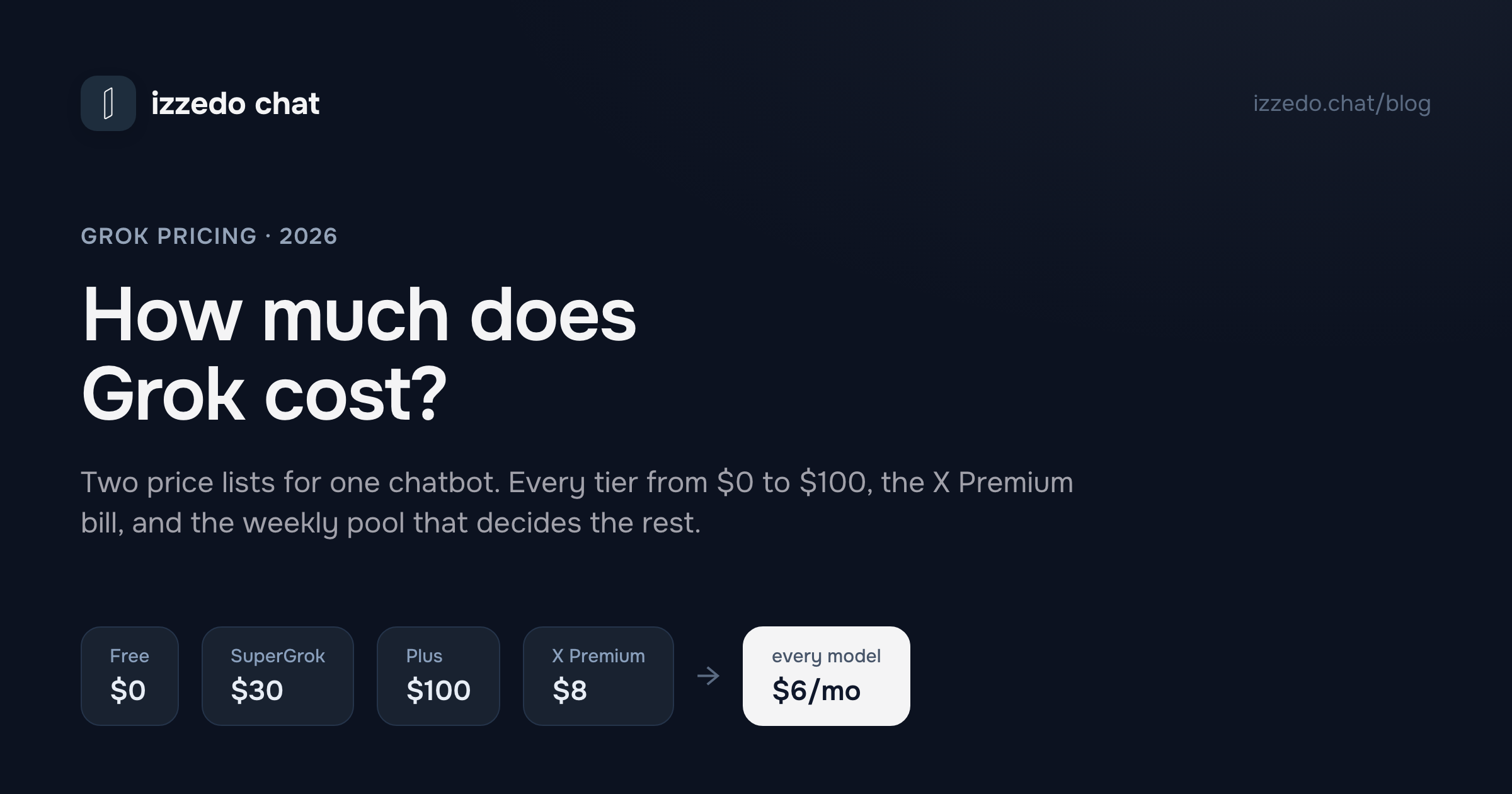
How Much Does Grok Cost? Every Plan, Priced (2026)
SuperGrok and X Premium closed to new sign-ups on 12 October, replaced by one plan family called The X Subscription. Here's every tier from $0 to $200, the first annual prices, what the $30 Premium bundle includes, the API rates, and what to do if you're still on SuperGrok.
Perplexity vs Claude in 2026: One Answers, One Works
Perplexity or Claude? They look like rivals and mostly aren't. One is built to answer a question with the sources attached, the other to do a piece of work. Here's which gap each one fills, and what the two $20 plans really meter.
Meta AI vs ChatGPT in 2026: Meta AI Doesn't Run Llama Anymore
Almost every comparison you'll read says Meta AI runs on Llama. It hasn't since April. What replaced it is very good, closed, and only reachable inside apps that turn your chats into ad targeting — which changes the question entirely.
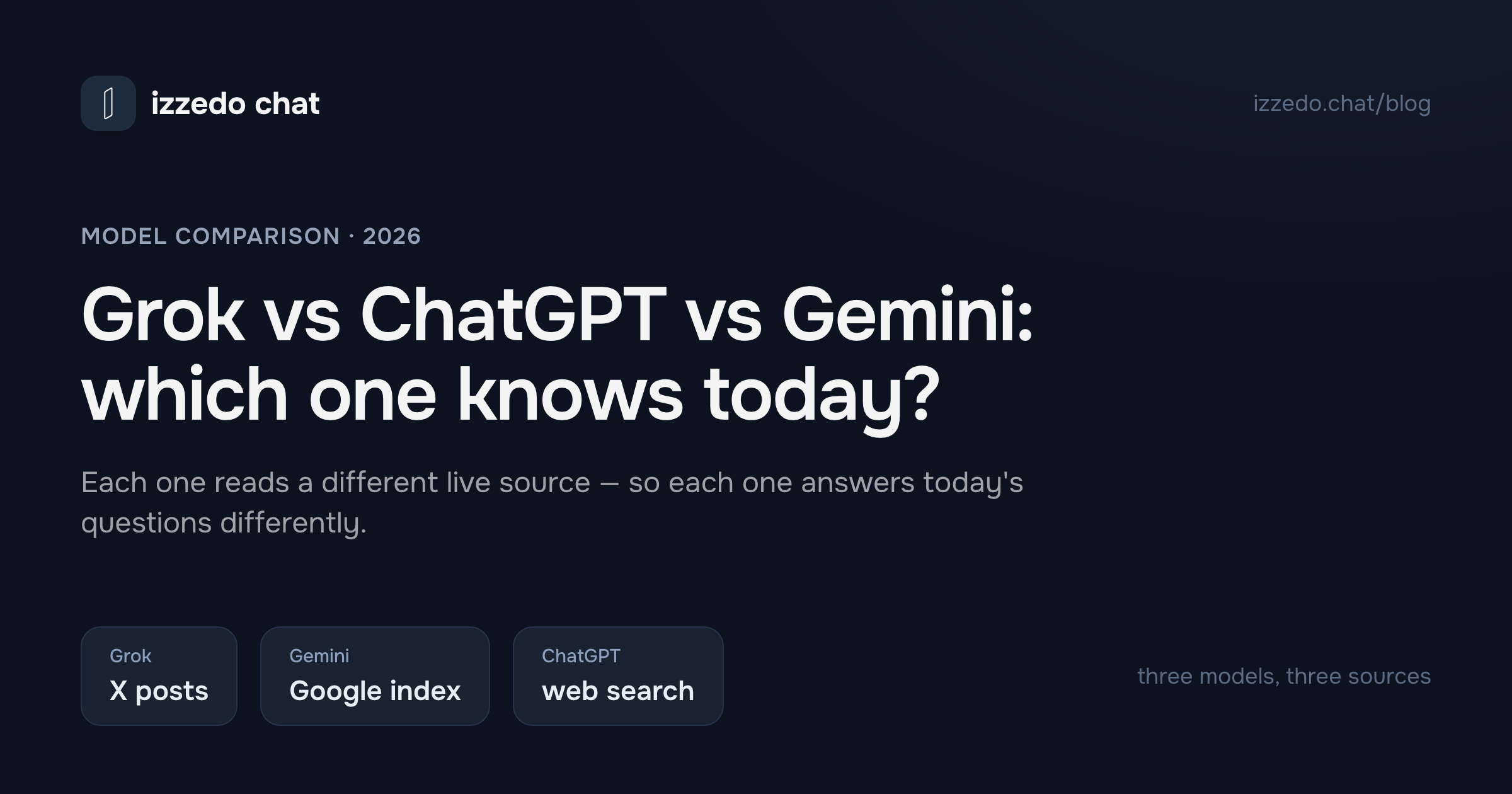
Grok vs ChatGPT vs Gemini in 2026: Three Models, Three Different Internets
Ask all three what happened this morning and you get three different answers. That's not one model being smarter — it's three models reading three different internets. Here's which source wins which question.
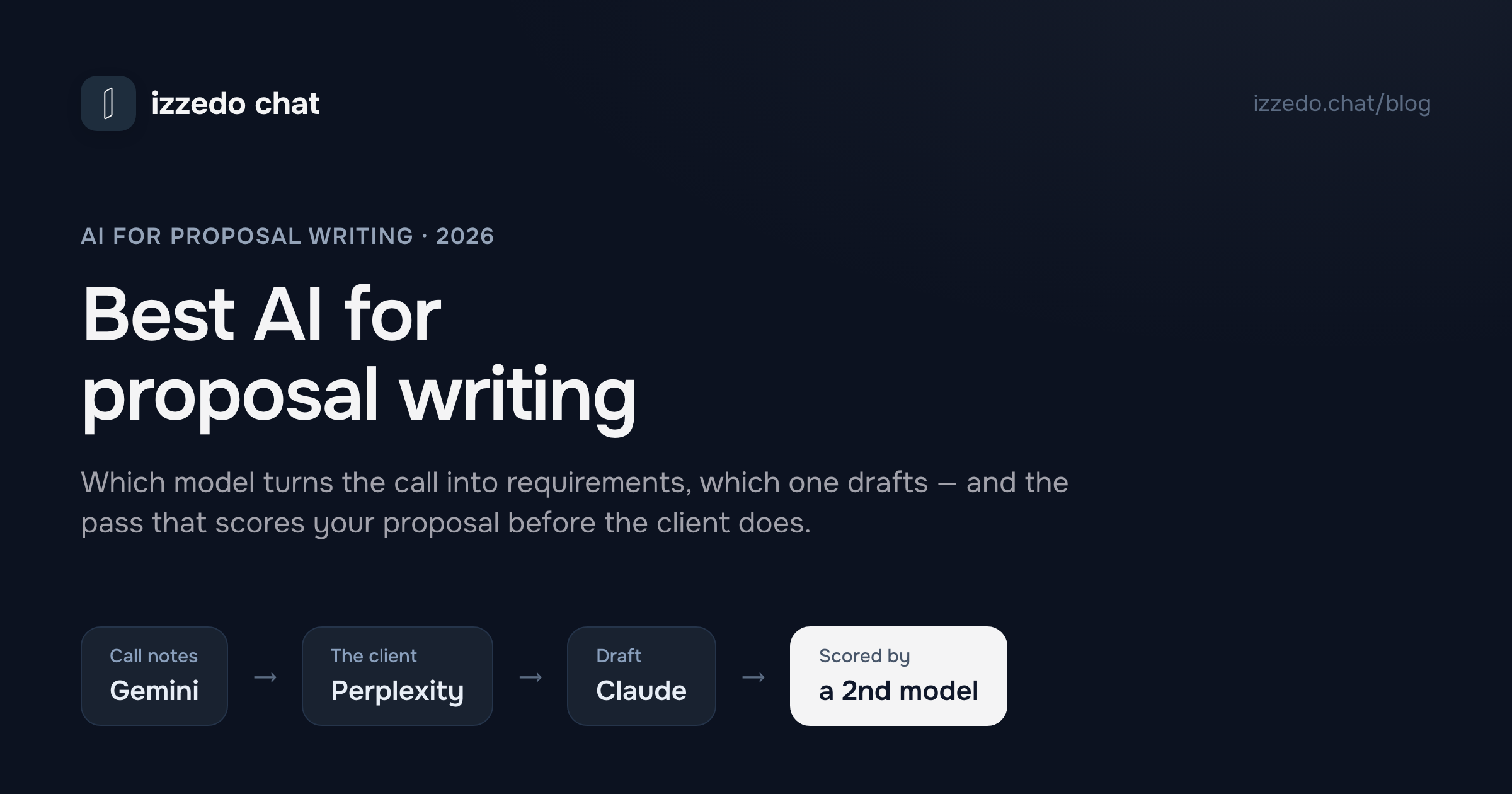
The Best AI for Proposal Writing in 2026 (Write to the Scorecard)
Your client is scoring your proposal against two others, and they never tell you the criteria. Here's which model to use at each stage of a client proposal, and how to reconstruct the scorecard and mark your own draft before they do.
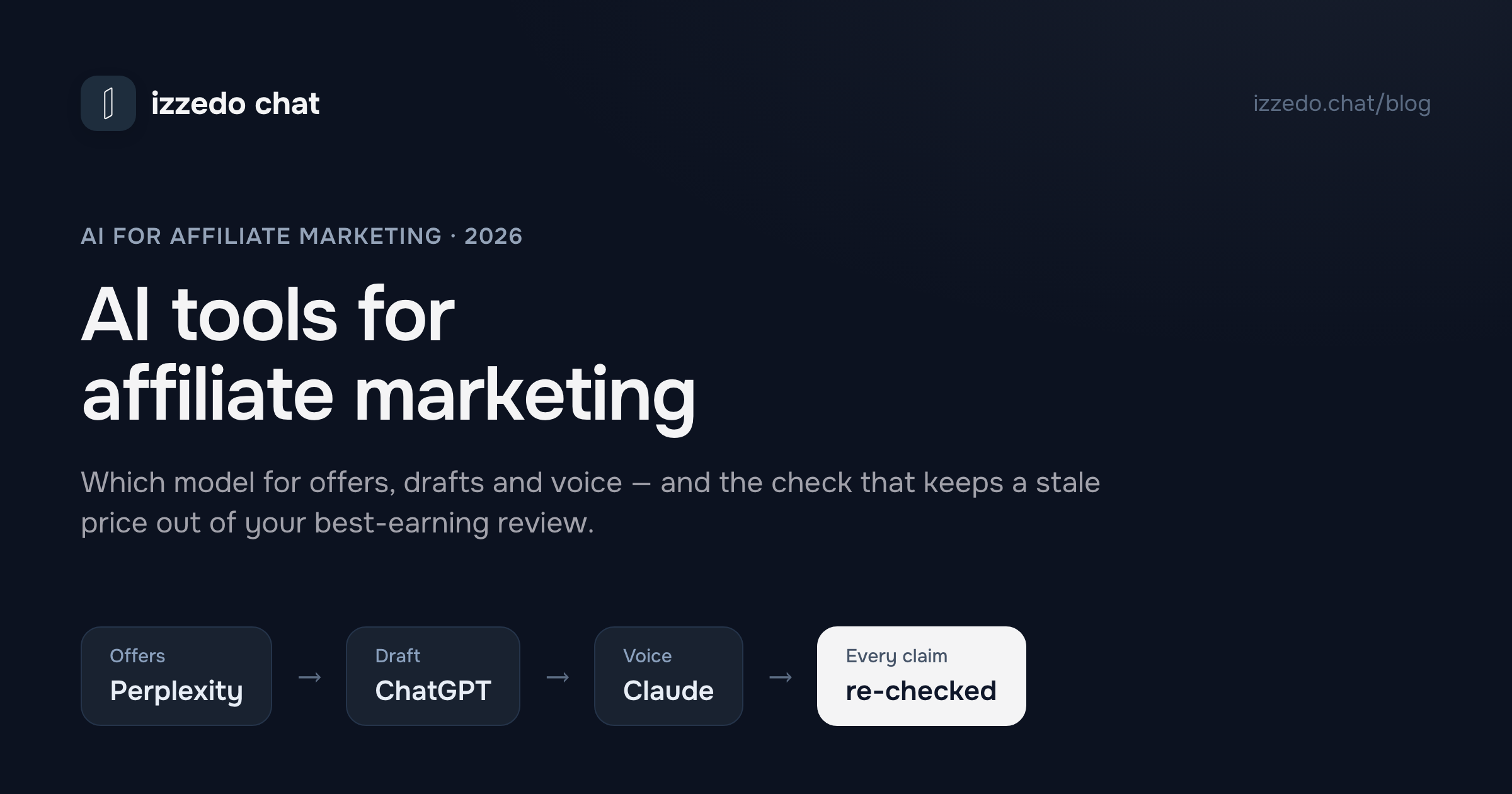
The Best AI Tools for Affiliate Marketing in 2026 (Sorted by Job)
Every listicle for this query tells you AI makes affiliate content faster. Faster is no longer the advantage. Here's the stack sorted by job, and the verification step that decides whether the page survives.
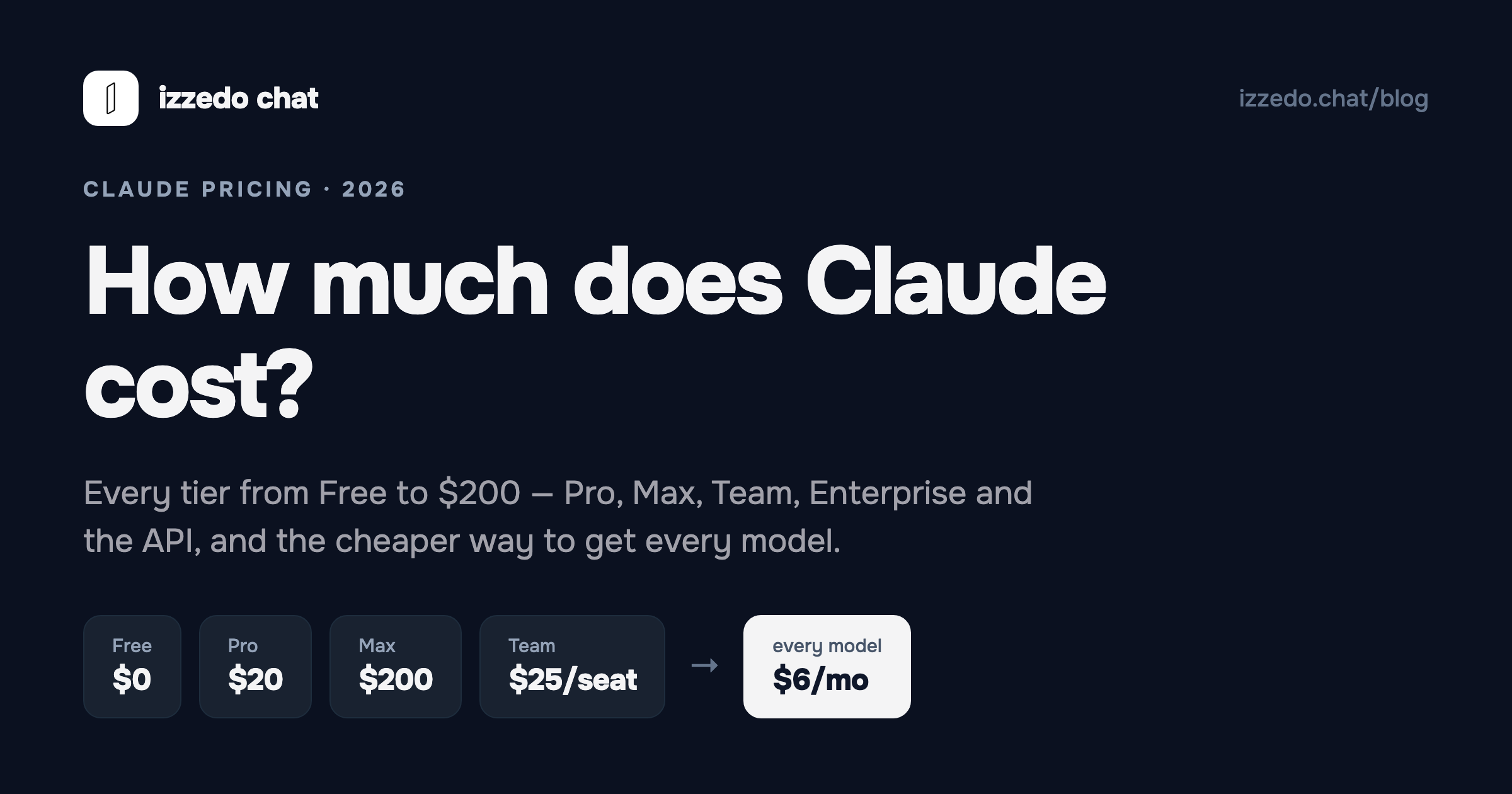
How Much Does Claude Cost? Full 2026 Pricing Breakdown
Claude runs from $0 to $200 a month for one person, turns per-seat for teams, and bills per token on the API. Here's every tier explained, the limits nobody mentions until they hit them — and what a full AI stack costs next to one flat $6 bill.
Best Juma Alternatives in 2026: For Everyone Team-GPT Left Behind
Team-GPT became Juma in November 2025, and Juma is built for marketers — the name is partly an acronym for JUst MArketing. If you adopted it for cross-functional work, the product moved. Here's what to use instead, and how its credit pool actually divides.
Best Langdock Alternatives in 2026: Pick by Team Size, Not by Rank
Every roundup answers 'Langdock alternatives' with another enterprise platform. But Langdock has no solo plan and no free tier, so most people searching bounced off a price floor built for a bigger company. Here's the honest shortlist, sorted by headcount.
The Best AI for Writing in 2026 — and Why It Still Sounds Like AI
Every ranking of the best AI for writing answers a question nobody asked. Here's which model wins each kind of writing — and the three fixes that stop the output from reading like a machine.
Claude vs Gemini in 2026: I Tested Both on Real Work, Not Benchmarks
Claude or Gemini? Every comparison online settles it with benchmark scores. I settled it with a week of ordinary work instead — and the answer splits cleanly down the middle.
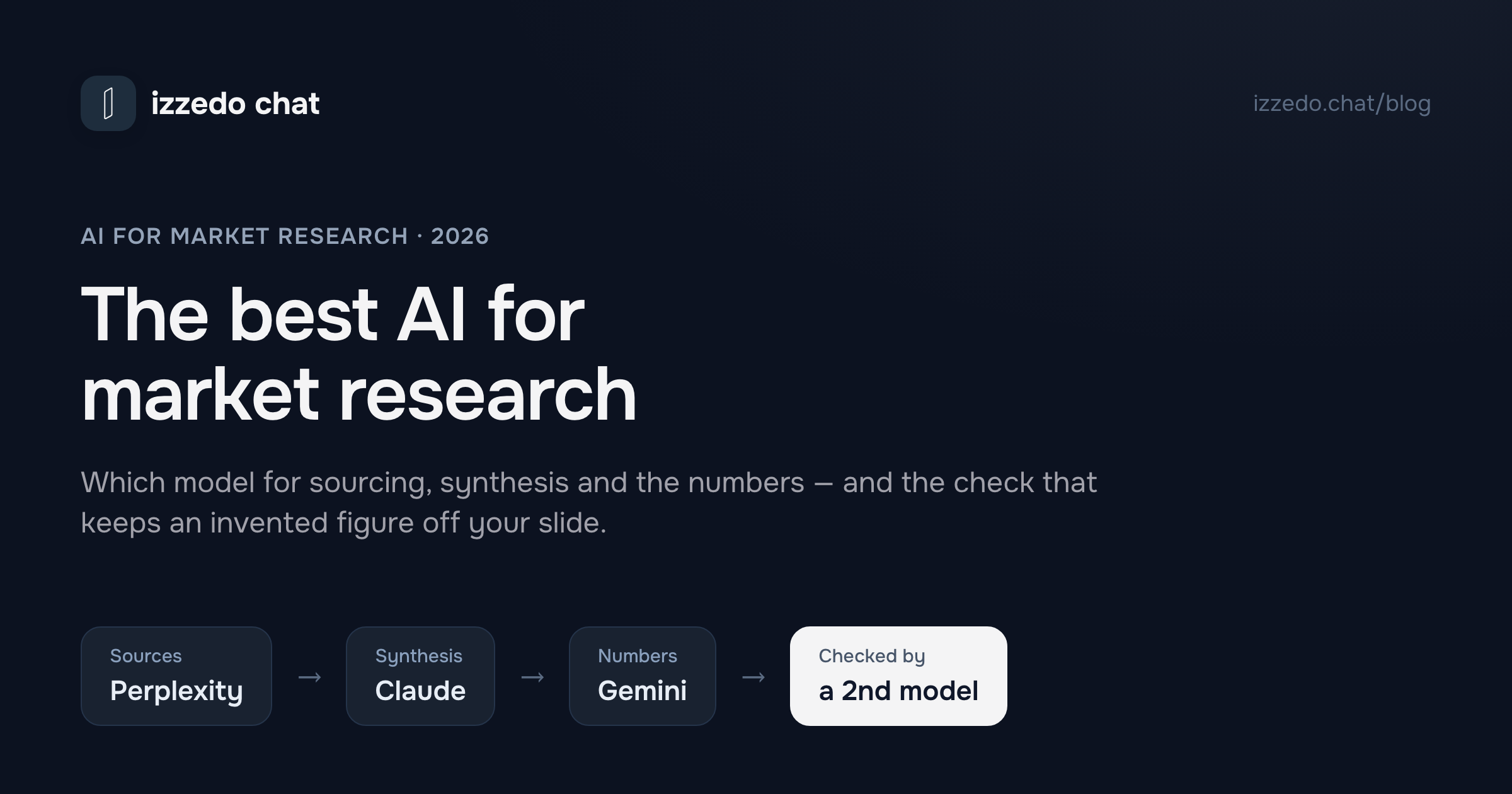
The Best AI for Market Research and Analysis in 2026 — and the Numbers It Will Invent
Market research is five different jobs, and no single model is best at all of them. Here's which AI to use for desk research, competitor scans, interview synthesis, quant and the readout — plus the two-minute check that keeps a made-up market size off your slide.
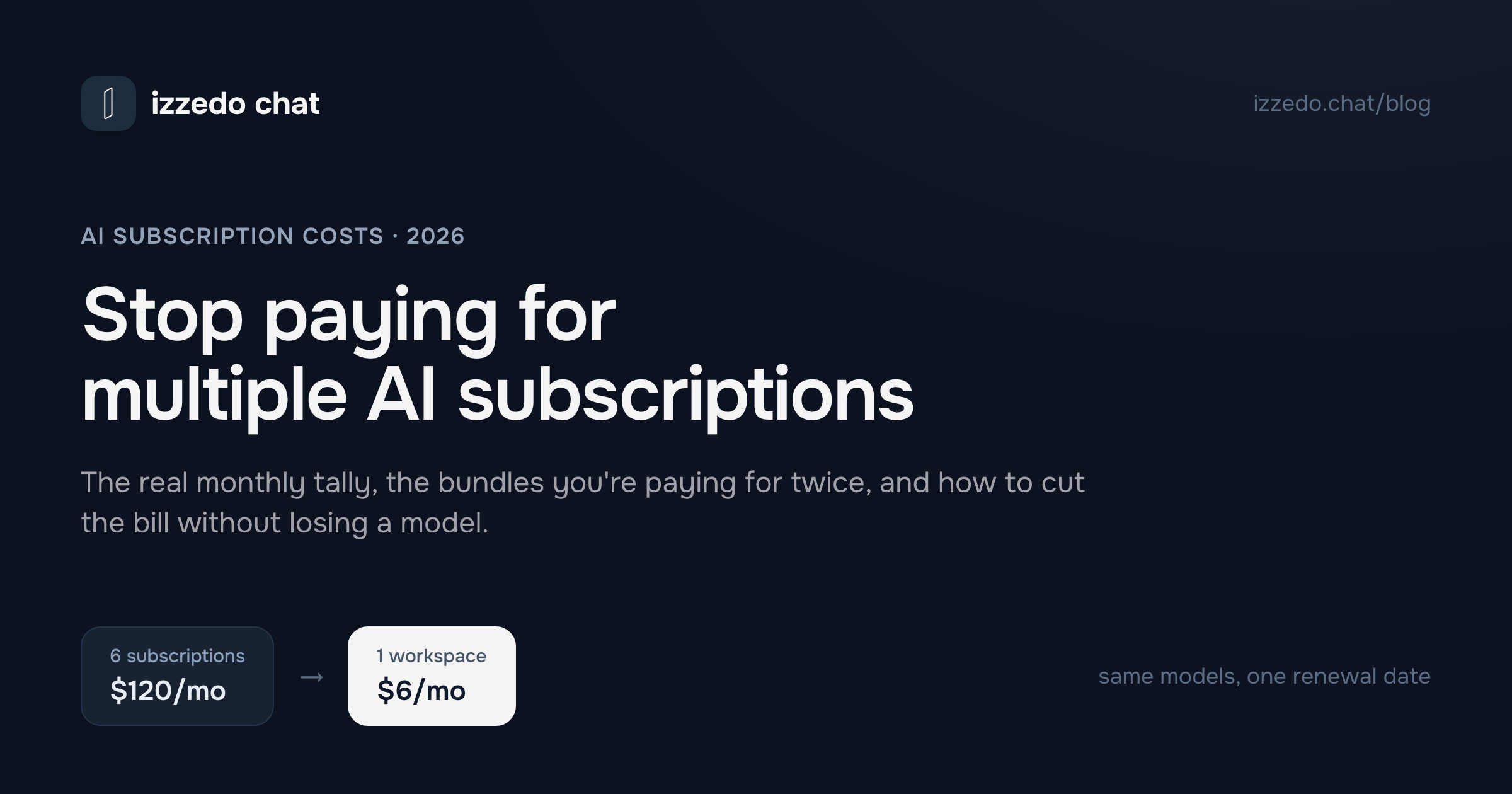
Stop Paying for Multiple AI Subscriptions: The 2026 Math
Nobody decides to spend $80 a month on AI — it accrues one $20 at a time. Here's a five-minute audit of your own bill, the subscriptions you're already paying for twice, how to cancel without losing anything, and the one-bill alternative.
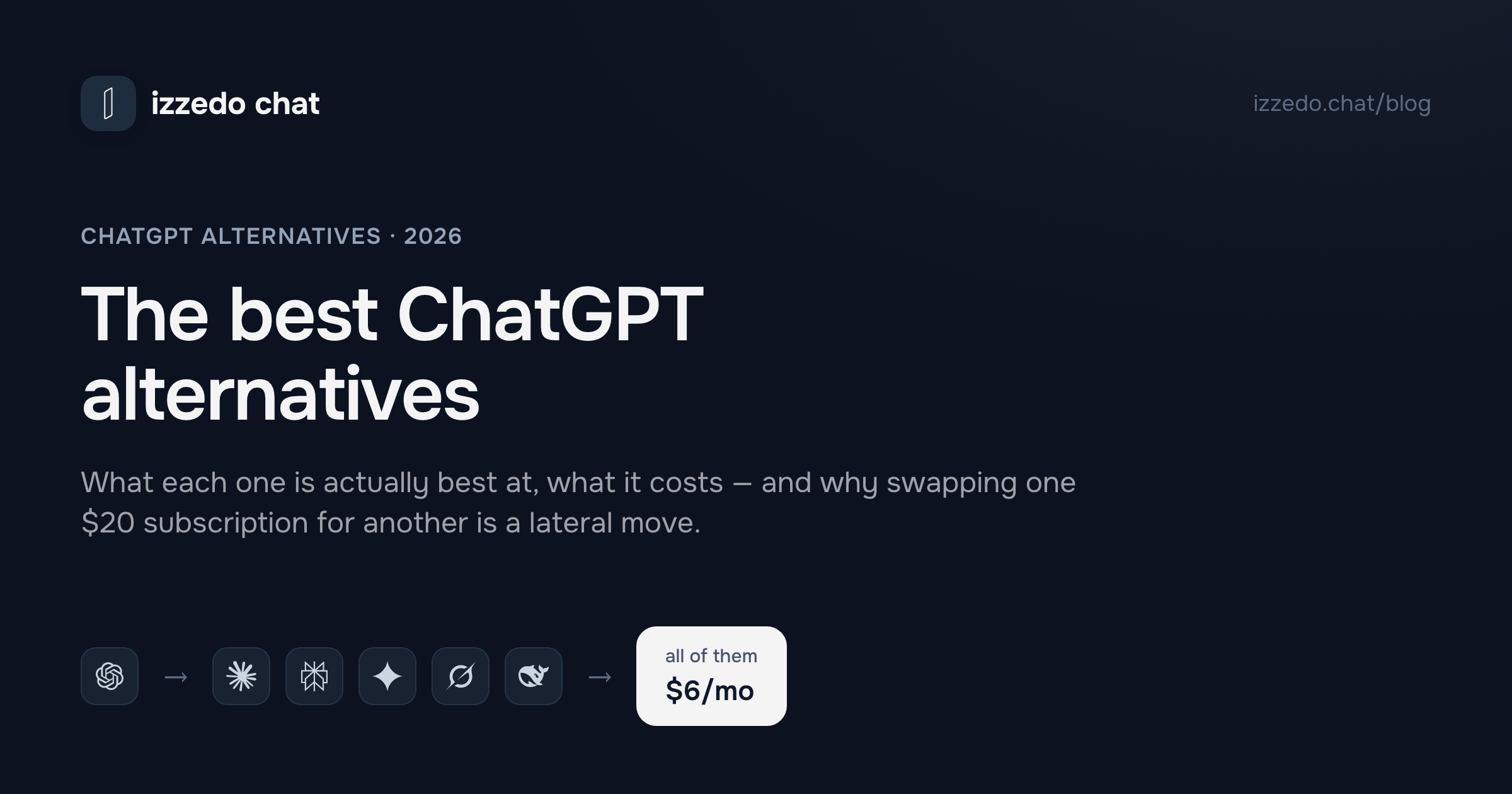
Best ChatGPT Alternatives in 2026: Tested, Priced, and Honest About the Catch
Every ChatGPT alternative worth switching to, sorted by the reason you're leaving — what each one costs, where each one falls down, how to move your history over, and why swapping one $20 subscription for another is usually a lateral move.
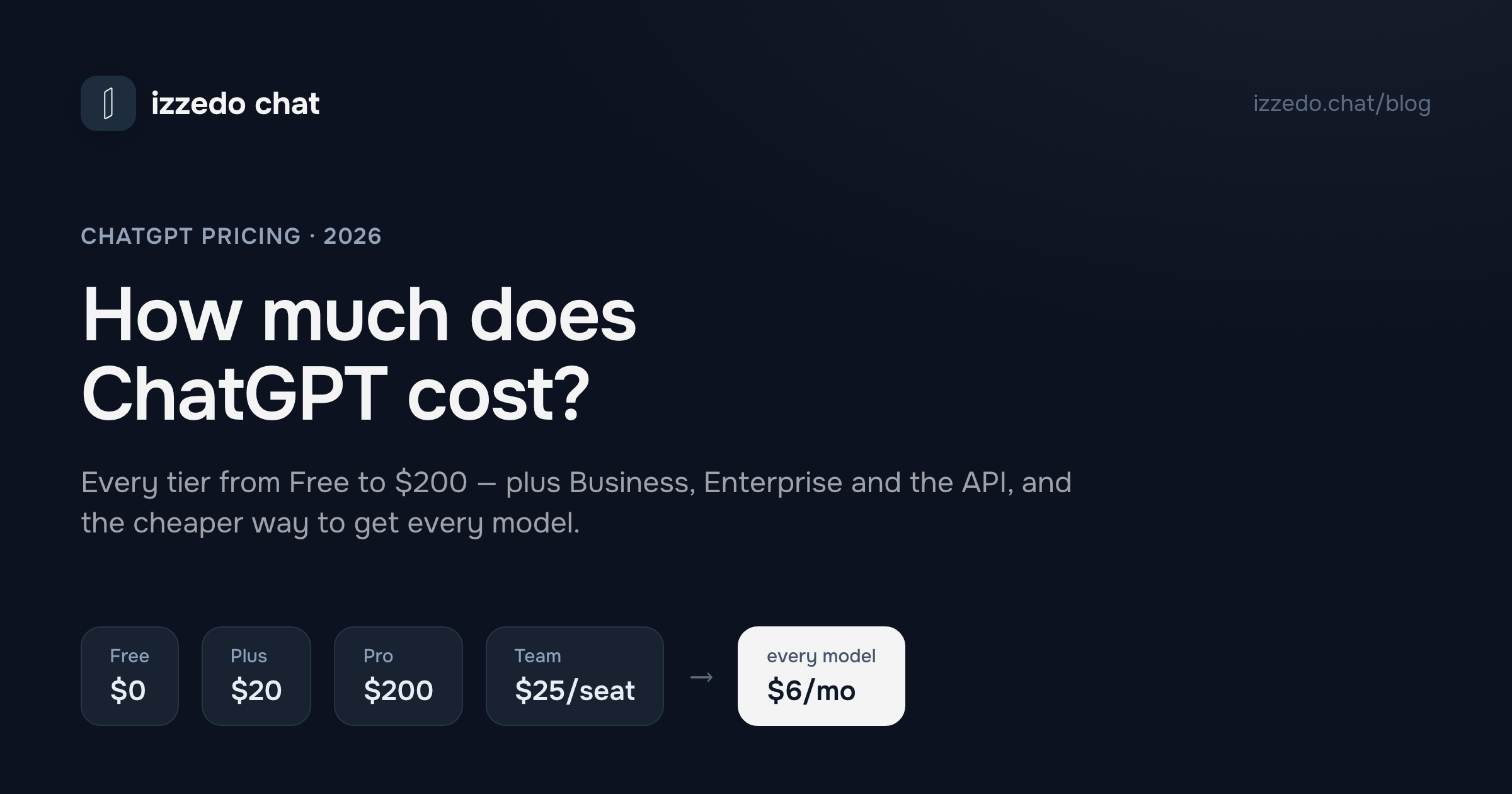
How Much Does ChatGPT Cost? Full 2026 Pricing Breakdown
ChatGPT ranges from $0 to $500 a month for one person, climbs per seat for teams, and turns into pay-per-token for the API. Here's every tier explained — and what a full AI stack really costs next to one flat $6 bill.

Is ChatGPT Plus Worth It in 2026? An Honest Breakdown
The free tier keeps improving, there's a cheaper plan below Plus and two pricier ones above it. Here's who still gets their $20 back every month, who doesn't — and the option that reframes the question entirely.
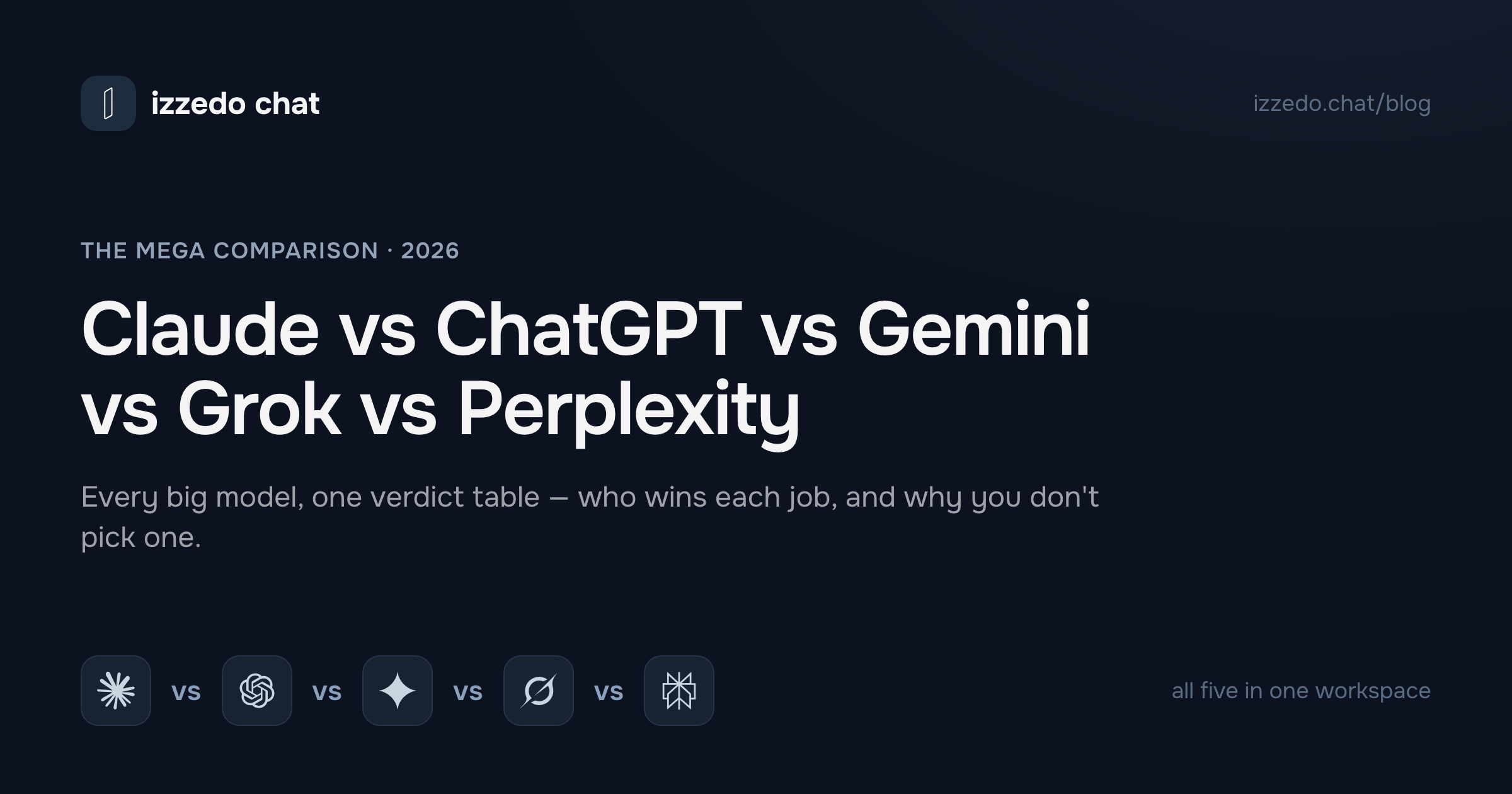
Claude vs ChatGPT vs Gemini vs Grok vs Perplexity: Every Big AI, Tested in One Place (2026)
After running five separate head-to-heads, here's the capstone: every big AI model in one verdict table — who wins each job, what the full lineup costs at retail, and the setup that gets you all of them at once.
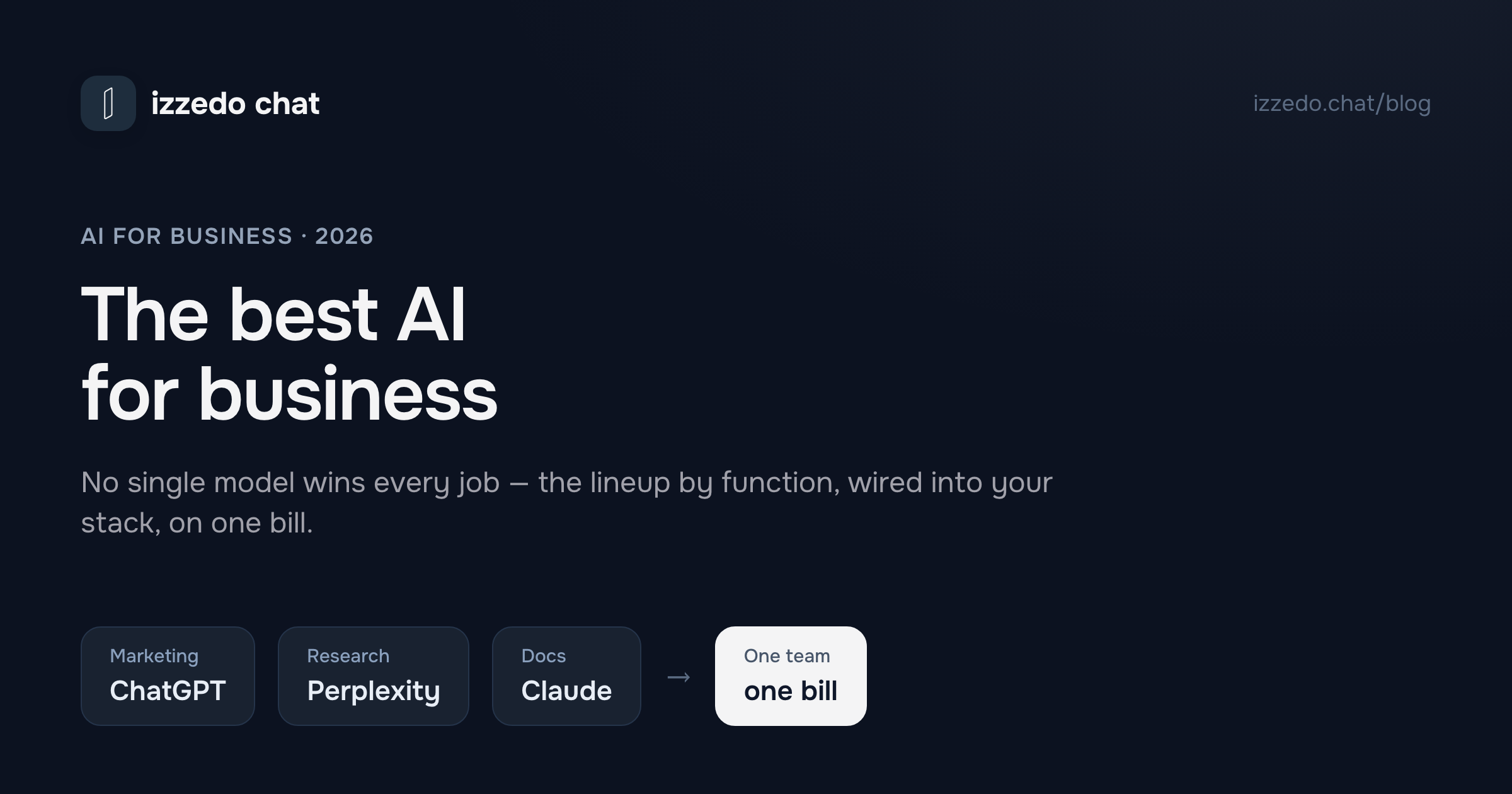
The Best AI for Business in 2026: It's a Lineup, Not a Model
A business isn't one person doing one task, so the best AI for business was never going to be one model. Here's the lineup that actually earns its seat — matched to each function, wired into the tools your team already uses, and priced so you're not buying six subscriptions per head.
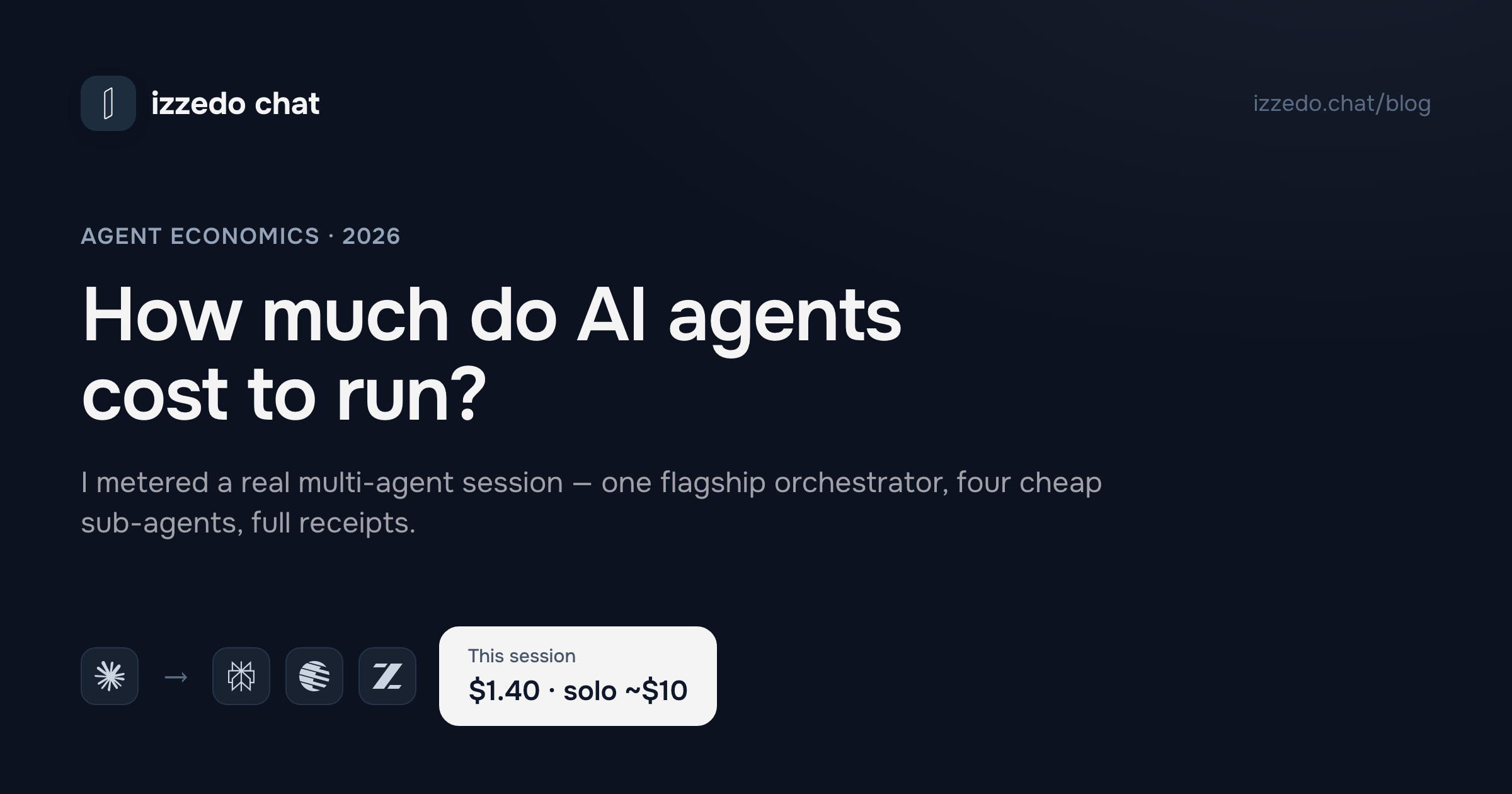
How Much Do AI Agents Cost to Run? I Metered a Real Session
Everyone writing about AI agent costs quotes strategy lists. Nobody shows a receipt. So here's one: a real research session with one expensive orchestrator and four cheap sub-agents, metered token by token — and what the same work would have cost done the obvious way.
The Best AI for Math in 2026: I Gave Every Frontier Model the Same Problems
Every AI will solve a math problem with total confidence — including the ones it gets wrong. I ran the same algebra, calculus, word problems and proofs through the frontier models to find out which deserve your trust, and built the two-model habit that catches the rest.
DeepSeek vs ChatGPT in 2026: What Does $20 Actually Buy You?
DeepSeek hands out frontier-grade reasoning for free; ChatGPT charges $20 for the most complete AI product there is. I tested both — here's which wins each task, and the setup that quietly gets you both.
Perplexity vs ChatGPT vs Claude in 2026: Best for Research & Daily Use
Perplexity, ChatGPT or Claude for research? After running real research tasks through all three, the answer isn't a winner — it's an assembly line. Here's who does which step, and how to run it in one thread.
Claude vs ChatGPT vs Gemini in 2026: Which AI to Use for What
Claude, ChatGPT or Gemini? After months with all three in daily rotation, the honest answer is a job chart, not a single winner. Here's which to use for what — and how to stop choosing.

DeepSeek & Qwen vs ChatGPT (2026): How Good Are the Chinese AI Models — and What's the Catch?
DeepSeek and Qwen now trade blows with ChatGPT — for free. Here's what each one is genuinely good at, why the privacy warnings are really about the apps rather than the models, and how to try both without installing either.
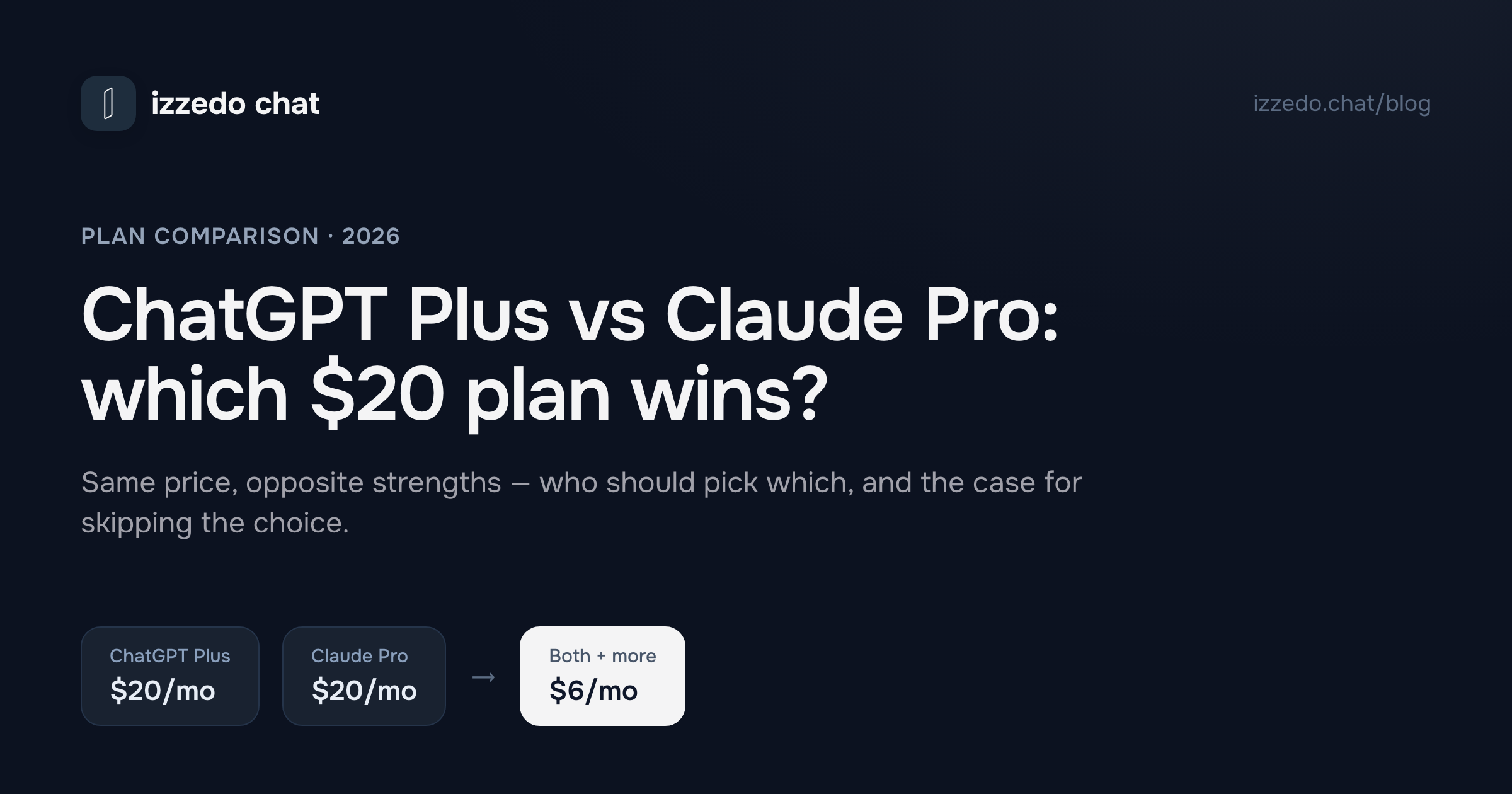
ChatGPT Plus vs Claude Pro (2026): Which $20 Plan Wins — or Should You Skip Both?
ChatGPT Plus and Claude Pro cost exactly the same $20 — and buy you very different things. Here's what each plan actually includes, how their limits compare, and why the sharpest move in 2026 might be paying for neither.
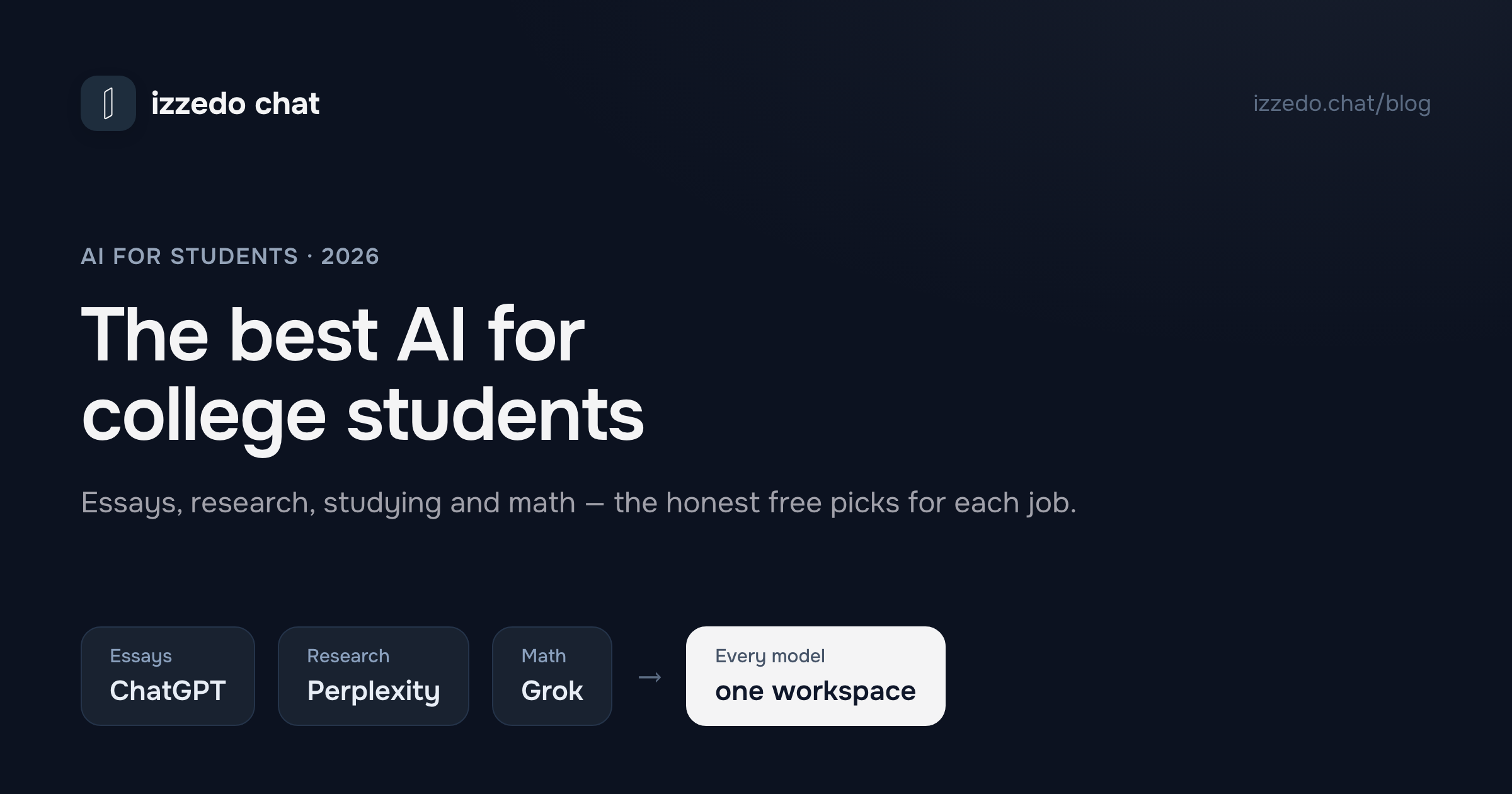
Best AI for College Students in 2026: The Free Tools That Actually Help
Forget the 40-app listicles. A handful of AI models cover everything college asks of you — essays, research, readings, math — and most of it is free. Here's which model to use for what.
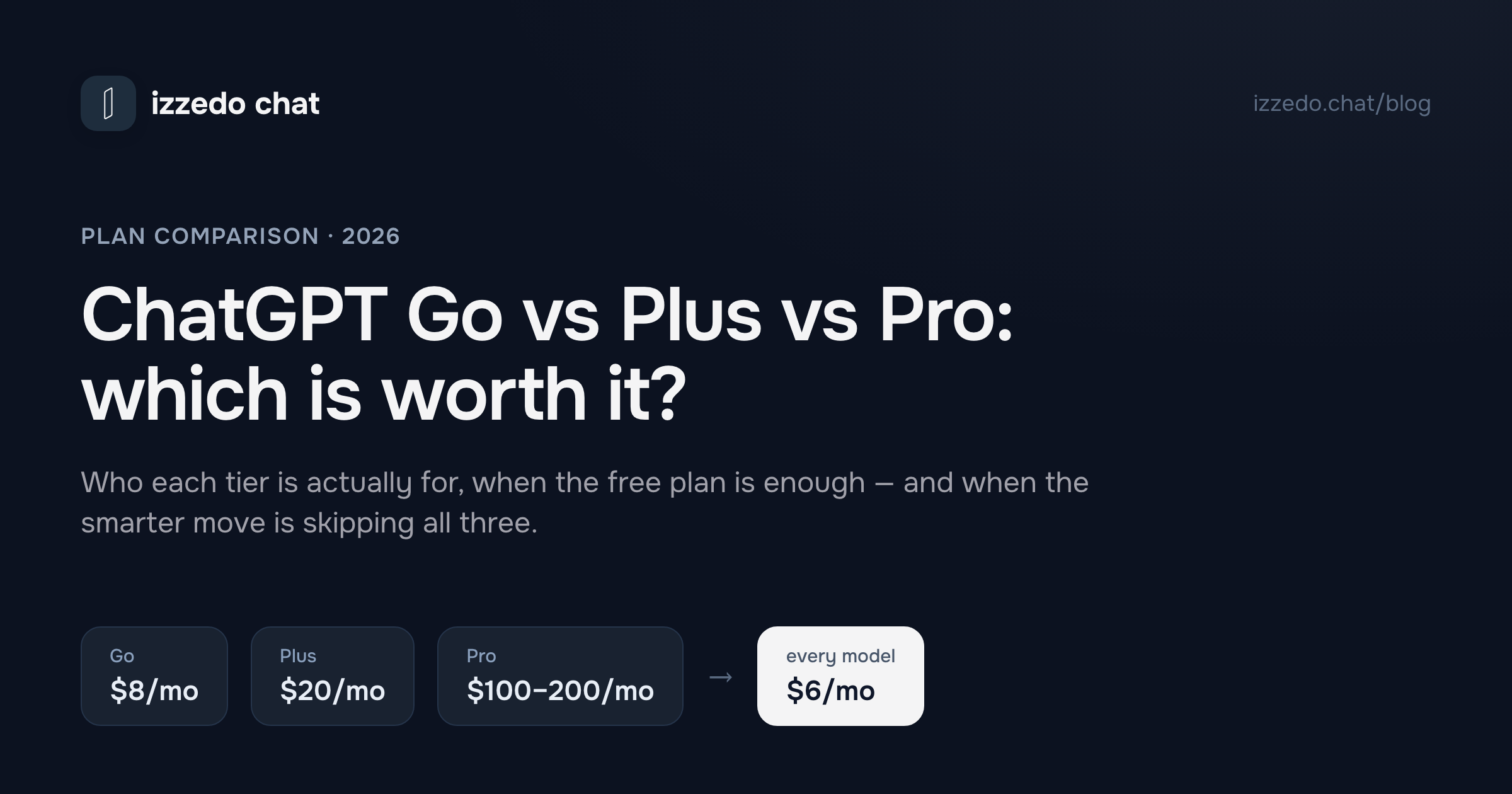
ChatGPT Go vs Plus vs Pro (2026): Which Plan Is Worth It — or Should You Skip All Three?
ChatGPT now has five paid price points, from $6 to $500 a month. Here's who each tier is actually for, when the free version is enough — and what the same $6 buys outside OpenAI's ladder.
Best Poe (AI) Alternatives in 2026: Every Model, One Flat Plan
An honest look at the best Poe alternatives in 2026, who each one is actually for, and why the compute-points system is the thing that pushes most people out.
Best Free AI Tools for Marketing in 2026 (Organized by Job)
A no-fluff roundup of the best free AI tools for marketing, organized by the job you're actually doing — from copywriting to competitive research.
Claude vs ChatGPT in 2026: I Tested Both Head-to-Head
Claude or ChatGPT? I tested both across writing, reasoning, long documents and research. Neither wins outright — one goes deep, the other goes wide. Here's the breakdown.
Google Gemini vs ChatGPT in 2026: I Tested Both Head-to-Head
Gemini or ChatGPT? I tested both across long documents, search, writing and reasoning. Neither wins outright — each owns different tasks. Here's the breakdown.
Grok vs ChatGPT in 2026: I Tested Both Head-to-Head
Grok or ChatGPT? I tested both head-to-head across research, reasoning, and writing. Neither wins outright — each takes different tasks. Here's the breakdown.
Perplexity vs ChatGPT in 2026: I Tested Both for Research
Perplexity or ChatGPT? I tested both across research, writing, and everyday work. Neither wins outright — each owns different tasks. Here's the breakdown.

Is ChatGPT Plus Worth It for Students in 2026? An Honest Take
Eligible US students can claim four free months of ChatGPT Plus before October 31. Here's what month five costs, when the free tier is plenty, and how to get every AI model for less.
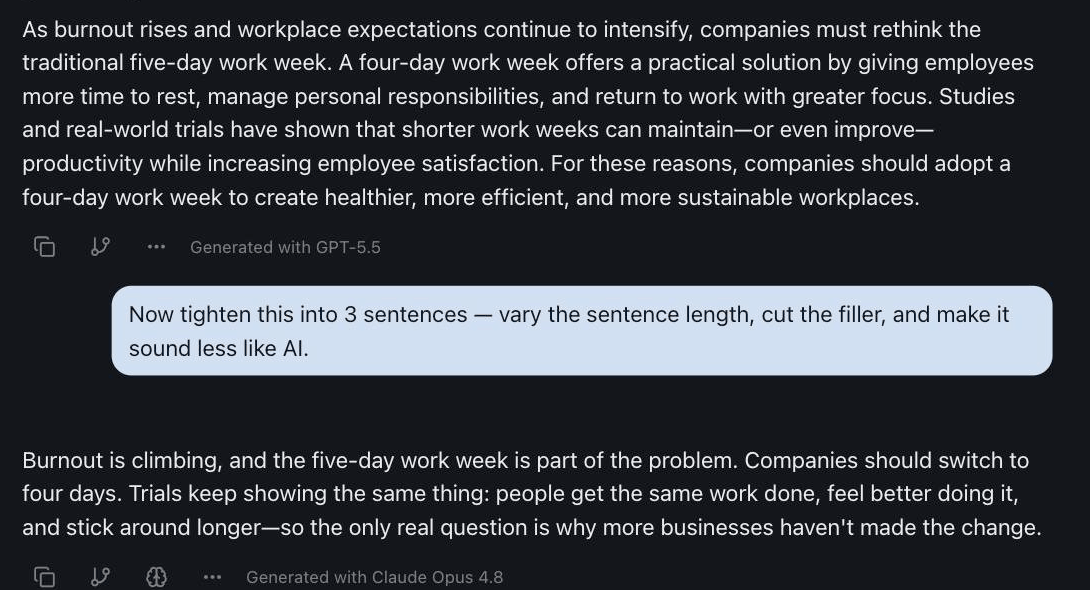
Best AI for Writing Essays in 2026: I Tested 7 Models
There's no single best AI for writing essays — each model wins a different stage. Here's what I found testing seven across research, drafting, and editing.
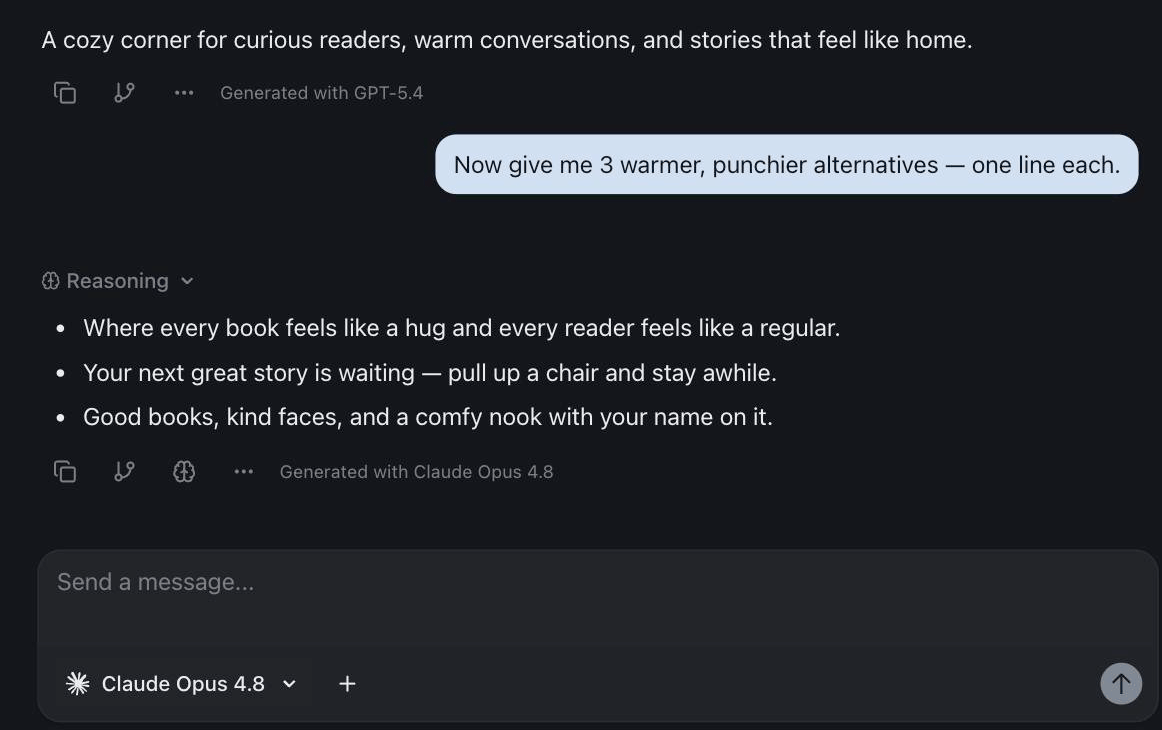
How to Use Multiple AI Models at Once (Without 6 Browser Tabs)
Switching between ChatGPT, Claude, Gemini, and Perplexity means six tabs, six logins, and lost context. Here's how to run every model in one conversation instead.
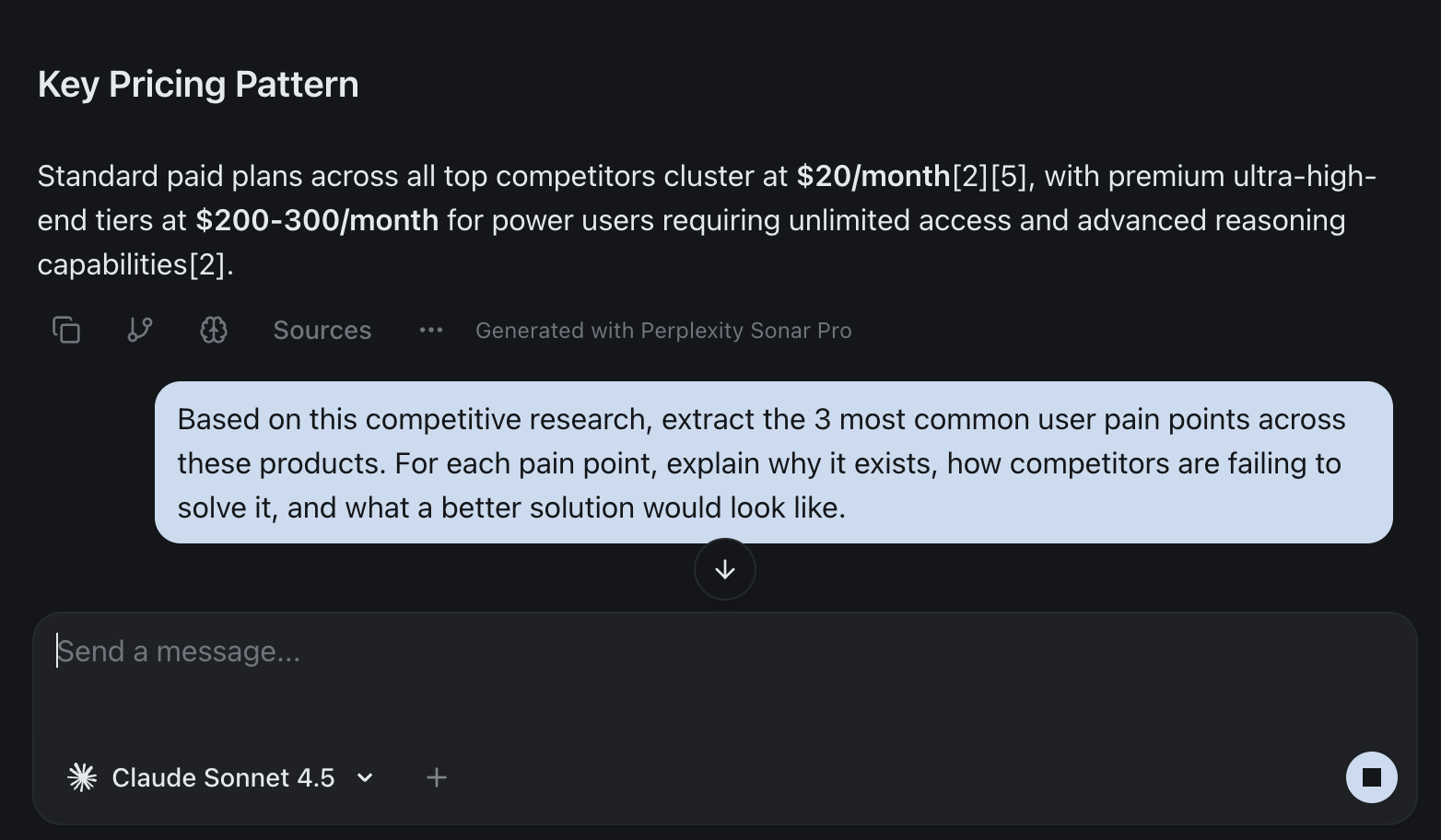
4 Tasks That Take 3 Hours With One AI — and 20 Minutes With Three
Stop doing everything with one AI model. These 4 step-by-step tutorials show you exactly how to chain ChatGPT, Claude, Gemini, and Perplexity together to write PRDs, proposals, case studies, and course outlines in a fraction of the time.
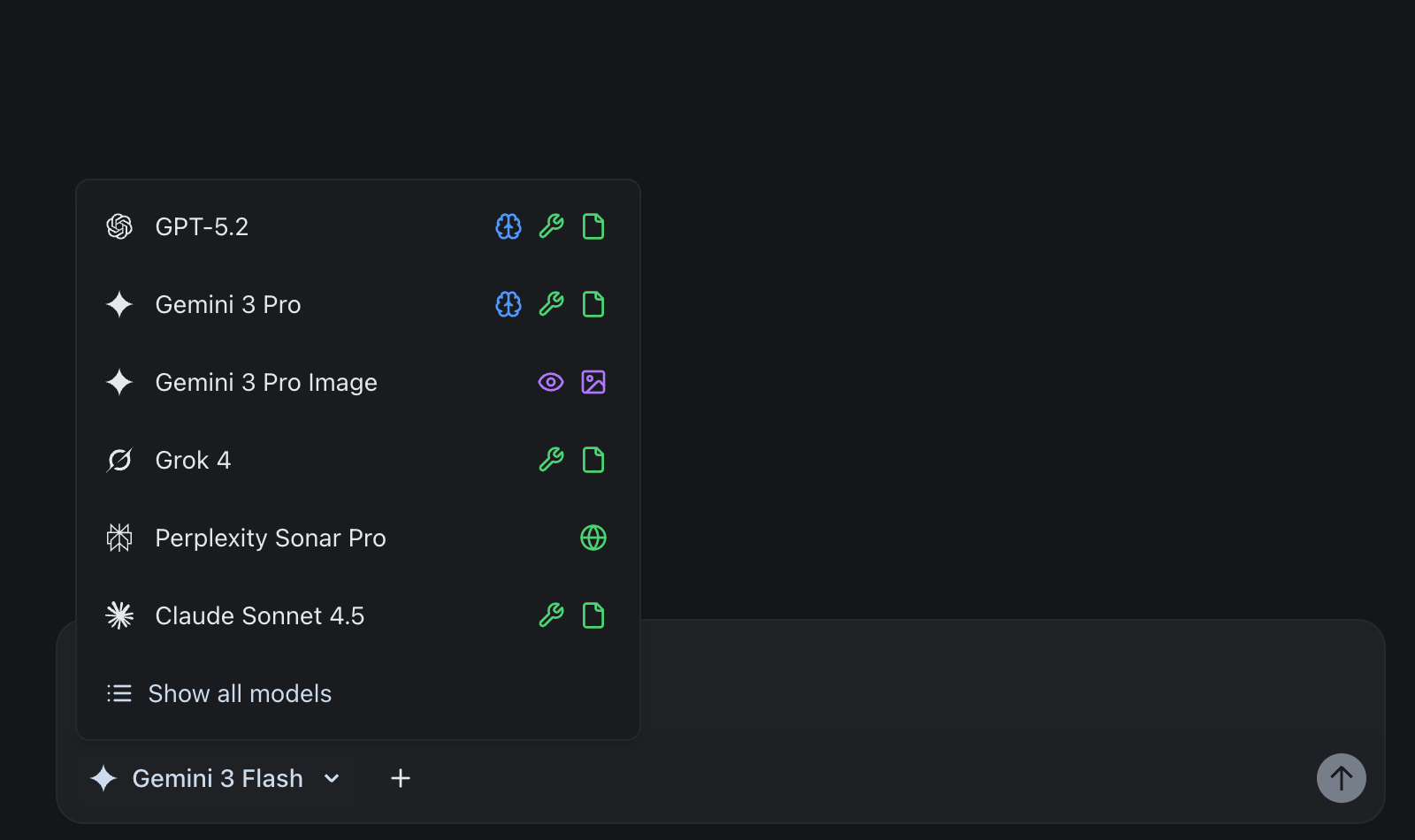
Stop Using Just One AI Model: The Multi-Model AI Workflow Playbook
Most people stick to one AI model for everything. Here's why a multi-model AI workflow produces dramatically better results — and how to build one yourself.