The Best AI for Market Research and Analysis in 2026 — and the Numbers It Will Invent
Market research is five different jobs, and no single model is best at all of them. Here's which AI to use for desk research, competitor scans, interview synthesis, quant and the readout — plus the two-minute check that keeps a made-up market size off your slide.
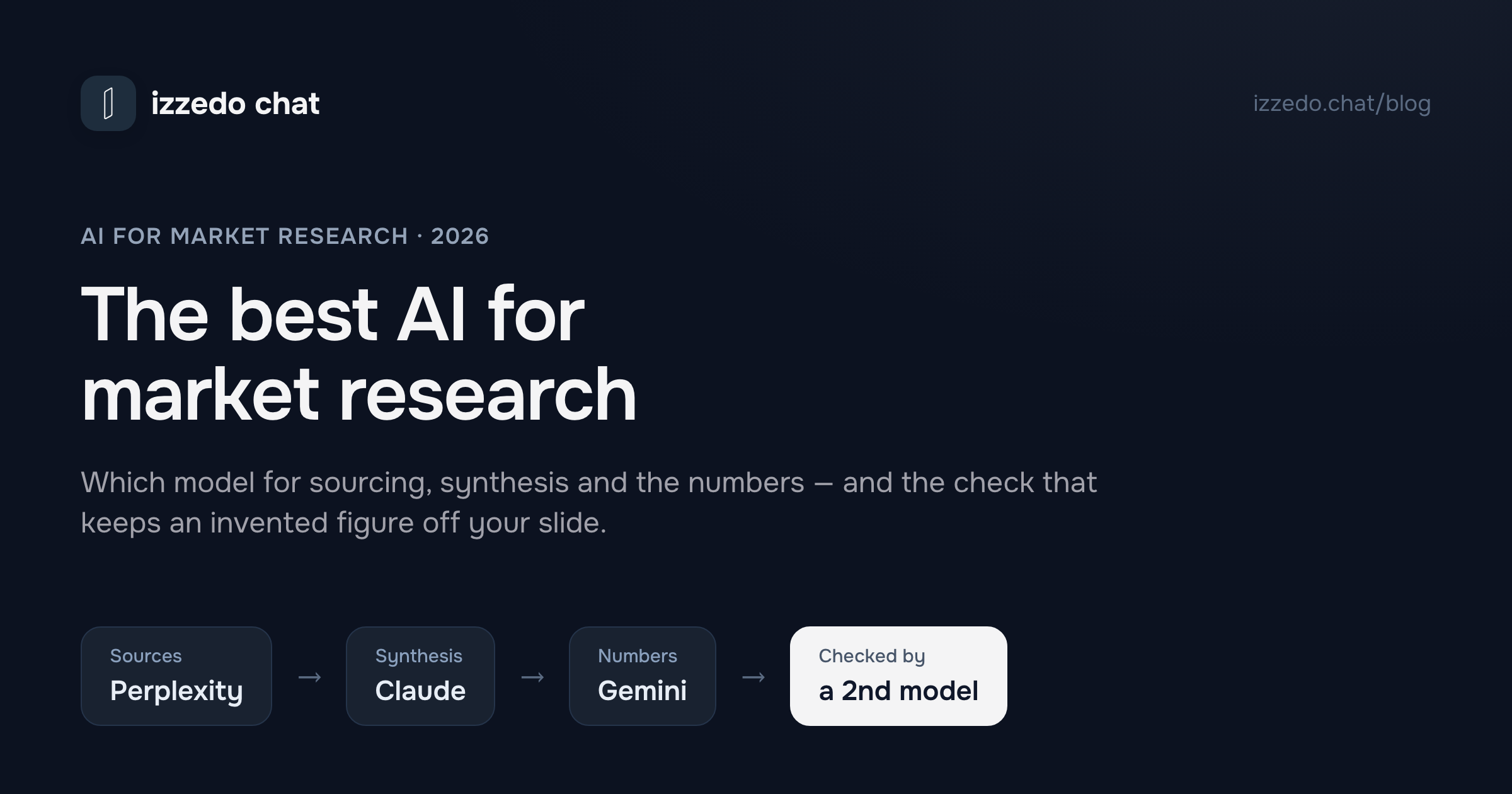
There are two completely different products hiding behind the phrase "AI for market research," and most roundups blend them into one list of thirty tools. One kind collects data you don't have — panels, surveys, fieldwork, social listening. The other kind reasons over data you can already get. They cost different amounts, answer different questions, and confusing them is why so many teams buy a research platform when what they needed was a better way to read what's already on the internet.
I do this work most weeks — market sizing before a launch, competitor pricing teardowns, reading through user interviews, turning all of it into something a decision can be made from. This is the lineup I actually use, split by the five jobs market research really consists of, plus the failure mode nobody puts in a listicle: the number the model invents, delivered with total confidence, that ends up on a slide in front of people who trust you.
The Short Answer: The Best AI for Market Research by Job
| Research job | Best-fit model | Why it wins |
|---|---|---|
| Desk research & market sizing | Perplexity | Live web, citations attached — numbers you can trace and defend |
| Competitor, pricing & positioning scans | Perplexity + an automation | Current by definition, and it can run weekly without you |
| Interviews, reviews & open-ended survey answers | Claude | Reads long, clusters themes, keeps the nuance and the quotes |
| Exports, cross-tabs & messy spreadsheets | Gemini | Swallows enormous files and reasons across the whole thing |
| Trend and hypothesis exploration | ChatGPT | Best at thinking with you when there's no answer to look up |
| The readout: report, deck, charts | Any strong writer + tooling | The bottleneck isn't prose, it's producing the actual file |
| Any figure that leaves the building | A second model | Two models rarely hallucinate the same number |
That last row is the one this post is really about, and it comes at the end.
Two Different Products Wear the Same Label
Before picking a model, work out which half of the category you're in.
Research platforms — Qualtrics, Quantilope, Attest, Brandwatch, Similarweb and the rest — exist to get you data that doesn't exist yet or isn't yours: a representative sample of buyers, a survey fielded to 500 people in a segment, social conversation at scale, someone else's traffic. That's genuine value you cannot talk a chatbot into producing. It's also a real budget line; most don't publish prices, and where numbers do surface, business plans start in the five figures a year. Their AI features are mostly convenience on top of the data — a co-pilot that drafts the questionnaire, auto-charts the results, summarizes the report.
Research models — ChatGPT, Claude, Gemini, Perplexity, Grok — own the other half: everything you do with information that's already reachable. Desk research, market definitions, competitor teardowns, regulation, pricing pages, analyst commentary, your own past studies, your own interview transcripts, your own exports. This is the majority of what gets called market research inside most companies, and it used to be the part that ate the week.
The test is one question: do I need new data, or better use of data I can already reach? If it's the second — and it usually is — a platform subscription is the wrong purchase and a model lineup is the right one.
How I Judged the Models
I'm not scoring these on benchmarks. I ran the five jobs above as real work: a market-sizing question I actually needed an answer to, a competitor pricing scan across a category, a pile of user interview transcripts, a spreadsheet export with more tabs than anyone should have, and a readout at the end. What I care about is which model I'd hand each job to on a deadline, and where each one quietly gets things wrong. And no version numbers below — they're replaced every few weeks, while each model's character stays remarkably stable.
The Models, Job by Job
Desk research and market sizing — Perplexity
Every research project starts with facts you'll have to defend, and this is where a general chatbot is actively dangerous: it answers from training data that's months stale, in the same confident tone it uses for things it actually knows. Perplexity's Sonar models search the live web and attach sources to each claim, so "the category is worth X and growing at Y" arrives with a link you can open and a publisher you can name.
That difference matters more in research than anywhere else, because a market size isn't really a number — it's a number plus who counted it, how they defined the category, and when. A citation gives you all four. I use Perplexity for the entire first pass: market definitions, sizing, regulatory changes, funding and acquisition news, "what's changed in this category since last year." Where it's weaker is the thinking that comes after — it's built to retrieve and summarize, not to sit with an ambiguous question, which is exactly the split I broke down in Perplexity vs ChatGPT.
Competitor, pricing and positioning scans — Perplexity, then a standing automation
Competitor work has a shelf life of about a fortnight. A model that reads the live page — the actual pricing table, the actual positioning copy, not a snippet from a search result — beats one working from memory every time, and full-page extraction is what makes the difference between "their entry plan is around $30" and the three tiers as they're published today.
The upgrade is to stop doing it manually. A saved prompt on a weekly schedule — check these five competitors' pricing and homepage messaging, tell me what changed — turns competitive tracking from a task somebody forgets into a Monday summary that's simply there. That's what automations are for, and the competitive digest is the one I'd set up first.
Interviews, reviews and open-ended survey answers — Claude
This is the most undersold use of AI in research, and the one that saves the most hours. Forty interview transcripts, two thousand open-ended answers, six months of support tickets, a category's worth of app-store reviews: material that's genuinely valuable and that nobody has time to read properly. A long-context model reads all of it and comes back with themes.
Claude is the strongest here because it holds a long document set without losing the thread and resists the urge to flatten everything into three tidy bullets. The discipline that makes it trustworthy: always ask for the verbatim quotes behind every theme. A theme with five quotes attached is a finding you can check in ten seconds. A theme without them is the model's impression of your data, and it will sound just as convincing.
One thing it won't tell you unless you ask: whether your sample supports the conclusion. Hand it eight interviews and ask what customers want, and you'll get a confident answer about "customers" — not a warning that eight people from your existing user base can't speak for a market. That judgment is still yours.
Exports, cross-tabs and the messy spreadsheet — Gemini
Quantitative work arrives as a file nobody wants to open: the survey export with forty columns of coded responses, the sales data by region and quarter, the panel results someone downloaded as a CSV. Gemini's advantage is appetite — hand it the whole thing and it reasons across all of it, cross-referencing, spotting the segment that moves differently, checking whether the pattern you think you see is actually there.
Then have it build the chart rather than describing what a chart would show. Getting a bar or line chart out of your own numbers, in the same place you did the analysis, is the step that turns a conversation into something you can paste into a deck.
Trend and hypothesis exploration — ChatGPT
Some research questions have no answer to fetch. Why is this segment churning? What would have to be true for this market to double? Which three explanations fit the data we have, and what would distinguish between them? That's thinking, not retrieval, and ChatGPT's range is best suited to it — it argues with you, holds a hypothesis, and follows the tangent that turns out to matter. Just remember that anything factual it produces along the way still needs the sourcing pass above.
The readout — the model matters less than the tooling
The final mile of every research project is the same: a document or a deck. Any of the strong writers can produce the prose; what actually saves the afternoon is generating the artifact. Producing a finished PDF, Word document, Excel sheet or PowerPoint deck from the analysis you just did — with the charts built from your numbers — is the difference between "here's a wall of text you'll now reformat" and something you can send.
Where AI Gets Market Research Wrong
Every failure below has shipped in someone's deck. They're worth knowing by name.
The invented market size. Ask an ungrounded model how big a category is and you'll often get a precise-looking figure with a growth rate to one decimal place and no traceable origin. It isn't lying — it's completing a pattern, and the pattern of market-size sentences includes confident numbers. This is the single most dangerous output in research because it's the most quotable.
The phantom citation. Sometimes the number comes with a source: a report title, a firm, a year. Occasionally that report doesn't exist, or exists and says something else. If you didn't open the link, you don't have a source — you have a formatted string.
The stale price. Competitor pricing, plan limits and feature lists change constantly. A model answering from training data will describe last year's tiers with total assurance, and a pricing error in a competitive analysis is the kind of mistake that survives all the way into strategy.
The agreeable analyst. This one is specific to research and it's the sneakiest. Ask "why is our new segment underperforming?" and the model will explain why it's underperforming — even if it isn't. Frame your hypothesis in the question and you'll get evidence for it. The fix is to invert it deliberately: ask for the strongest case against your conclusion, and ask a second model the same question with no framing at all.
And a note on synthetic respondents. A growing set of tools offers AI-simulated participants — panels of model-generated "consumers" you can interview. They're useful for pressure-testing a discussion guide or a concept before real fieldwork. They are not a sample. A model trained on the internet reproduces what's written about a group of people, which is a different thing from what that group actually thinks, and the gap doesn't announce itself.
The Two-Minute Number Check
Here's the discipline I use before any figure leaves a working doc. It costs about two minutes per number, and it's the whole difference between AI-assisted research and AI-flavored guessing.
- Open the source. Not the citation — the page. Confirm it contains the number, and that the number refers to what you think it refers to. Half of all sourcing errors are definitional: total market vs. addressable segment, revenue vs. bookings, global vs. one region.
- Date it. Attach the publication year to the figure everywhere it appears. A 2023 estimate isn't wrong; it's just old, and the reader deserves to know which they're getting.
- Ask a second model cold. Same question, no framing, no mention of the first answer. If two independent models produce figures in the same neighborhood from different sources, you have corroboration. If they don't, you've found the thing worth an extra ten minutes. This is the second-opinion habit applied where it pays best — the disagreement is the signal.
- Ask who benefits. Category sizes are frequently published by firms selling into that category. That doesn't make them wrong, it makes them interested — worth a sentence of framing when you present it.
Running step 3 without switching apps is the practical part. Sending the same question to several models side by side and comparing the answers is a built-in workflow in izzedo — the point being that a check you can do in one keystroke is a check you'll actually do.
The same discipline scales to a whole document rather than a single figure — pull every checkable claim into a list and hand it to a model that didn't write the draft. The affiliate marketing version has that prompt written out, and it works on any content where a wrong price gets published.
One Project, End to End
Here's how the five jobs fit together when they live in one place instead of six tabs.
Start a project for the study, and drop your own material into its knowledge base — past decks, the analyst PDFs you've bought, interview transcripts, last quarter's export. It becomes conversationally searchable, so "what did we learn about pricing objections last year" is a question rather than an archaeology expedition.
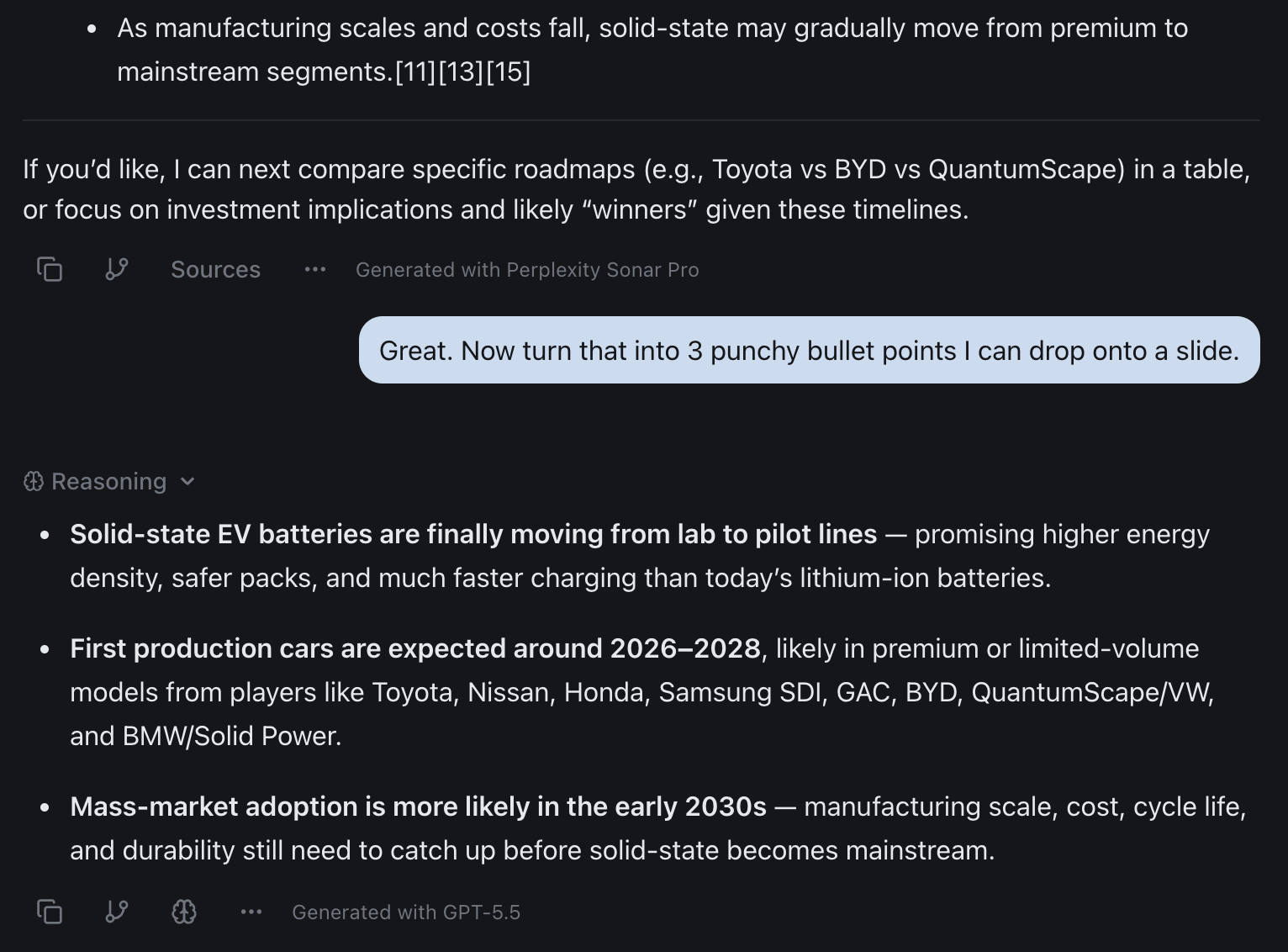
Do the sourcing pass with Perplexity, then switch models mid-thread to synthesize — the context carries over, so the analysis model can see everything the research model found without you pasting anything. That single move, switching model inside one conversation, is the one people underestimate most.
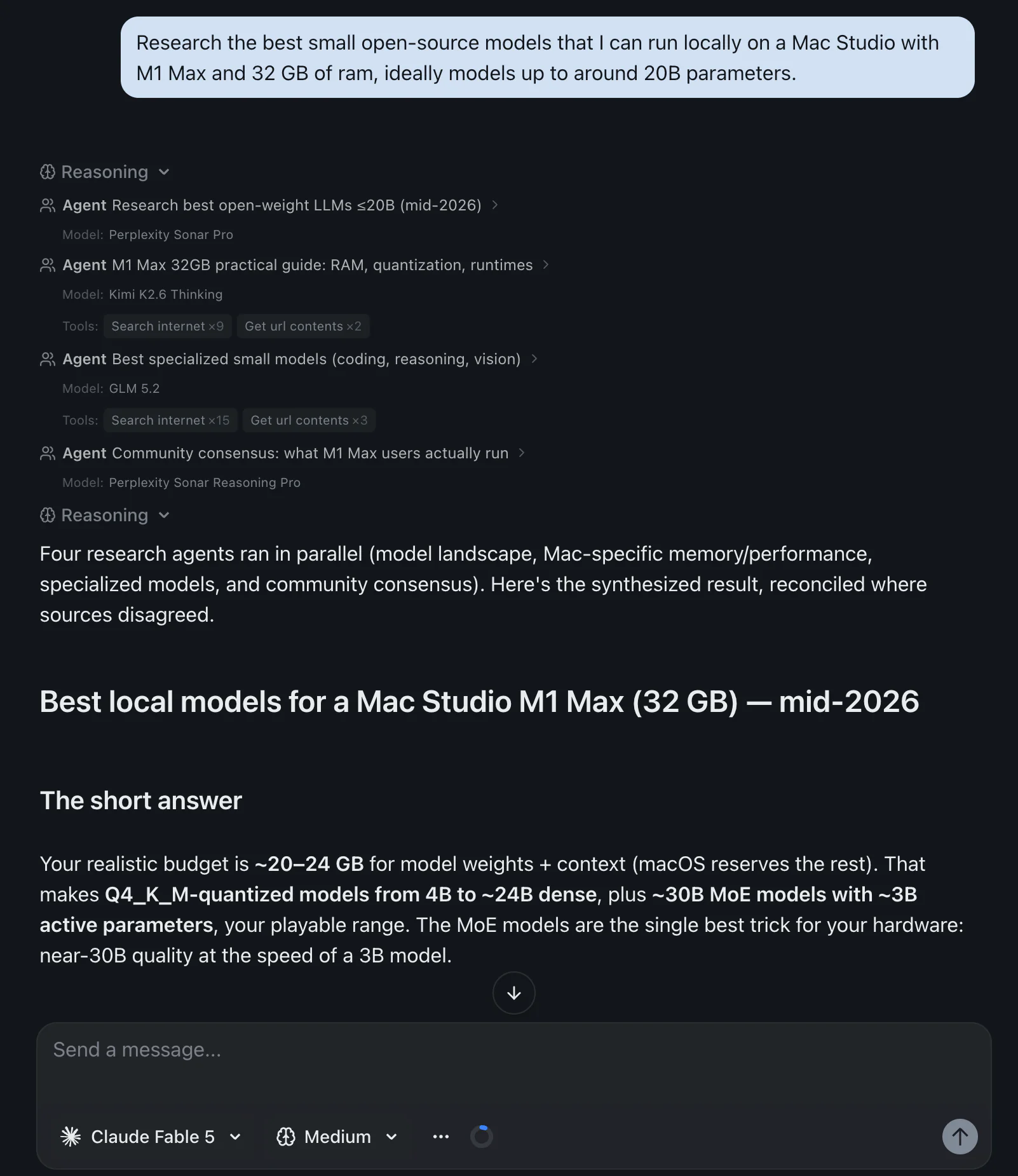
When the job is genuinely big — map an entire competitive landscape rather than five named rivals — hand it to agent mode with parallel agents: the model you pick becomes an orchestrator, splits the work across several agents running at once on different models, each with its own tools and context, and combines what they find into one answer. It's faster, and because the sub-agents can run on cheaper models than the orchestrator, it's usually cheaper than making one expensive model grind through the whole thing.
Finish by generating the deliverable — charts from the numbers, then the deck or report as an actual file — and leave a weekly automation running to keep the competitive section current after the study ships.
One More Thing: That Data Is Not Yours
Market research runs on other people's information. Interview transcripts contain named customers, survey exports contain personal data, and the deck you're building may contain a client's confidential strategy. Before any of it goes into a chat window, the policy matters as much as the model: izzedo is GDPR compliant, doesn't train on user inputs, and operates on zero data retention with the providers, so prompts sent through it aren't stored on their side — and you can permanently delete your history. Whatever tool you use, check that list before you upload a transcript. It's the question procurement will ask you afterwards regardless.
What It Costs
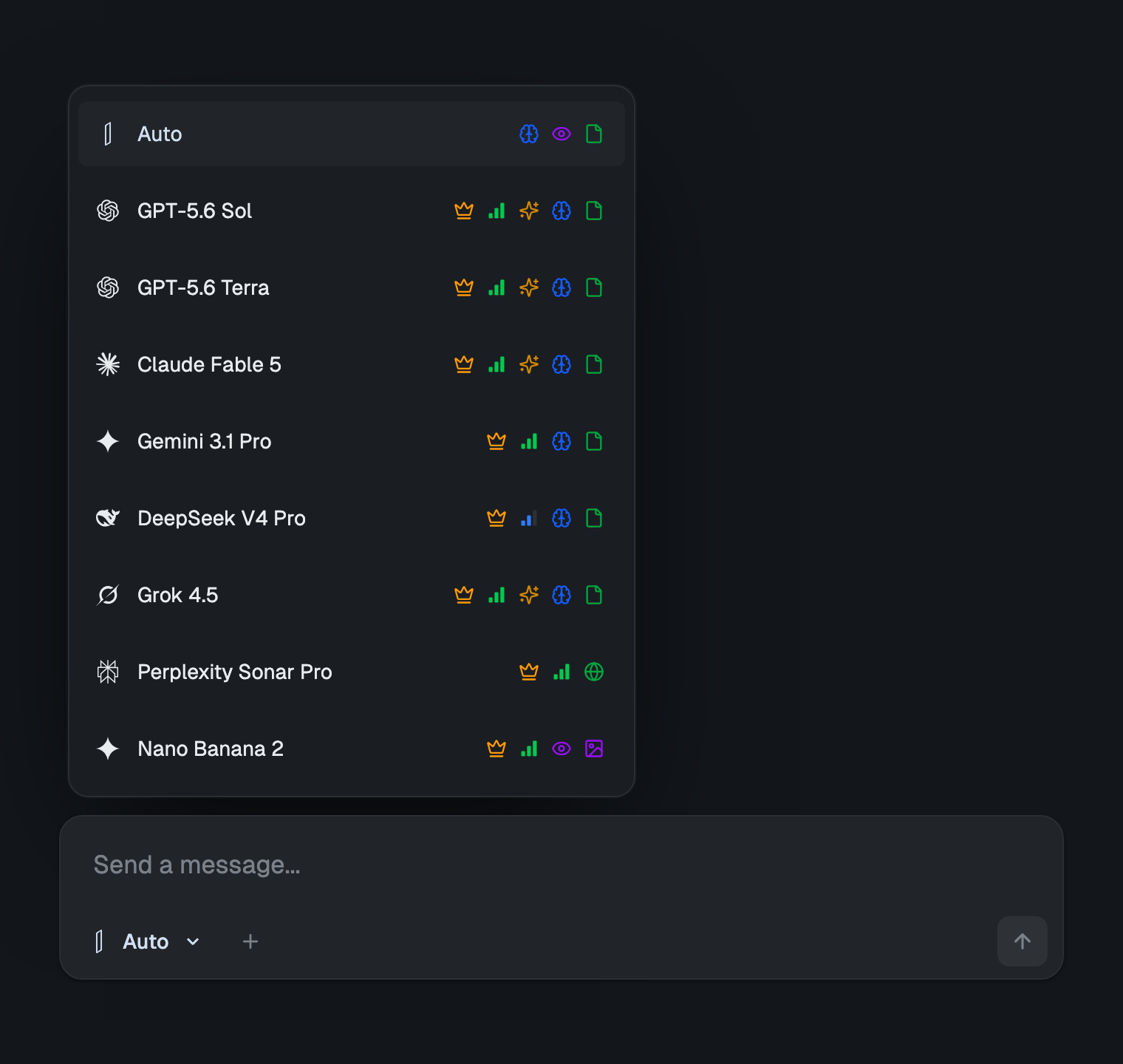
The models: bought separately, the research lineup is about $110/month — $20 each for ChatGPT, Claude, Gemini and Perplexity and $30 for Grok, with DeepSeek free — and you'll want at least three of them, because sourcing, synthesis and the second-opinion check are different jobs. izzedo chat puts the whole lineup behind one bill from $6/month, with a free plan that needs no credit card if you want to run a real study through it before paying. It's a flat monthly bill with no credits or points to ration — fair use runs quietly in the background on a short rolling window with a weekly pool behind it, so a full week of heavy study runs can reach a ceiling. The current numbers live on the pricing page.
The platforms are a separate conversation, and an honest one: if your question genuinely requires a representative sample of people who don't work for you, budget for fieldwork. No amount of model juggling substitutes for asking real buyers. What the models replace is everything that happens before and after that fieldwork — which, on most projects, is where the weeks actually go.
The Bottom Line
The best AI for market research and analysis in 2026 is a short lineup used deliberately: Perplexity for anything you'll have to cite, Claude for reading the qualitative pile, Gemini for the big files, ChatGPT for the thinking, and document generation for the readout — with the whole thing anchored in a project that holds your own material. The tooling around the models does more work than the choice of model: the knowledge base, the automation that keeps competitive tracking alive, the agents that parallelize the big sweeps.
And the habit that separates research you can stand behind from research that merely reads well: no number reaches a slide until you've opened its source and asked a second model the same question cold. Models are extraordinary at finding and shaping information. They have no idea when they're wrong — which is precisely why you keep a second one on hand. For the full lineup by business function rather than by research job, that's the best AI for business; for the free end of the same stack, the free marketing tools roundup covers what you can do at $0.
Want Perplexity's sources, Claude's synthesis and a second model to check the numbers — in one workspace, on one bill? Try izzedo chat free — no credit card required.
Frequently asked questions
What is the best AI for market research and analysis?
There isn't one, because market research is several different jobs. Perplexity is the best starting point for desk research and competitor scans because it answers from the live web with citations you can open; Claude is the strongest at synthesizing interviews, reviews and open-ended survey responses without flattening the nuance; Gemini handles the big exports and spreadsheets; and any capable model can write the readout. The practical setup is a workspace where you can use all of them on one bill instead of buying four subscriptions.
Can AI replace market research?
It replaces the desk-research half — the reading, scanning, summarizing and first-pass analysis that used to eat days. It cannot replace primary data collection. If you need to know what 400 buyers in a specific segment think, someone still has to ask them through a panel or a survey platform, and no model can conjure that sample. Treat AI as the fastest analyst you've ever had, not as the respondents.
Are AI-generated market size numbers reliable?
Not on their own. A model asked for a market size will often produce a confident figure with a plausible growth rate and no traceable origin, because it is completing a pattern rather than looking anything up. Only use a number you can trace to a named publisher with a date, get it from a model that cites live sources, and check important figures against a second model before they reach a slide.
Is Perplexity good for market research?
It is the best first stop for anything factual and current — market definitions, competitor pricing, regulatory changes, funding news — because every claim comes with sources you can click and verify. It is weaker at open-ended analysis and at long synthesis work, so most research projects end up starting in Perplexity and finishing in a model built for reasoning and writing.
Can AI analyze survey responses and interview transcripts?
Yes, and it is one of the highest-value uses. A long-context model can read dozens of transcripts or thousands of open-ended answers, cluster them into themes, and pull the verbatim quotes behind each theme so you can check its work. Ask for the quotes every time — a theme without evidence attached is the model's summary of your data, not a finding from it.
What is the cheapest way to use several AI models for research?
Buying the main research models separately runs about $110/month — $20 each for ChatGPT, Claude, Gemini and Perplexity and $30 for Grok, with DeepSeek's consumer app free. izzedo chat includes all of them on one login from $6/month, with a free plan that needs no credit card, so you can run sources, synthesis and the second-opinion check without a subscription per vendor.
Ready to try multi-model AI workflows?
Access GPT, Claude, Gemini, Perplexity, and more — all in one place.
Start for Free →