Claude vs Gemini in 2026: I Tested Both on Real Work, Not Benchmarks
Claude or Gemini? Every comparison online settles it with benchmark scores. I settled it with a week of ordinary work instead — and the answer splits cleanly down the middle.
Almost every other comparison of these two settles the argument with a benchmark score — a percentage on a coding test, quoted to one decimal place. It's a strange way to answer the question, because the people typing "Claude vs Gemini" into Google are mostly writing, researching, planning and reading, not shipping software. So I skipped the leaderboards and gave both a week of ordinary work.
This is also the one big AI matchup with no safe default. Compare anything to ChatGPT and there's an obvious fallback — the tool everyone already has. Claude against Gemini has no incumbent in the room. Both are deliberate choices, made by people who either walked away from the default or arrived through Google's front door. That makes the decision feel higher-stakes than it is, so here's the honest version: they're strong at almost exactly opposite things, and the split is clean enough to describe in a sentence.
The Short Answer: Claude vs Gemini at a Glance
If you're skimming, this is the whole post in one table — which one I'd open for each job, and why.
| Task | Better pick | Why it wins here |
|---|---|---|
| Writing & editing | Claude | Prose with a natural rhythm; takes tone and structure notes without a fight |
| Long documents & big piles of source | Gemini | Built for volume — holds whole reports, PDF stacks and books in one pass |
| Current information | Gemini | Grounded in live Google Search, so answers are fresh and come with openable links |
| Careful reasoning & judgment | Claude | Slows down, keeps the caveats, resists tidying a messy question into a clean lie |
| Images, audio & mixed media | Gemini | Natively multimodal — reads and makes visuals as easily as it handles text |
| Working inside Gmail, Docs & Drive | Gemini | It's already there; no copying between a chat window and your actual files |
| Following a detailed brief | Claude | Holds a long list of constraints across a task without quietly dropping half |
Seven rows, four to Claude and three to Gemini — and no row where the loser is embarrassed. That's not fence-sitting, it's the finding: these two divide the work rather than compete for it, which is why the back half of this guide is about using both.
Meet the Two Contenders
Quick character sketches, with no version numbers — those roll over every few weeks while the personalities stay put.
Claude, from Anthropic, is the craftsman. Its calling card is writing that doesn't announce itself as machine-made: good sentence rhythm, restraint with filler, and a real willingness to be steered toward a specific voice. It's the most obedient of the big models when you hand it a detailed brief — twelve constraints in, twelve constraints respected — and on hard questions it would rather show you the trade-off than hand you a confident, tidy answer that isn't true. Its limits are reach: a thinner spread of built-in extras than Google's, a smaller appetite for enormous inputs, and a cautiousness that occasionally needs a second nudge before it will engage.
Gemini, from Google, is the heavy machinery. It's engineered for scale — feed it a long report, a folder of PDFs, hours of notes, and it keeps the lot in view — and for freshness, because it grounds answers in live Search rather than reciting what it memorized. It treats images, audio and text as one substance instead of three separate features. And it has an advantage no benchmark measures: it's already inside the tools most people work in all day. Where it gives ground is voice. Its writing is clear, organized and correct, and still reads a half-step more functional than Claude's — the work of a very capable engine rather than a stylist.
Why the Benchmark Scores Everyone Quotes Won't Settle This
Search this matchup and you'll be handed numbers within seconds: this model scores 82% on a software-engineering benchmark, that one leads on a graduate reasoning test. The figures are real. They're just answering a different question than the one you asked.
Three reasons they mislead here. First, they measure a narrow slice. The most-quoted benchmarks grade automated programming and exam-style problems — genuinely useful if that's your job, close to irrelevant if your week is proposals, research memos, lesson plans and email. (Both models write perfectly decent code, incidentally; it just isn't what most people are here for.) Second, they go stale on contact. Both labs ship upgrades every few weeks, and each release reshuffles the leaderboard — a post citing a decimal point from two months ago is quoting a scoreboard that no longer exists. Third, and worst, a benchmark can't score the things that actually decide your day: whether the draft needs rewriting before you'd send it, whether it noticed the contradiction buried on page 40, whether it quietly ignored three of your instructions, whether the answer is current.
So the tests below are deliberately unglamorous — the jobs people actually open an AI to do. Where a number would genuinely help, I'll say so. Where the difference is a matter of feel, I'll say that too, because pretending otherwise is how these comparisons end up useless.
How I Tested
Same prompt, same source material, same follow-ups — both models, side by side, across a normal week's work: drafting and then editing a piece of writing, digesting a long dense document, chasing down something that happened recently, reasoning through a decision with no clean answer, and handling a pile of mixed material with images in it.
I graded four things: how much of the output survived to a final version without rewriting, how faithfully each one handled a long source without drifting or inventing, how well it held a multi-part brief, and how current and checkable the facts were. These are hands-on impressions, not lab scores — swap the topic and the edges move. But the pattern repeated often enough that the recommendation at the end was easy to make.
Claude vs Gemini, Task by Task
Writing and editing
Claude's clearest win, and the one people notice within a day. Its first drafts land closer to publishable: less throat-clearing, fewer stock transitions, a rhythm that survives being read aloud. More importantly it's the better editor. Ask it to tighten something, warm it up, cut a third, or match an existing voice, and it does that specific thing while leaving your meaning intact, rather than gently rewriting the piece into house style.
Gemini's copy is genuinely fine — structured, accurate, clear. It just tends to sound like it was assembled rather than written, and it drifts back toward its default register after a couple of turns, so keeping it in a particular voice takes repeated correction. When the output is prose someone will read closely, Claude gets there in fewer rounds. (For the full research-draft-edit version of this workflow, I broke it down in Best AI for Writing Essays; the wider ranking, including why the drafts still read machine-made until you brief them properly, is in the best AI for writing.)
Long documents and big piles of source
Gemini's headline strength, and the reason people keep it around even when they prefer Claude's writing. Its context capacity is built for volume: drop in a long report, a stack of PDFs, a full transcript, and ask questions across the entire thing without pre-trimming it first. That "just paste it all in" quality changes how you work — no chunking, no deciding in advance which twenty pages matter.
Claude handles long documents well too, and there's a real distinction worth drawing: Gemini is better at holding more, Claude is better at reading closely. Give Gemini the pile; give Claude the twenty pages where the argument actually lives and it'll catch the qualifier that changes the meaning. The strongest pattern I landed on uses both in that order.
The catch: neither reading style protects you from confident error. A model can hold a document perfectly and still misattribute a figure or invent a citation that looks exactly right. The longer the source and the higher the stakes, the more worth spot-checking the specific claims you plan to rely on — there's a low-effort way to do that further down.
Current information
Gemini again, and it isn't close. Grounding in live Google Search means questions about recent events, current prices or this month's state of anything come back current, usually with links you can open and verify yourself. That last part matters more than the freshness: a claim you can click is a claim you can check.
Claude can search the web, but its instinct is to answer from what it knows and reach outward second. It's the difference between asking someone well-read and asking someone who just looked it up. For anything time-sensitive, start with Gemini. (If sourced, citation-first research is the core of your job rather than an occasional need, that's a specialist's game — I covered it in Perplexity vs ChatGPT and in the best AI for market research breakdown.)
Careful reasoning and judgment
Back to Claude, though by a narrower margin than the writing gap. Both reason well; the difference is temperament. On a question with no clean answer — a decision with real trade-offs, an argument with a weak link, a plan that might not survive contact — Claude tends to hold the ambiguity rather than resolve it prematurely. It names what it's unsure about. It pushes back when a premise is shaky instead of building obediently on top of it.
Gemini is a strong, methodical reasoner, especially on structured problems with many moving parts, where its capacity to keep everything in view genuinely helps. It's just quicker to produce a confident, well-organized conclusion — excellent when the question has an answer, less so when the honest response is "it depends, and here's what it depends on."
Following a detailed brief
An underrated column, and the one that surprised me most. Give a model a task with a dozen simultaneous constraints — length, tone, audience, banned words, required structure, a fact that must appear, a claim that must not — and watch what survives. Claude holds the list. Come back three turns later and the constraints are still in force.
Gemini is more prone to constraint decay: the first response honors the brief, and by the third exchange a couple of requirements have quietly evaporated, usually the negative ones ("don't mention X"). Restating them brings it back. But if you work from detailed briefs or a house style guide, that difference compounds across a project.
Images, audio and mixed media
Gemini's turf, and it's a structural advantage rather than a feature checklist. Multimodality is in its foundations, so a screenshot, a chart, a diagram or an audio file drops into the conversation and gets treated as ordinary input — no ceremony, no separate mode. It generates images too, and Google's paid tiers reach into video.
Claude reads images and documents capably and will discuss what it sees. But this isn't a close column: when the work mixes media, Gemini is the one built for it.
Living inside the tools you already use
The factor no benchmark scores and plenty of people decide on. If your work already lives in Gmail, Docs, Drive and Sheets, Gemini is there — in the sidebar, next to the actual document, with your files reachable without an upload dance. That proximity quietly wins arguments that capability alone wouldn't. A slightly weaker draft written where the file already sits often beats a slightly better draft that requires copying text between two windows.
Claude's answer is different in kind: connectors and integrations you set up deliberately, plus desktop and mobile apps. Set up, it's capable. But it starts as a destination you go to, while Gemini starts as something already sitting in the room. Worth being honest that this is a real advantage for Google, and one that has nothing to do with which model is smarter.
Where Claude Wins / Where Gemini Wins
Strip out the detail and it lands cleanly:
- Claude wins when the output is craft — writing and editing that reads human, judgment-heavy reasoning that keeps its caveats, close reading of the pages that matter, and faithful adherence to a complicated brief.
- Gemini wins when the input is volume or velocity — enormous documents, live Google-grounded facts, mixed media, and the sheer convenience of already being inside the tools you work in.
Put plainly: Claude is the writer, Gemini is the reader. Give Gemini the raw material, and give Claude the sentence that has to land.
Pricing: The One Place This Isn't a Tie
Most of the comparisons on this blog reach the pricing section and find a stalemate — two $20 plans, no tiebreaker. This one is different, and it's the strongest practical argument in Gemini's favor.
Claude's ladder: a free tier, then Claude Pro at $20/month (about $17 if you pay annually), then Max plans starting at $100/month and topping out around $200/month for the heaviest use. There's no paid rung underneath $20, and Pro still meters you in five-hour sessions with a weekly cap across every model.
Google's ladder: a free tier, then a light paid tier at about $5/month, then the main plan at about $20/month, then premium tiers at roughly $100 and $200/month. Google's plans also bundle things Claude doesn't sell: cloud storage that scales with the tier (hundreds of gigabytes on the cheap plan, terabytes higher up), Gemini inside Gmail and Docs, and consumer perks like a YouTube Premium plan attached to the upper tiers in some countries.
Two honest conclusions. If you're a light user, Gemini genuinely wins on price — a $5 rung with no Claude equivalent, and the storage alone may cover a bill you're already paying. If you're a heavy user, price is a wash — both top out around the same numbers, so decide on the work instead.
There's a third conclusion neither company will volunteer. If you read the task-by-task section and thought "I want Claude for the writing and Gemini for the documents" — which is what most people conclude — the honest price of this comparison is $40/month and two subscriptions. And it rarely stops at two, because the next gap sends you to ChatGPT for range, Perplexity for sourced research, Grok for the live take:
- ChatGPT — $20/mo
- Claude — $20/mo
- Gemini — $20/mo
- Perplexity — $20/mo
- Grok — $30/mo
- DeepSeek — free (consumer app; API is usage-priced)
That's $110/month for the full bench, most of it idle on any given day. There's a cheaper way to end this comparison, and it's the next section. (The full arithmetic, including what to cancel first, is in Stop Paying for Multiple AI Subscriptions.)
Is Claude Better Than Gemini?
So — is Claude better than Gemini? Having used both properly, my answer is that the question smuggles in an assumption that doesn't survive contact with real work: that these two are competing for the same seat.
Claude is better at producing things: writing, editing, careful judgment, obedience to a brief. Gemini is better at consuming things: huge documents, live information, mixed media — and at being where your files already are. Crown either one and you hand back the other half. A writer who picks Gemini for the context window spends the year fighting its prose. A researcher who picks Claude for the writing spends the year trimming documents to fit.
The people who get the most out of AI worked this out a while ago: they don't pick a side, they route each task to whatever's built for it, and they cross-check the answers that matter. The obstacle has always been plumbing — two tabs, two logins, two invoices, and re-explaining your task every time you cross the gap.
So Which Should You Pick? Match It to Your Work
If one really has to win, let your most frequent task decide:
- Writers, marketers and anyone whose output is prose: Claude. The drafts need less rewriting and the editing passes actually do what you asked — with Gemini nearby for the moments the job turns into "read all of this" or "what happened last week."
- Researchers, analysts and heavy readers: Gemini for getting through the volume and staying current — then Claude to turn what you found into something worth reading.
- Students: Gemini to digest long readings, lecture material and dense sources; Claude to think through the argument and write it. (The 3-way Claude vs ChatGPT vs Gemini adds the third option if you want it in the mix.) Google gives verified students a free year of its AI plan and Anthropic has no student discount at all, so check what each vendor gives students before paying either.
- Anyone living in Google Workspace: Gemini, on convenience alone — it's already beside the document. Add Claude the moment the writing needs to be good rather than done.
- Anyone working from detailed briefs or a style guide: Claude, without much hesitation. Constraint-holding is the difference you'll feel every single day.
Notice that every line ends in a caveat pointing at the other model. That's not indecision — it's what falls out of two tools built for opposite ends of the same job.
The other matchups get the same treatment, and all of them are on one page.
You Don't Have to Choose: Run Both in One Workspace
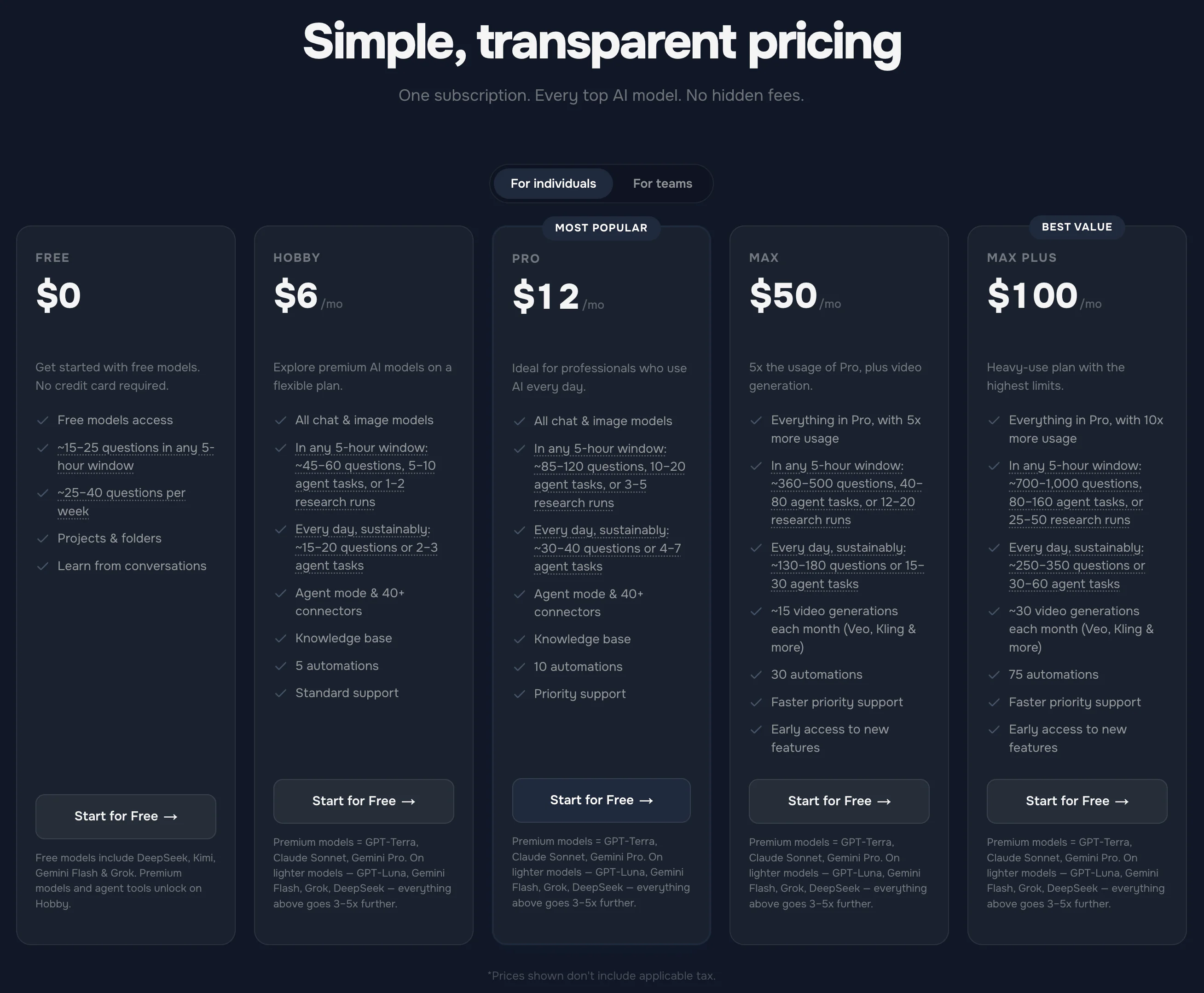
Here's the move that dissolves the whole dilemma. Rather than paying ~$20 for Claude, ~$20 for Gemini, and re-pasting your context every time you cross between them, you can have Claude, Gemini, ChatGPT, Grok, Perplexity, DeepSeek and more in one workspace for $6/month — with a free plan that needs no credit card to start. The fine print, stated plainly: fair-use limits exist here as they do everywhere in AI. The difference is you never administer them — no credits, no points to ration, one flat bill. A heavy burst on the priciest models means a short wait while the rolling window clears, and a heavy week can reach the weekly pool underneath, which resets less often.
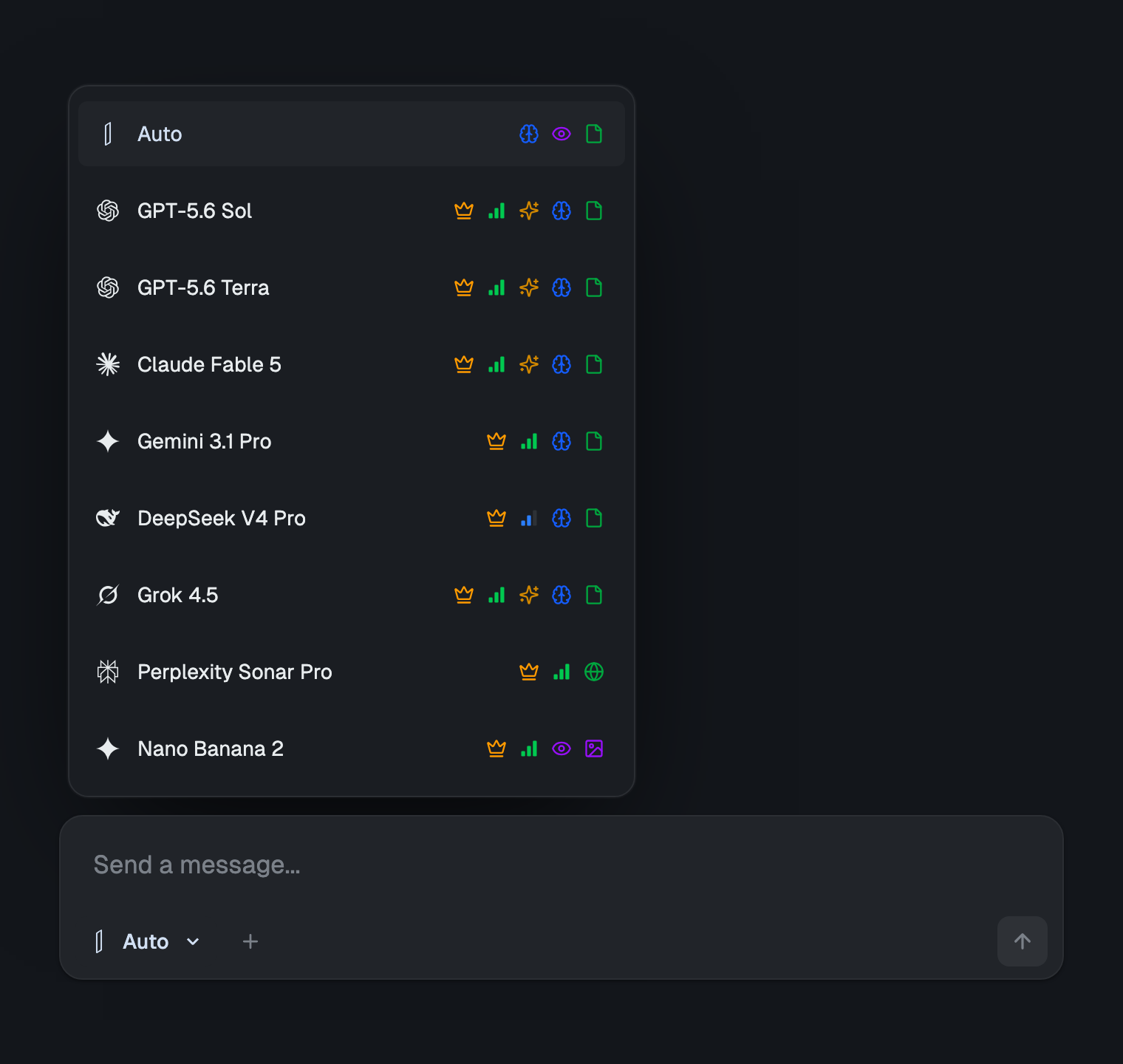
Because the models share one thread, you can hand work from one to the other mid-conversation without losing anything. Which is exactly the workflow this comparison keeps pointing at: let Gemini chew through the long source material or fetch what's current, then switch to Claude in the same thread to write it up — and Claude already sees everything Gemini surfaced. No copy-paste, no second login, no re-explaining the brief.
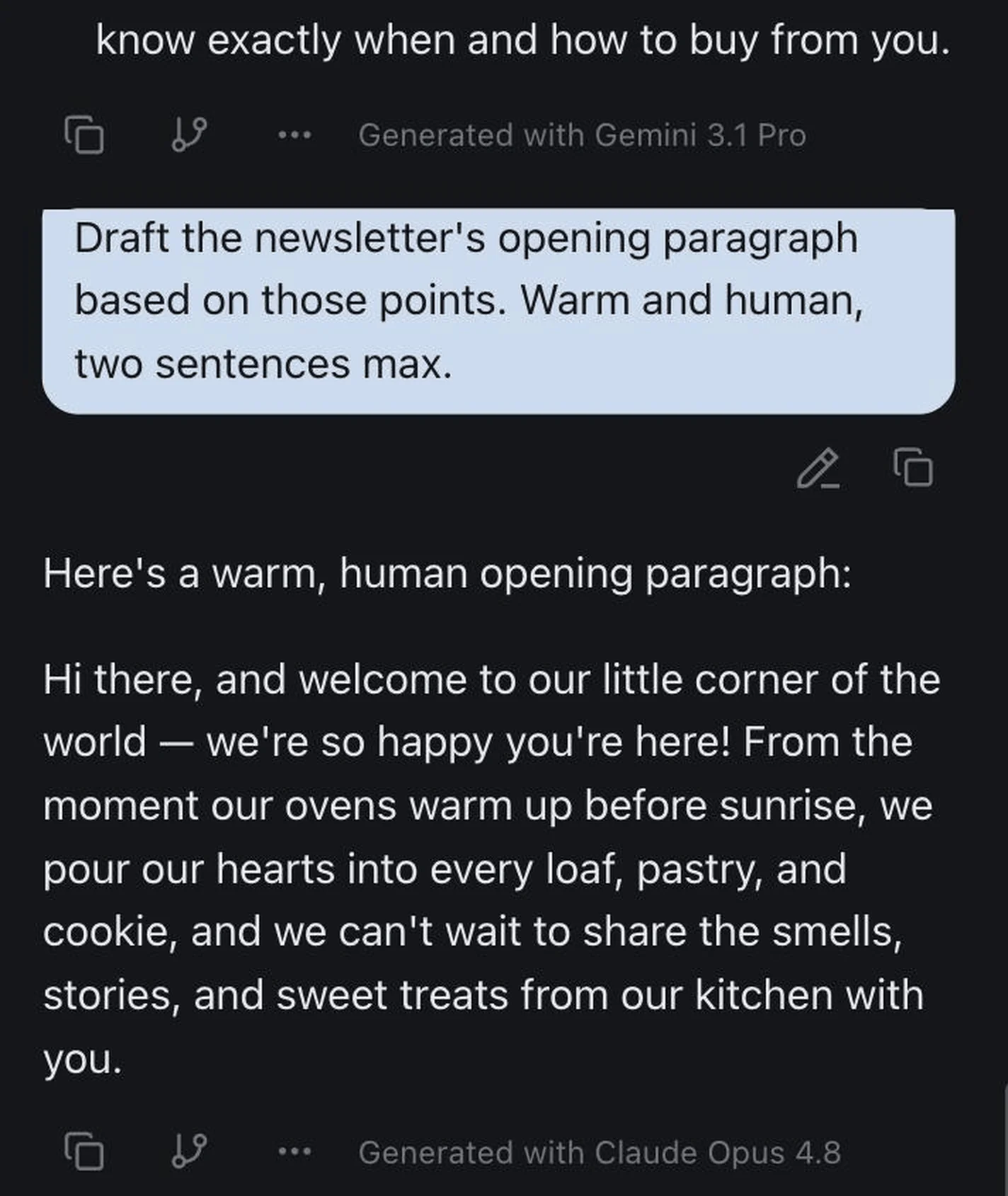
That order — Gemini reads, Claude writes — is the single most useful thing in this article, and it's precisely the setup that two separate subscriptions make annoying enough to skip.
The bigger payoff: a built-in second opinion
The best reason to keep both isn't convenience, it's accuracy. Any single model is confidently wrong often enough that one answer shouldn't be taken on trust — especially on numbers, dates and freshly fetched facts. The remedy costs almost nothing: ask the same question twice, to two different models, and see whether they agree. When Claude and Gemini match, move on. When they diverge, you've just located the exact claim worth checking before it embarrasses you in front of a client.
Across two separate subscriptions, that's friction you'll skip on a busy day. In one workspace it's a click — send the question to several models at once, or pass a follow-up to a second model inside the thread. I wrote up the one-minute version of that move.
That's the setup I actually use, which is why "Claude or Gemini" stopped being a question I had to answer. I have both, plus the rest, and each task goes to whatever's built for it. (If you'd like either one measured against the default instead, I ran the same tests in Claude vs ChatGPT and Gemini vs ChatGPT — and the whole field lines up in the five-way capstone.)
The Bottom Line
Claude vs Gemini in 2026 isn't a knockout, and no benchmark decimal is going to make it one. Claude wins craft: writing that needs no rewrite, careful judgment, and faithfulness to a complicated brief. Gemini wins scale and reach: huge documents, live Google-grounded facts, mixed media, and already being inside the tools you use. Forced to keep exactly one, I'd take Claude — my work is mostly words — but I'd resent it every time a 200-page PDF landed in my inbox.
The better news is that the forced choice is imaginary. Put both in one place, send the reading to one and the writing to the other, and let the moments they disagree catch the mistakes. Match the model to the job, keep one shared context, and stop paying two bills for two tools you wanted both of anyway. (Still shopping more broadly? The alternatives worth weighing covers the wider field.)
Want Gemini to do the reading and Claude to do the writing — in one thread, with ChatGPT, Grok and Perplexity a click away? Start with izzedo chat for free — no card required.
Frequently asked questions
Is Claude better than Gemini?
Neither is better across the board — they're strong at opposite things. Claude is the better writer and the more careful thinker: it produces prose that doesn't need rewriting, follows a style brief closely, and slows down on judgment-heavy problems. Gemini is the better handler of scale and freshness: a far bigger appetite for long documents, answers grounded in live Google Search, native work with images and audio, and it already sits inside Gmail and Docs. Pick Claude if your output is words; pick Gemini if your input is volume.
Which is better for writing, Claude or Gemini?
Claude, fairly clearly. Its default prose has a more natural rhythm and fewer stock phrases, and it takes editing direction — tone, structure, cutting throat-clearing — with less nagging. Gemini writes clean, correct, well-organized copy, but it more often reads functional rather than finished, so it usually needs an extra editing pass. If the deliverable is something a person will read closely, Claude gets you there in fewer rounds.
Is Gemini cheaper than Claude?
Yes, at the entry level. Google sells a paid AI tier at about $5/month, and its main plan runs about $20/month — with cloud storage and Gemini inside Gmail and Docs bundled in. Claude's paid ladder starts at $20/month, with no cheaper paid rung beneath it. At the top both land in the same place, roughly $100 and $200/month. So for light users Gemini genuinely undercuts Claude; for heavy users the two are priced alike.
Does Gemini have a bigger context window than Claude?
Yes. Gemini is built around very large context and is the more comfortable choice when you want to drop in a long report, a stack of PDFs or an entire book and reason across all of it at once. Claude also handles long documents well and reads them closely — arguably more carefully — but Gemini is the one designed for sheer volume. For big-pile work, start with Gemini; for close reading of what matters, hand it to Claude.
Can I use Claude and Gemini at the same time?
Yes. In a multi-model workspace both run in a single thread — let Gemini digest the long source material, then switch to Claude in the same conversation to write it up, with the context carried across. You can also put one question to both and treat any disagreement as a flag to check that claim. izzedo chat does this natively, with a free plan that needs no card.
Ready to try multi-model AI workflows?
Access GPT, Claude, Gemini, Perplexity, and more — all in one place.
Start for Free →