The Best AI Tools for Affiliate Marketing in 2026 (Sorted by Job)
Every listicle for this query tells you AI makes affiliate content faster. Faster is no longer the advantage. Here's the stack sorted by job, and the verification step that decides whether the page survives.
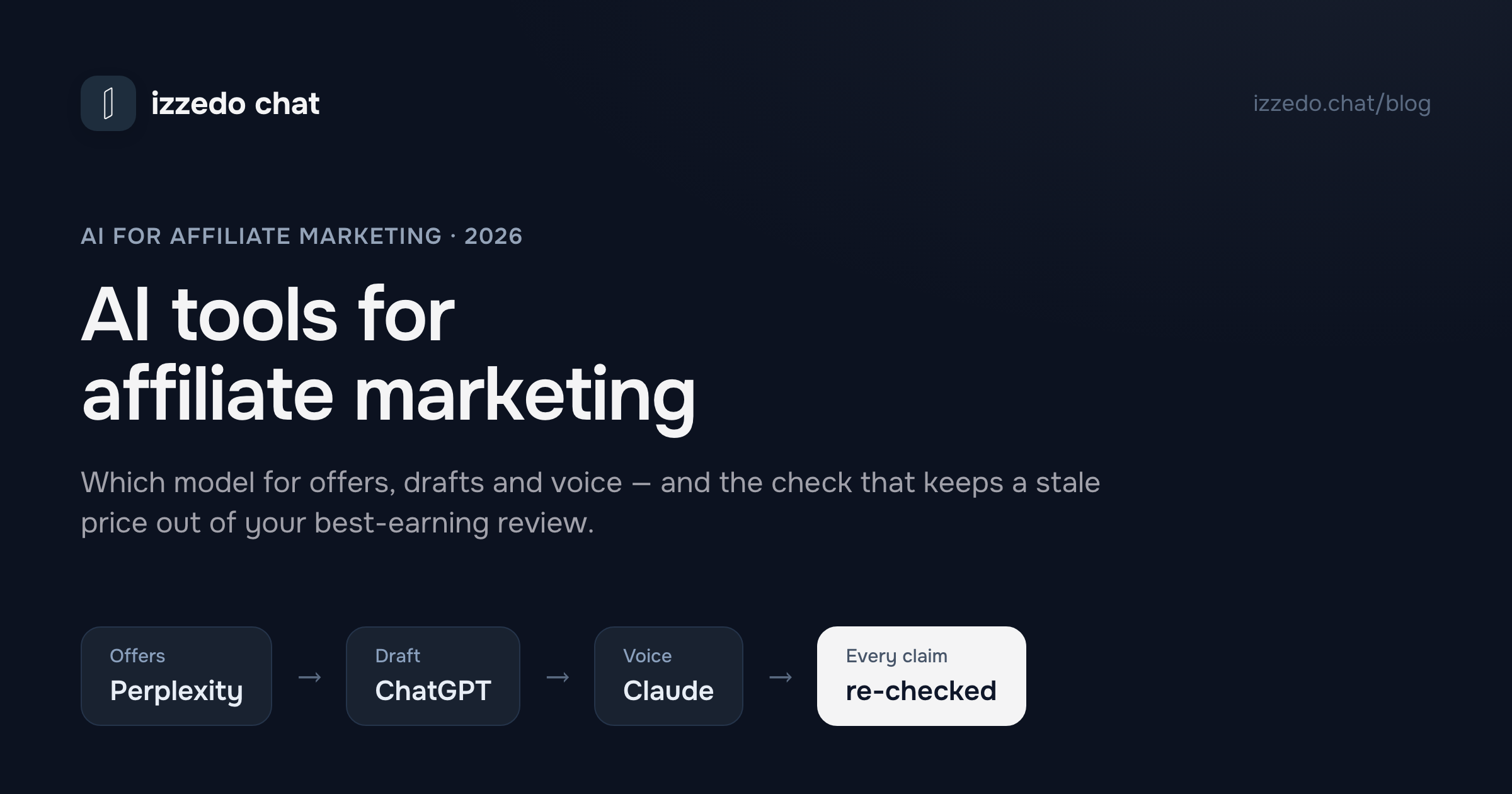
Search this exact phrase and you get a page of ranked tool lists. Most were written either by a vendor selling one of the tools or by an affiliate earning a commission on the click. You already know this — reading a SERP for what a page is really doing there is the job.
So here's the part those lists leave out. Since AI writing became good and cheap, producing affiliate content stopped being the hard part, which means it also stopped being the advantage. Everyone in your niche got the same speed boost in the same quarter. A tool that helps you publish thirty reviews a month is only useful if the thirty reviews are worth ranking, and Google has spent the last two years getting specific about what happens when they aren't.
This guide sorts the AI stack by the job you're actually doing — finding offers, reading the SERP, drafting, editing, checking, promoting — and spends the most time on the one step the listicles skip, because it's the step that decides whether the page survives.
The Short Answer: AI Tools for Affiliate Marketing, by Job
| Affiliate job | Reach for | What it gets you |
|---|---|---|
| Niche and program research | Perplexity Sonar | Live web with a citation behind every commission rate |
| Keyword and SERP reading | A research model + your own eyes | Who ranks, and why their page exists |
| The review draft | ChatGPT | Structure and speed on a repeatable format |
| Voice and edit pass | Claude | Holds one tone across 2,000 words |
| Checking every claim | A different model than the one that drafted | Catches the price that was true last year |
| Email sequences and ad copy | ChatGPT, or Grok for topical angles | Variations by the dozen |
| Comparison graphics and thumbnails | Gemini Image, GPT Image, Seedream, FLUX Kontext | Creative without a designer in the loop |
| Watching offers change | Automations | The merchant re-prices; your page finds out |
Two things stand out. No single model wins every row — the research model that cites its sources is not the model that writes well, and neither is the one you want auditing the result. And the highlighted row is the one no competing guide includes.
Where Affiliate Content Actually Dies
Google's spam policies name the failure modes directly, and it's worth using its words rather than the paraphrase that circulates on affiliate forums.
Scaled content abuse is, in Google's definition, "when many pages are generated for the primary purpose of manipulating search rankings and not helping users." The policy explicitly covers using AI tools to mass-generate pages. Note what it doesn't say: it doesn't say AI-written pages are spam. It says pages made in volume to move rankings are spam, whoever or whatever typed them.
Thin affiliation is narrower and lands closer to home: "publishing content with product affiliate links where the product descriptions and reviews are copied directly from the original merchant without any original content or added value." Google goes on to say affiliates who do add value — original reviews, price comparisons, product testing — aren't in scope.
There's a third, site reputation abuse, which is why the deals section a publisher rents out to a third party keeps getting demoted. Less likely to be your problem, but worth knowing the name.
Read those two definitions next to each other and the strategy writes itself. The escape hatch Google names is added value, and the two forms of it that AI can genuinely help with are original comparison and verified figures. The form it can't help with is original testing — nothing in this article gets you out of actually using the product. That's the honest boundary, and it's the reason the AI stack below is arranged around checking rather than generating.
Job 1: Finding the Niche and the Offers
This is the research job, and it's the one where a general chatbot is quietly dangerous. Ask a standard model for a program's commission rate or cookie window and it will answer from training data with total confidence — and commission terms are exactly the kind of fact that changes without an announcement.
Perplexity Sonar is the right first stop because it searches the live web and puts a source link behind each claim. Useful things to point it at:
- What a specific program actually pays now, and whether the rate tiers by volume.
- Which merchants in a category run their own programs versus sitting inside a network.
- Whether a niche is dominated by a handful of publishers or genuinely open.
- What buyers in the category complain about, which is where the review angle usually hides.
Watch-out: a citation proves a page exists, not that it's current or right. Open the links. A model will happily cite a 2023 blog post repeating a commission rate that was revised twice since. Anything that determines whether you build a site gets confirmed on the merchant's own program page.
For the wider version of this workflow — sourcing, synthesis and where numbers go wrong — the market research and analysis guide walks through the full pipeline, and Perplexity vs ChatGPT covers when a research model beats a general one.
Job 2: Reading the SERP Before You Write
Keyword volume tells you how many people search. The SERP tells you whether you can have any of them, and this is the part most AI content workflows skip entirely because a model can't do it for you.
What AI is good for here is the second pass. Once you've looked at the page-one results yourself, a model can help you answer: what does every ranking page cover, what does none of them cover, and what question is the searcher asking that the current results answer badly? That gap is your outline. It's also, not coincidentally, the "added value" test from the previous section, applied before you write instead of after you're penalised.
A practical habit: paste the titles and first paragraphs of the top five results and ask for the shared skeleton, then ask what's conspicuously missing. The second answer is worth more than the first.
Job 3: The Draft
Reviews and comparisons are a repeatable format — intro, who it's for, the criteria, the verdict, the alternatives — which makes them ideal work for a model that's fast and structurally reliable. ChatGPT is the workhorse here. Give it your outline, your actual notes from using the product, and the format, and you'll have a full draft in a minute.
The critical input is your notes. A draft built only from the product's marketing page is the thin-affiliation definition rendered in prose. A draft built from three weeks of your own use, with the model doing the arranging, is a genuinely original review that happened to be typed quickly.
Grok is worth keeping in the rotation for anything tied to a current moment — a launch week, a price change, a category argument that's live right now.
Job 4: The Voice Pass
Affiliate content converts on trust, which makes the "sounds like AI" problem a revenue problem rather than an aesthetic one. A reader who senses the review was generated discounts the recommendation, and the discount happens before they consciously notice why.
Claude is the stronger editor. It follows detailed instructions about tone and holds a voice across a long piece rather than drifting back to the default register by paragraph twelve. The instruction that works is specific and negative: name the habits you want gone rather than asking for "a more human tone."
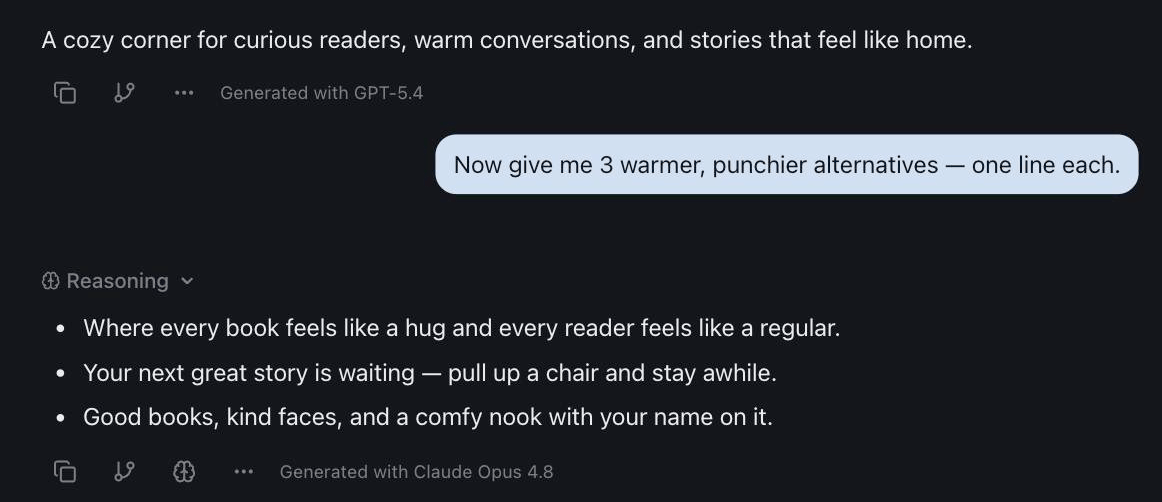
The tells worth banning by name are the warm-up paragraph that restates the question, everything arriving in threes, the "it's not X, it's Y" construction used in place of an actual point, and the closing summary nobody asked for. The best AI for writing covers why models produce those and the three fixes ranked by how much they help.
Job 5: The Claim Ledger
Here's the step that isn't in any of the competing guides, and the one I'd keep if I had to drop everything else.
An affiliate review is a document made of checkable claims. Prices, plan limits, specs, what's included at each tier, whether a feature exists, whether the free trial is fourteen days or seven. Every one of them is a fact that was true at some point and may not be now, and a model will reproduce a stale one in a fluent, confident sentence that looks exactly like the true ones around it.
The cost of getting one wrong is asymmetric. A reader who clicks through expecting $49 and finds $79 doesn't buy, so you don't earn. Do it consistently and you get refund-rate problems with the merchant, and eventually a program that stops returning your emails. Google's thin-affiliation language, meanwhile, contrasts copied merchant content with "price comparisons." An accurate price is therefore doing double duty: it keeps the reader, and it's part of the added value the policy asks for.
The move that works is a second model, and it has to be a different one from the model that wrote the draft. Asking a model to fact-check its own output is close to useless: it re-derives the same claim from the same weights and confirms itself. A different model, with live web access, has no attachment to the sentence.
The prompt is boring and that's the point:
Here is a draft product review. Do not improve the writing.

Extract every checkable factual claim into a three-column table:
claim | type | where it appears
(types: price, plan limit, spec, availability, commission)

Then check each one against the live web and mark it:
CONFIRMED — with the source URL
CHANGED — with the current figure and the source URL
UNVERIFIABLE — say what you searched

List UNVERIFIABLE and CHANGED first. Do not fix anything.
You get back a short list of things to deal with rather than a rewritten draft you'd have to re-edit. UNVERIFIABLE is the interesting bucket: half of those are claims the model invented, and the other half are real facts that simply aren't on a public page. Both need you.
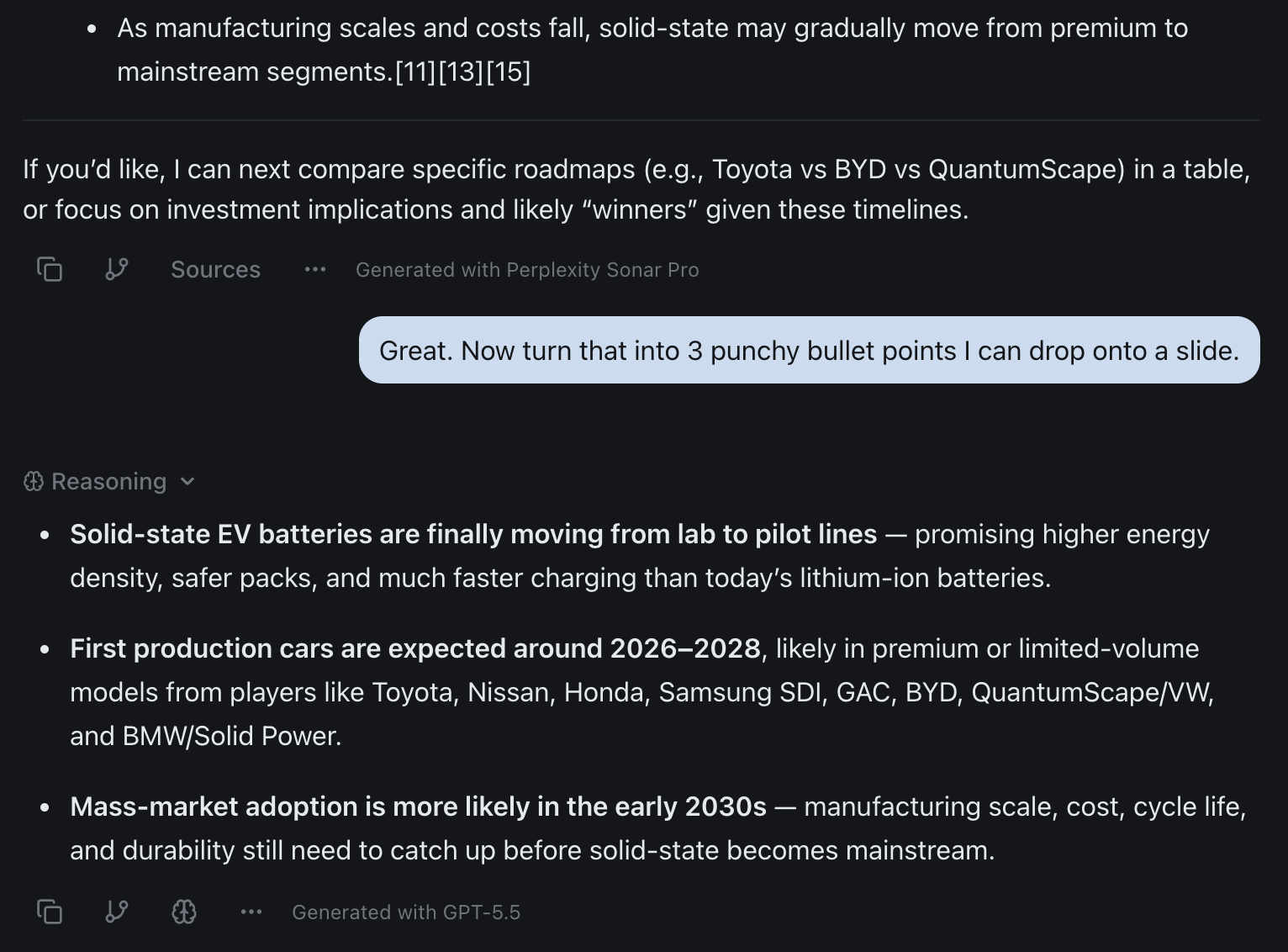
Where the two models flatly disagree, neither is your answer — go to the merchant's own pricing page and settle it. Treating disagreement as a signal rather than an annoyance is a general-purpose technique, not an affiliate-research trick.
Two practical notes. Run the ledger on comparison tables especially, since they're dense with figures and they're the part readers screenshot. And re-run it on your top earners quarterly — a page that was accurate at publish is a page that quietly rots, and the highest-traffic reviews are the ones where rot costs most.
Job 6: Email, Ads and the Promotion Layer
Once the review exists, the rest of the funnel is volume work, which is what AI is unambiguously good at.
- Email sequences. One review becomes a welcome sequence, a comparison email, an objection-handling email, and a deadline email for a promo window. Draft with one model, then edit for voice with the other — same split as above.
- Ad and social copy. Ten hooks, five angles, three lengths. The value is the range, not any single line.
- Creative. Image models handle comparison graphics, thumbnails, ad tiles and background variations. Gemini Image and GPT Image for generation, Seedream when composition matters, FLUX Kontext for editing an existing asset by describing the change.
- Repurposing. A single tested review is a video script, a carousel, a newsletter section and a forum answer. This is the highest-return AI task in the whole workflow, because the expensive part — the testing — is already paid for.
Watch-out: repurposing multiplies whatever's in the source. If a claim didn't survive the ledger, don't let it out into eight formats where you'll never catch it again. Verify, then repurpose, in that order.
Job 7: The Work That Should Run Itself
Offers change and pages don't. That gap is where affiliate revenue leaks quietly — a merchant re-prices in March and the post says the old number until someone happens to notice in August.
Automations are recurring prompts on a schedule — hourly, daily, weekly or weekdays — with the model and integrations you choose. Three that pay for themselves in this workflow:
- A weekly offer watch on your top merchants, flagging price, tier or commission changes.
- A monthly SERP check on your five best keywords, reporting who moved and what's new on page one.
- A quarterly claim re-check that runs the ledger prompt again on your highest-traffic reviews.
Because those run through 50+ integrations — Notion, Google Drive, Google Sheets, Gmail and others — the output can land where you'll actually read it. And when you need a deliverable rather than a chat answer, Agent mode produces the file: a chart from your numbers, a comparison table in Excel, a report in PDF.
Running the Whole Stack in One Place
Count the accounts the workflow above needs. A research model, a drafting model, an editing model, a checking model, image models, and somewhere for the recurring jobs. Bought separately, ChatGPT, Claude, Gemini, Perplexity and Grok run about $110 a month, with DeepSeek free. The money is the smaller cost. The bigger one is that every switch resets your context: new tab, new thread, re-paste the brief, re-explain the product, re-upload the notes.
That reset is fatal to the claim ledger specifically. The check only works if the second model can see the same draft the first one wrote, and pasting a 2,000-word review between tabs twice a week is how the step stops happening.
In izzedo chat, every model above lives in one conversation. Draft with one, switch mid-thread to another for the edit, switch again to a research model for the ledger — each one sees the whole project, with no re-pasting.
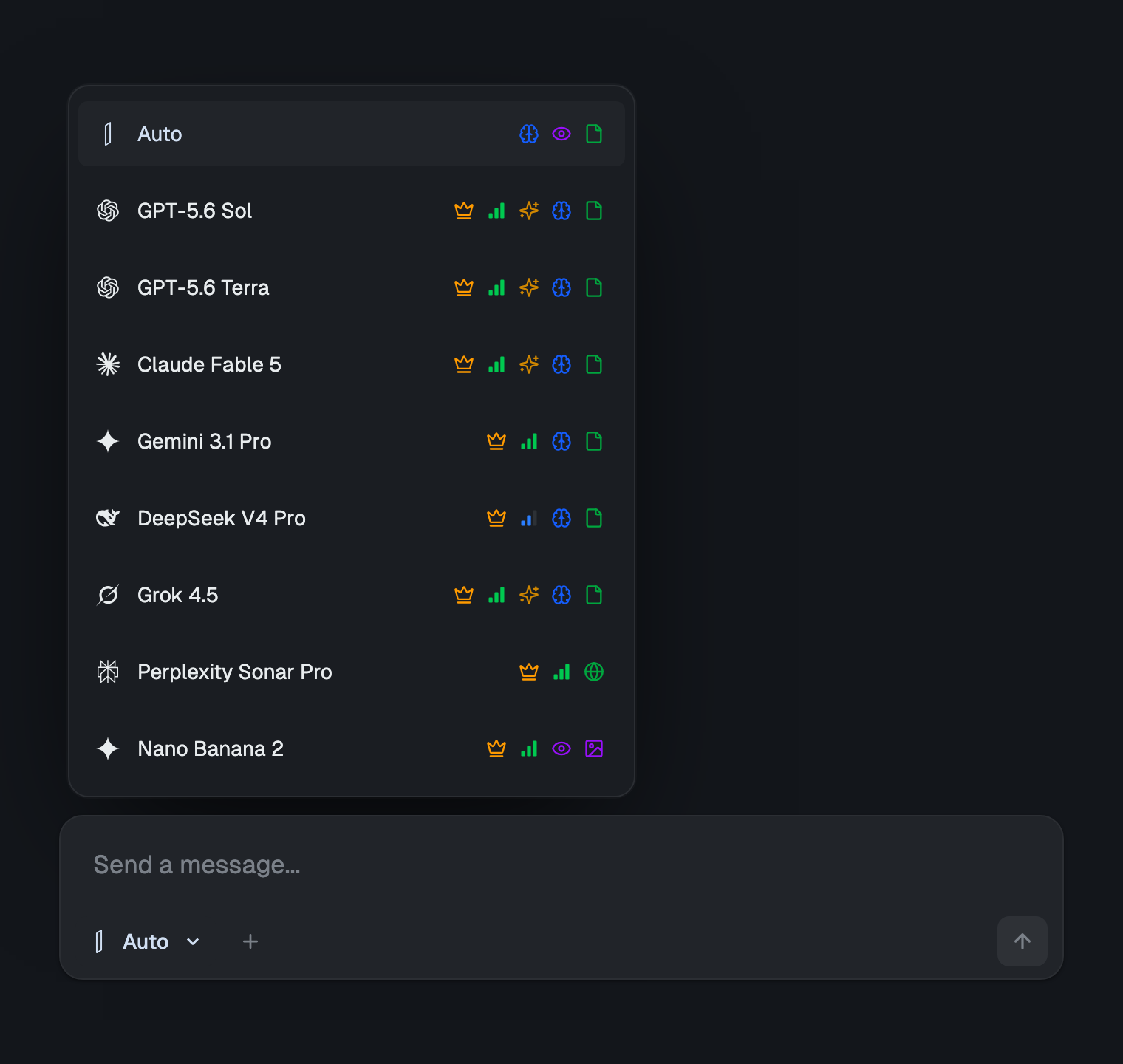
Upload the merchant's docs and your testing notes once and every model can use them. Ask several models the same question side by side when a claim looks shaky. Export the finished comparison to Word, Excel or PDF. It's the one-workspace version of running multiple models at once, with copy-pasteable multi-model workflows here if you'd rather start from something that works.
On price: izzedo has a free plan with no credit card, and every model unlocks at $6/month — roughly one idle subscription. It's a flat bill with fair use running quietly underneath — a short rolling window plus a weekly pool — so there's no credit meter to ration mid-campaign. A big launch week can reach that weekly ceiling, and then you wait for it rather than pay to clear it. That last part matters more for affiliates than for most users, because content volume is spiky by nature and points-metered platforms punish exactly that pattern — the same trap behind switching away from Poe and its compute points. Current details are on the pricing page.
One more thing, since affiliate work means handling merchant terms, unreleased promo details and your own performance data: izzedo is GDPR compliant, doesn't train on your inputs, and passes prompts through with zero data retention, with full control to delete your history.
Disclosure, and What Not to Delegate
Two things stay yours no matter how much of the workflow you automate.
Disclosure. In the US, the FTC's Endorsement Guides require a clear and conspicuous disclosure of a material connection between you and what you're recommending, and an affiliate commission is one. It belongs where a reader sees it before the link, not parked in a footer. Requirements differ by market and get revised, so check the current guidance where you publish.
Claims about outcomes. Never let a model draft earnings claims, health claims, guarantees or "clinically proven"-style statements. Models generate that language fluently because the training data is full of it, and a fluent regulatory problem is still a regulatory problem. Cut it on sight.
The Bottom Line
The best AI tools for affiliate marketing in 2026 aren't a shopping list — they're the frontier models matched to specific jobs: a research model that cites, a drafting model that's fast, an editing model that holds a voice, and a different model auditing the result before it ships.
The reason to arrange it that way is that speed is no longer scarce. Everyone publishing in your niche can produce a competent review in an afternoon. What's scarce is a page whose numbers are still right and whose recommendation came from having used the thing — which is also, word for word, what Google's own policy asks affiliates to add. AI can carry most of that. The testing is still yours, and the check is the step that separates the two.
If you're currently running that stack across four subscriptions and six tabs, the tooling is the easy fix — and it's the whole reason izzedo chat exists. (The free AI marketing stack covers the same territory for general marketing work, and stopping the multi-subscription bleed does the arithmetic in full.)
Want a research model, a drafting model and a fact-checking model in one thread? Start using izzedo chat for free — no credit card required.
Frequently asked questions
What are the best AI tools for affiliate marketing?
The tools that matter most are the frontier models themselves, matched to the job: a web-research model like Perplexity Sonar for offer and program research with citations, ChatGPT for review drafts and ad variations, Claude for the voice and edit pass, image models for comparison graphics and thumbnails, and a second model — different from the one that wrote the draft — to verify every price and spec before publish. The point tools layered on top are mostly convenience wrappers around those same models.
Can I use AI to write affiliate content without getting penalised?
Google's guidance is about the content, not the tool used to make it. Two of its spam policies are the ones affiliates need to know by name. Scaled content abuse covers pages generated in volume mainly to manipulate rankings rather than help anyone. Thin affiliation covers affiliate pages whose descriptions and reviews are copied from the merchant with nothing original added. AI writing is not itself a violation, but AI used purely for volume walks straight into the first policy, and an AI draft that just paraphrases the merchant's own page walks into the second. What clears the bar is added value: original testing, real comparison, verified figures.
Which AI model is best for writing product reviews?
Split the job. Use ChatGPT to get the structure and a fast first draft, since reviews are a repeatable format and it handles volume well. Then switch to Claude for the edit, because it holds a consistent voice across a long piece and follows detailed instructions about tone better. Reviews convert on trust, so the edit pass matters more here than in most content — a review that reads machine-written undercuts the recommendation it's making.
How do I stop AI from inventing prices in my affiliate content?
Don't ask the model that wrote the draft to check it — it will restate its own claim with the same confidence. Extract every checkable fact into a list, hand the list to a different model with live web access, and require a source link for each confirmation. Anything the second model can't confirm gets cut or rewritten. Where the two models disagree is exactly where you go to the merchant's own pricing page and settle it yourself.
Do I still need to disclose affiliate links if AI wrote the review?
Yes, and nothing about that changes. In the US the FTC's Endorsement Guides require a clear and conspicuous disclosure of a material connection, and an affiliate commission is one. The disclosure belongs where a reader will see it before they reach the link, not in a footer. Rules vary by country and get updated, so check the current guidance for the markets you publish in — and never let a model draft earnings claims or performance promises on your behalf.
Is a multi-model workspace worth it for one affiliate site?
It comes down to whether your workflow uses more than one model. If a single chatbot covers everything you do, buy that one. But the review workflow described here needs a research model, a drafting model, an editing model and a checking model, and paying four separate subscriptions for that costs around $80 a month. izzedo chat puts every leading model behind one login with a free plan and no credit card, and the models share one thread, so the brief and the research follow you when you switch instead of being re-pasted.
Ready to try multi-model AI workflows?
Access GPT, Claude, Gemini, Perplexity, and more — all in one place.
Start for Free →